
Solar Powered Anchor Light: 3 Options Compared

Britta Solar Anchor or Dock Light is the clearest fit for most boat owners because it provides white 360-degree illumination, the key feature for an anchor light. Choose AnTom Solar Strobe Beacon Light if you want magnetic mounting and multiple beacon modes; Cloud Fire Green Solar Magnetic LED Light is green, so treat it as a marker rather than a substitute for an all-round white anchor light.
An anchor light signals a vessel at rest after dark. Before relying on any option for required navigation lighting, confirm that it meets the visibility requirements for your vessel and location.
We earn a commission if you buy through links on this page. As an Amazon Associate I earn from qualifying purchases. Products are compared on manufacturer specifications, not hands-on testing.
- Best overall: Britta Solar Anchor or Dock Light – Its white LEDs provide 360-degree illumination, with constant-on or flashing operation.
- Best for magnetic mounting: AnTom Solar Strobe Beacon Light – It has a magnetic mount and three modes, including rotating and constant.
- Best for green marking: Cloud Fire Green Solar Magnetic LED Light – Its green light offers four modes and a magnetic base for compatible metal surfaces.
| Product | Best for | Color | Mounting | Modes | Shop |
|---|---|---|---|---|---|
| Britta Solar Anchor or Dock Light | 360-degree coverage | White | Bracket | Constant, flashing | Check Price on Amazon |
| AnTom Solar Strobe Beacon Light | Magnetic mounting | White | Magnet, suction, screws | Flashing, rotating, constant | Check Price on Amazon |
| Cloud Fire Green Solar Magnetic LED Light | Green safety marking | Green | Magnetic base | Flashing, strobe, steady, rotating | Check Price on Amazon |
Solar Powered Anchor Lights
Compare light color, mounting style and operating modes, then check that the light suits your vessel’s required visibility range.
Britta Solar Anchor or Dock Light
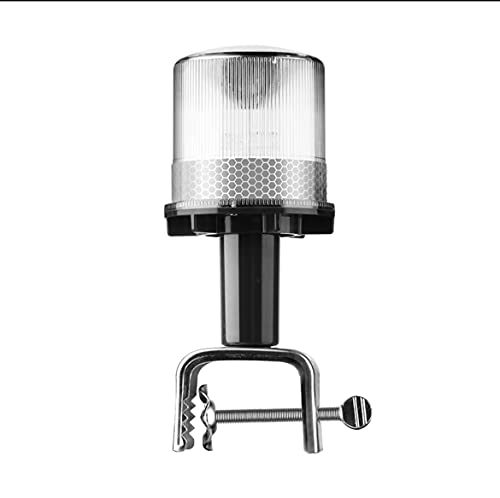
White 360-degree illumination makes this option the most direct match for boat owners seeking an all-round anchor light. Four LEDs provide the light, and the unit charges during daylight and turns on automatically at dusk. Choose constant-on or flashing operation, and use the included bracket for installation. Its 8-by-8-inch footprint is larger than the compact lights here, so check the mounting location before choosing it. The product is described as waterproof to IP48; confirm that its visibility range meets your vessel’s requirements before treating it as required navigation lighting.
Bottom line: Choose this for white 360-degree light and bracket mounting.
AnTom Solar Strobe Beacon Light

Magnetic, suction and screw mounting make this white solar beacon more adaptable to different installation surfaces than a bracket-only option. It uses 96 LEDs, automatically switches on at night after daytime charging, and offers flashing, rotating and constant modes. The 10-inch length and 2-inch width give it a narrow profile, while its IP67 rating is specified. Its beacon modes and mounting flexibility suit users who need a warning light as well as a potential anchor marker. However, the maker does not establish 360-degree coverage or a required navigation-light visibility range, so verify those before relying on it as an anchor light.
Bottom line: Choose this if flexible mounting and selectable beacon modes matter.
Cloud Fire Green Solar Magnetic LED Light

Green light sets this magnetic solar marker apart from the white anchor lights, making it a poor substitute when an all-round white anchor light is required. The unit charges in daylight, turns on automatically at night and provides flashing, strobe, steady and rotating modes. Its magnetic base attaches to compatible metal surfaces, and its 5-inch dimensions make it the smallest option here. The product is rated IP65. Choose it for green warning or safety marking where that color is appropriate, but do not use it as the required anchor light for a vessel that needs an all-round white signal.
Bottom line: Choose this for green marking, not as a required white anchor light.
Choosing a Solar Powered Anchor Light
Start with color and coverage: a vessel at anchor generally needs an all-round white light, not a colored marker or a directional beam. Under U.S. navigation rules, a vessel under 50 meters at anchor must show an all-round white light visible for 2 nautical miles; vessels under 7 meters have a limited exception when not in or near a narrow channel, fairway, anchorage or place where other vessels normally navigate. Solar charging and automatic dusk activation are conveniences, not proof of regulatory compliance. Check visibility distance and approval for your intended waters before relying on a light as required navigation equipment. If you need an anchor light, prioritize white all-round coverage over extra flashing modes.
Anchor Light Color and Coverage
White is the decisive color for an anchor signal, while green is used as a navigation-light color in other contexts and should not replace the all-round white light required at anchor. A 360-degree claim describes horizontal coverage, but it does not by itself establish how far away the light can be seen. Compare the maker’s visibility range with the rule applicable to your vessel; the U.S. threshold for vessels under 50 meters is 2 nautical miles. A beacon that flashes or rotates may be useful for warning or marking, but those patterns are not interchangeable with an all-round white anchor signal. When a product’s range or approval cannot be established, confirm it before relying on the light for navigation safety.
Mounting and Solar Light Placement
Mounting affects whether an anchor light remains visible from every direction: place it above nearby structures and clear of sails, covers and equipment that can block the beam. Brackets suit a fixed installation, while magnetic bases require a compatible ferrous metal surface; suction mounting depends on a clean, smooth surface. Solar panels also need unobstructed daylight exposure to recharge effectively, so a shaded mounting spot can undermine automatic nighttime operation. A useful decision rule is to choose a fixed bracket when the light must stay in one position, and a magnetic base when repositioning on metal is important. Check that the intended mounting surface and height keep the light clear of obstructions.
Using and Maintaining Solar Anchor Lights
Solar lights depend on daylight reaching the panel, so clean the panel when dust, salt spray or grime accumulates and inspect the mounting after rough weather. Automatic dusk-to-dawn operation does not guarantee a full night of illumination; available runtime depends on charge, panel exposure and battery condition. Before departure after dark, switch the light on and confirm that it is visible from all sides rather than trusting the sensor alone. Keep a compliant backup light aboard for a required navigation signal, especially when charging conditions are poor. Avoid assuming that waterproof ratings establish suitability for continuous immersion; an anchor light is normally mounted above the waterline, where spray and rain exposure still make sealing important.
Frequently Asked Questions
What color should an anchor light be?
A vessel at anchor generally displays an all-round white light. Green is not a substitute for that anchor signal; use the applicable navigation rules for your vessel and waters.
How far away must an anchor light be visible?
In U.S. rules, vessels under 50 meters at anchor need an all-round white light visible for 2 nautical miles. Confirm the rules for your vessel size and operating area before choosing a light.
Can a flashing light serve as an anchor light?
A flashing beacon should not be assumed to replace the required all-round white anchor signal. Check the light’s approval and applicable rules, especially if it has rotating or colored modes.
Where should I mount a boat anchor light?
Mount it where structures, sails and covers will not block its visibility around the horizon. A solar panel also needs daylight exposure, so avoid a shaded position.
Do solar anchor lights work through the whole night?
Runtime depends on the charge collected during daylight and the battery’s condition. Test operation before nighttime use, and carry a compliant backup when the light is serving as required navigation equipment.