
Splash Foam Spray Oven Cleaner: 4 Alternatives Compared

Weiman Heavy Duty Foaming Aerosol Oven Cleaner is the closest match for most people seeking a foam spray because its foam is made to cling to oven surfaces. The Splash product in this comparison is cleaning tablets for a multipurpose spray, not an oven-cleaning foam spray.
Choose a different option if you need a fume free formula, a larger bottle, or a general-purpose cleaner rather than a dedicated oven cleaner.
We earn a commission if you buy through links on this page. As an Amazon Associate I earn from qualifying purchases. Products are compared on manufacturer specifications, not hands-on testing.
- Best overall: Weiman Heavy Duty Foaming Oven Cleaner – Foaming aerosol made for ovens, grills, broiler pans and grates.
- Best for larger bottle: Goo Gone Oven and Grill Cleaner – The 28-ounce foam spray is intended for ovens, grills, racks and cookware.
- Best for routine spot cleaning: Easy-Off Fume Free Oven Cleaner – The fume free spray is positioned for everyday oven spot cleaning and air fryers.
| Product | Best for | Form | Volume | Named uses | Shop |
|---|---|---|---|---|---|
| Weiman Heavy Duty Foaming Oven Cleaner | Clinging oven foam | Foaming aerosol | 14.5 oz | Ovens, grills, broiler pans | Check Price on Amazon |
| Goo Gone Oven and Grill Cleaner | Broad surface use | Foam spray | 28 fl oz | Ovens, grills, racks, cookware | Check Price on Amazon |
| Heavy Duty Stove Oven Foam Spray | Compact spot jobs | Foam spray | 3.38 fl oz | Ovens, racks, grills | Check Price on Amazon |
| Easy-Off Fume Free Oven Cleaner | Everyday spot cleaning | Spray | 24 oz | Ovens, air fryers | Check Price on Amazon |
Splash Foam Spray Oven Cleaner Alternatives
These options differ in whether they are dedicated oven cleaners, how they apply, and the kitchen surfaces they are intended for.
Weiman Heavy Duty Foaming Oven Cleaner
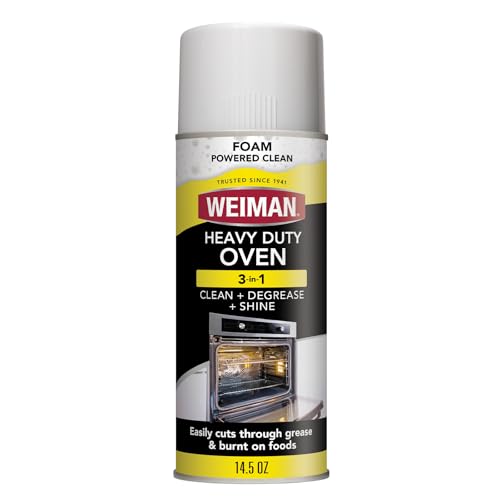
For a dedicated oven cleaner in aerosol form, this option pairs a clinging foam with use on ovens, grills, broiler pans and grates. Weiman says the formula works on hot and cold surfaces and targets burnt-on grease, baked-on food residue and carbon deposits. The 14.5-ounce can is a focused choice for someone who wants foam rather than a dissolving tablet or a fume free spot-cleaning spray. Its limitation is the smaller stated volume than the 28-ounce bottle in this group, which matters for repeated or larger-area cleaning.
Bottom line: Pick this if you want an oven-focused aerosol foam for several cooking surfaces.
Goo Gone Oven and Grill Cleaner

The 28-ounce size makes this the largest-volume ready-to-use foam spray among the dedicated oven cleaners here. Goo Gone says its stay-in-place foam dissolves grease, food and carbon deposits, and the product is intended for self-cleaning and non-self-cleaning ovens, grills, racks, pots and pans, burner drip pans, rotisserie ovens and toaster ovens. The maker also describes it as fume free and biodegradable. That broad surface range may suit varied cooking equipment, but buyers should still verify compatibility with their specific appliance before applying it.
Bottom line: Choose this for a larger foam bottle intended for several oven and grill surfaces.
Heavy Duty Stove Oven Foam Spray

This compact 3.38-fluid-ounce foam spray is the smallest oven cleaner format in this comparison, making it a better fit for a limited cleanup than repeated large-area use. The product is described for burnt grease and baked-on food on ovens and stovetops, with additional intended uses on racks, grills, cookware and stainless steel. Its foam is designed to cling to vertical surfaces. The modest container size is the key trade-off: buyers planning to clean a large oven or several cooking appliances may prefer a larger-volume option.
Bottom line: Pick this for a small, targeted oven or stovetop cleanup.
Easy-Off Fume Free Oven Cleaner

Unlike the foam-specific options, this 24-ounce Easy-Off is a fume free spray intended for ovens and air fryers, with everyday spot cleaning as a use. The maker says it removes grease and burned-on food and recommends a spray, wait and wipe approach; it also claims gloves are not required. That positioning may suit buyers who want a routine-cleaning spray rather than a cling-foam formula. Its surface range is narrower than products in this group that name grills, racks or cookware, so those uses should not be assumed.
Bottom line: Choose this for fume free routine cleaning of an oven or air fryer.
How to choose a foam oven cleaner
Match the cleaner to both the soil and the surface: foam is useful on vertical oven walls because it can cling instead of running off immediately. Aerosol cans, trigger sprays and dissolving-tablet systems are different delivery formats, so compare the product’s uses rather than assuming every kitchen spray is an oven cleaner. For a small spot, a compact container may be enough; for racks, grills and repeated cleaning, a larger bottle can reduce interruptions. Never mix oven cleaner with bleach, ammonia or another cleaning product, because household cleaners can react and release hazardous gases. Wear eye protection and gloves unless the label specifically says otherwise, and ventilate the area while cleaning.
Check oven surface compatibility before spraying
Confirm that the cleaner is approved for the oven surface and mode before applying it. A product that names self-cleaning ovens is not automatically suitable for every oven interior, and a household oven cleaner should not be applied to a self-clean cycle’s high-temperature surfaces unless the appliance manual permits it. Keep spray away from heating elements, pilot lights and electrical components unless the product directions explicitly allow contact. Apply only to surfaces named for the cleaner, and avoid transferring residue to food-contact cookware until the surface has been cleaned as directed. If your oven has a specialty lining or an unusual finish, verify compatibility first; the wrong chemical or abrasive scrubbing can damage a coating.
Foam, spray and tablet cleaners compared
Choose a ready-to-use foam when clinging application matters, a conventional spray when ease of spot application is the priority, or a tablet system when the goal is making a general-purpose solution. These formats do not guarantee the same cleaning strength or surface compatibility; use the intended surface list to decide. The table separates the options by format and use so buyers can distinguish an oven cleaner from a multi-purpose kitchen spray.
| Format | Good fit | Check before use |
|---|---|---|
| Foam spray | Vertical oven walls, racks or grill surfaces named by the product | Oven finish and whether hot-surface use is allowed |
| Ready-to-use spray | Targeted spot cleaning on specifically named appliances | Surface list and any wait or wipe directions |
| Dissolving tablet | General kitchen messes on listed surfaces | Whether the product is actually intended for ovens |
A tablet that makes a general-purpose cleaner is not interchangeable with an oven cleaner for carbonized, baked-on residue.
Use oven cleaner with basic safety precautions
Protect skin, eyes and nearby food before using oven cleaner: many oven-cleaning formulas can irritate or burn tissue, and aerosol spray can spread beyond the target area. Read the container directions, ventilate the kitchen, keep children and pets away during application, and avoid breathing the mist. The Easy-Off product here is described by its maker as fume free and not requiring gloves, but that claim does not replace its package directions or basic care around eyes and skin. Never spray a warm appliance unless the product explicitly permits hot-surface application. Do not combine cleaners, and rinse or wipe surfaces according to the product directions before using the oven again.
Frequently Asked Questions
Can oven cleaner be used on a self-cleaning oven?
Only use a chemical cleaner if the oven manual and cleaner both permit it. Self-cleaning models can have specialty interior surfaces, so confirm compatibility before spraying rather than relying on the oven’s self-clean label alone.
Should oven cleaner be used on a hot oven?
Use oven cleaner on a hot surface only when its directions explicitly allow it. Some products permit hot and cold surfaces, while others may require a cool appliance; spraying a warm oven without approval can increase fumes or splash risk.
How do I clean oven racks with foam spray?
Use a foam cleaner on oven racks only when the product names racks as an intended surface. Remove racks if the appliance manual permits, protect surrounding surfaces, then follow the cleaner’s contact and wipe-off directions.
Can oven cleaner damage stainless steel?
Yes, an incompatible cleaner can discolor or damage stainless steel. Use a product that names stainless steel, test a small concealed area first, and avoid leaving residue longer than its directions allow.
Can I mix oven cleaner with another cleaner?
No, never mix oven cleaner with bleach, ammonia or another cleaning product. Chemical mixtures can release hazardous gases; use one product at a time and clean away residues as its directions require.