
Step to Get in Truck: Hitch, Side and Dog Steps Compared

For a step to get in a truck, Two-Step Folding Hitch Step suits most people who want rear access because its two folding steps fit a 2-inch receiver; choose Universal Aluminum Side Hoop Steps instead for regular access at the side of the truck.
Dog stairs such as Five-Step Wide Dog Stairs and Four-Step Aluminum Dog Stairs serve pets rather than people, so they are not substitutes for a vehicle-mounted passenger step.
We earn a commission if you buy through links on this page. As an Amazon Associate I earn from qualifying purchases. Products are compared on manufacturer specifications, not hands-on testing.
- Best overall: Two-Step Folding Hitch Step – Two foldable steps fit a 2-inch receiver and stay attached when folded.
- Best for side entry: Universal Aluminum Side Hoop Steps – The cast-aluminum hoop steps are rated for up to 350 pounds each.
- Best for wide dog stairs: Five-Step Wide Dog Stairs – Its five steps are 17 inches wide and designed mainly for cargo-area access.
| Product | Best for | Mounting or use | Step count | Shop |
|---|---|---|---|---|
| Two-Step Folding Hitch Step | Rear truck entry | 2-inch receiver | 2 | Check Price on Amazon |
| Universal Aluminum Side Hoop Steps | Side cab access | Bolt-on side mount | 2 pieces | Check Price on Amazon |
| Five-Step Wide Dog Stairs | Large-dog access | Cargo area or door | 5 | Check Price on Amazon |
| Four-Step Aluminum Dog Stairs | Adjustable dog access | Vehicle or furniture | 4 | Check Price on Amazon |
Truck Steps to Get In
Choose by entry point first: rear receiver, side access, or a pet’s route into the cargo area.
Two-Step Folding Hitch Step
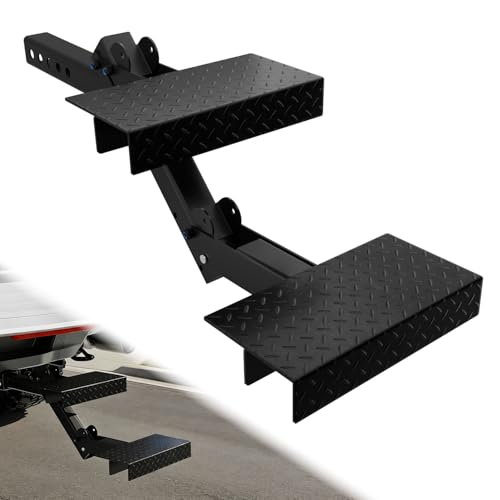
For rear access without removing the step between trips, Two-Step Folding Hitch Step folds and locks in place on a 2-inch receiver. Its two platforms each measure 12 by 6 inches, with 5.2 inches between them, giving a two-level route up to the rear of an SUV, truck, RV, or van. This is the clearest match for someone who wants a step at the hitch rather than beside the cab. The limitation is placement: buyers who need a step next to a door should choose a side-mounted style instead.
Bottom line: Choose this if rear access and a 2-inch receiver match your truck.
Universal Aluminum Side Hoop Steps

For entry beside the cab, Universal Aluminum Side Hoop Steps provides a pair of bolt-on side hoop steps rather than a rear hitch platform. The cast-aluminum steps measure 12 inches long, 7 inches wide, and 11 inches high; each is rated for up to 350 pounds. This setup can also help with roof or cargo access, where a side step is more convenient than reaching around to the receiver. Fitment is the main limitation: check the vehicle-specific fit guide before choosing a universal product, especially for model years outside its 1967–2020 range.
Bottom line: Pick this for side-door access when the vehicle fit guide confirms compatibility.
Five-Step Wide Dog Stairs
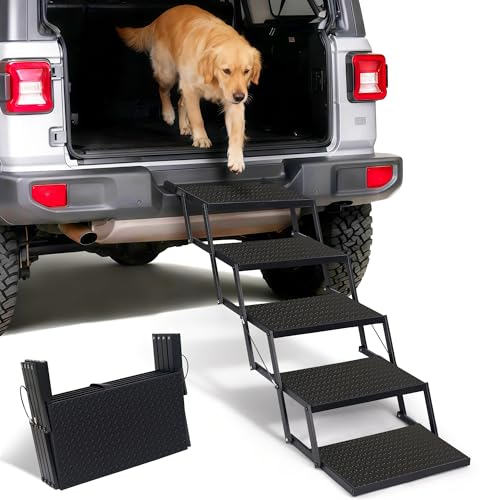
For a dog rather than a person, Five-Step Wide Dog Stairs offers five wide stairs intended mainly for an SUV or truck cargo area. The 17-inch-wide steps have molded waterproof, non-slip surfaces, and the stair unit weighs 9.9 pounds; padded handles and a carabiner are meant to protect the vehicle and limit movement. It may also work at a side or rear door if the opening is wider than 17 inches. This is not a passenger step: measure the opening for side-door use and keep the stair secured as intended.
Bottom line: Choose these for a dog that needs a broad route into the cargo area.
Four-Step Aluminum Dog Stairs

For a dog needing an adjustable approach rather than a fixed vehicle step, Four-Step Aluminum Dog Stairs has four steps and two angle options, low angle and normal stretch. Its non-slip paw-print surface and rubber mat are intended to help with traction and reduce movement. The stairs are described for use with trucks, SUVs, cars, and household furniture, so they can serve more than one access point. The product is a pet aid, not a step for passengers; buyers seeking a human entry step should choose a hitch or side-mounted design.
Bottom line: Pick these for a dog when the adjustable angle suits its approach.
How to Choose a Truck Entry Step
Start with the point of entry: a hitch step serves the rear, while a hoop step or running board serves the side door. Hitch-mounted steps depend on the receiver size, so match the receiver opening before selecting one; a 2-inch receiver is common on many trucks, but verify the truck’s actual receiver. Side steps use vehicle-specific mounting points, and universal fit claims do not guarantee that brackets line up on every cab or frame. With frequent cab entry, choose a side-mounted step; for occasional access to a bed or cargo area, rear access may be more useful. Keep pet stairs separate from passenger steps because their tread spacing and intended load use differ.
Hitch Steps Versus Side Steps
Hitch steps mount at the rear receiver, while side steps attach below a door, so the right style depends on where a person needs to climb. A rear step can help reach a tailgate or cargo area but may be awkward when entering the cab. Hoop steps provide a small foothold near a door; longer running boards distribute footholds along the cab and can assist multiple passengers. Before buying a hitch step, confirm both receiver size and clearance with the hitch accessory in place. Before choosing bolt-on side steps, check the exact cab and mounting configuration. No entry step replaces three-point contact when climbing: keep two hands and one foot, or two feet and one hand, in contact with the vehicle.
| Need | Step style | Check first |
|---|---|---|
| Rear cargo or tailgate access | Hitch step | Receiver opening size |
| Cab-side entry | Hoop step or running board | Vehicle mounting fit |
| Pet access | Foldable dog stairs | Opening width and secure attachment |
Measuring Fit and Entry Height
Measure the actual entry point before choosing a step: receiver openings, side doors, and tire positions are different fit constraints. For dog stairs used at a side door, the opening must exceed the stair width; the 17-inch width of Five-Step Wide Dog Stairs makes that check especially important. A hitch step must match the receiver opening, while a side step needs the correct bracket position and enough clearance beneath the door. Consider the user’s reach as well as the measurement: a low foothold can require less lift, but an overly narrow or unstable platform is harder to use. Park on level ground and confirm that the step sits securely before climbing.
Using and Maintaining Truck Steps Safely
Keep a step clean and dry enough to maintain traction, and inspect mounting points regularly for looseness, corrosion, or damage. Salt, mud, and road debris collect around exposed hitch hardware and side-step brackets, so rinse those areas after harsh conditions and check bolts according to the vehicle and step maker’s instructions. Do not exceed a step’s weight rating, and remember that a rating for one step is not automatically a rating for a pair or for a moving load. Foldable designs should be locked in their travel position before driving. Dog stairs should be clipped or otherwise secured as intended and placed on firm, level ground.
Frequently Asked Questions
Can a hitch step fit any truck receiver?
No, a hitch step must match the receiver opening and leave usable clearance. Measure the receiver before choosing, because 2-inch and 1.25-inch openings are common sizes.
Are hoop steps better than running boards?
Hoop steps provide an individual foothold near a door, while running boards offer a longer step along the cab. For several passengers or a long cab, the longer board gives more entry positions; check the vehicle-specific mounting fit either way.
How wide should dog stairs be for a truck door?
The stair unit must be narrower than the usable door opening, with room to position it securely. For a 17-inch-wide stair, measure the clear opening and do not assume a nominal door size is the usable width.
How should I climb into a tall truck safely?
Use three points of contact while climbing: two hands and one foot, or two feet and one hand. Step on a stable, dry foothold, and do not jump down from the cab, which can increase impact on joints.
Can a truck step help reach the roof?
A side-mounted step can provide a foothold near the cab, but the user still needs safe handholds and firm footing. For roof or cargo access, select a step specifically intended for that use and respect its load rating.