
Tall Rubber Boots for Women: 3 Models Compared

Western Chief Garden Play Tall Rain Boot is the best starting point for tall rubber boots for women if a removable insole and soft poly-cotton lining matter most. Choose Asgard Women’s Knee-High Rain Boots for a knee-high design with a tyre-pattern sole, or Lezzglt Women’s Tall Rain Boots if you want a boot marketed for muddy work and outdoor activities.
Rain boots are waterproof footwear for wet ground, but they can feel warm during extended wear; check shaft height and calf fit against your needs before choosing.
We earn a commission if you buy through links on this page. As an Amazon Associate I earn from qualifying purchases. Products are compared on manufacturer specifications, not hands-on testing.
- Best overall: Western Chief Garden Play Tall Rain Boot – The rubber boot has a removable EVA insole and a poly-cotton lining.
- Best for knee-high coverage: Asgard Women’s Knee-High Rain Boots – Its knee-high design and tyre-pattern sole distinguish it from the others.
- Best for muddy outdoor work: Lezzglt Women’s Tall Rain Boots – It is marketed for farming, fishing, dog walking and muddy work.
| Product | Best for | Lining | Insole | Shop |
|---|---|---|---|---|
| Western Chief Garden Play Tall Rain Boot | Removable insole | Poly-cotton | Removable EVA | Check Price on Amazon |
| Asgard Women’s Knee-High Rain Boots | Knee-high coverage | Quick-dry textile | Removable molded | Check Price on Amazon |
| Lezzglt Women’s Tall Rain Boots | Muddy outdoor tasks | — | — | Check Price on Amazon |
Tall Rubber Boots for Women
Compare the boot construction and interior features to find a pair that suits your wet-weather routine.
Western Chief Garden Play Tall Rain Boot

Western Chief Garden Play Tall Rain Boot stands apart with its removable EVA insole, which you can take out for cleaning or replacement. The boot uses rubber and handmade vulcanized construction, with a poly-cotton lining intended to absorb moisture. Its rubber lug outsole is suited to wet-weather and yard use. Choose it if the insole feature and lined interior matter more than a quick-drying textile lining. The specifications give no shaft measurement, so buyers who need a precise height for calf coverage should confirm the fit before ordering.
Bottom line: Pick this pair if a removable insole and soft lining are priorities.
Asgard Women’s Knee-High Rain Boots
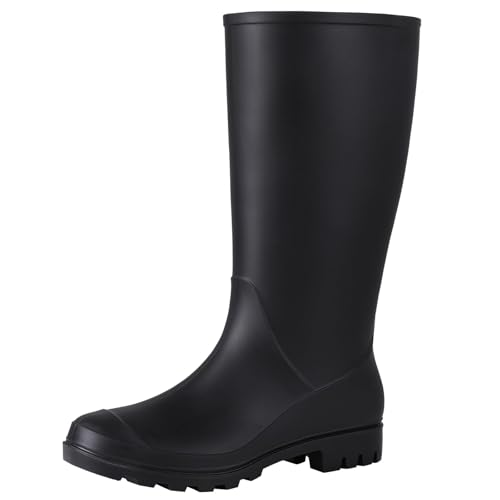
Asgard Women’s Knee-High Rain Boots is the clearest knee-high option here, with a quick-drying textile lining and removable molded insole. Its rubber sole has a tyre-pattern design intended to improve grip on wet ground, and a pull loop helps with taking the boots on and off. That combination suits rainy walks and gardening when easier entry and a removable footbed are useful.
Bottom line: Choose this pair when knee-high coverage and a pull loop are useful.
Lezzglt Women’s Tall Rain Boots

Lezzglt Women’s Tall Rain Boots is marketed for a broad mix of muddy outdoor tasks, including farming, fishing, camping and dog walking. The specifications highlight a non-slip PVC sole with a textured pattern intended to add grip, making tread the distinguishing feature to consider for slick paths. The size is 8.5. Unlike the other exact-fit options, no lining or insole feature is provided, so buyers who need a particular interior feel should verify those points before ordering. Tread can help on wet ground but cannot eliminate slipping risk.
Bottom line: Pick this pair if you want a tall boot marketed for muddy outdoor work.
How to choose tall rubber boots for women
Start with shaft coverage, calf fit and the sole pattern rather than style alone. A knee-high boot can cover more of the lower leg than a mid-calf boot, but the shaft should not rub or restrict movement when you bend. Measure around the widest part of your calf while wearing the socks you expect to use; compare that measurement with the maker’s shaft circumference when available. For wet yard work, look for visible tread grooves, since smooth soles offer less pattern to engage muddy ground. If you stand for long periods, a removable insole can make cleaning or replacing the footbed simpler.
Rubber and PVC rain boots compared
Rubber and PVC boots both serve as waterproof rain footwear, but material alone does not determine comfort or grip. Seamless molded construction can reduce seam openings, while a lined interior may feel different from an unlined one in warm weather. Deep grooves provide more tread pattern than a smooth outsole, though no tread makes a wet, slick surface risk-free. Choose by the conditions you expect: for frequent muddy paths, prioritize a pronounced lug or patterned sole; for occasional rain, shaft fit and ease of putting the boots on may matter more.
Use this quick comparison to match a need to a boot feature:
| Need | Feature to prioritize |
|---|---|
| More leg coverage | Knee-high shaft |
| Removable footbed | Removable insole |
| Muddy walking | Grooved or lugged tread |
| Room for wider calves | Roomier shaft fit |
Getting the right shaft and calf fit
A boot should let you walk and bend without the top edge digging into your calf. Measure calf circumference at its widest point and shaft height from the floor beside the heel to the top opening; then compare both numbers with the maker’s size chart. Wear the socks intended for use during measurement because thicker socks take up interior room. If your calf measurement is close to a boot’s circumference, allow room for movement and clothing rather than assuming the shaft will stretch. Never size up only for calf width if the foot then slides; heel movement can cause rubbing.
Staying steady and comfortable in rain boots
Wet leaves, smooth tile and algae-covered surfaces can remain slippery even when boots have tread. Walk slowly on slick ground, shorten your stride, and use a handrail on steps; do not treat a non-slip label as a guarantee. Waterproof rubber and PVC can trap warmth and perspiration because they do not ventilate like mesh footwear. For longer wear, choose socks that manage moisture and let boots dry fully between uses. Remove a removable footbed for separate drying when the boot design allows it, and clean mud from outsole grooves so buildup does not flatten the tread pattern.
Frequently Asked Questions
How should tall rain boots fit around the calf?
Tall rain boots should leave enough room to walk and bend without the shaft pinching or rubbing. Measure the widest part of your calf over your usual socks and compare that number with the maker’s shaft circumference.
Are rubber rain boots breathable for all-day wear?
Rubber rain boots generally ventilate less than mesh shoes, so feet may feel warm or damp during extended wear. Moisture-managing socks and fully drying the boots between uses can help.
Can I wear tall rain boots on muddy trails?
Treaded rain boots can work for muddy paths, but they are not a substitute for hiking footwear on rough or steep terrain. Choose pronounced grooves and take shorter steps on slick ground.
How do I measure rain boot shaft height?
Measure vertically from the ground beside the heel to the top edge of the boot. Compare that figure with the maker’s measurement, since boot height can determine whether the shaft reaches your preferred point on the leg.
Should I wear thick socks with rubber boots?
Wear the socks you expect to use when checking boot fit, because thick socks reduce interior space. If your heel slips or toes feel cramped in those socks, the fit may not suit longer walks.