
Tea Tree Oil Wipes for Eye Mites: 4 Options Compared

For tea tree oil wipes marketed specifically for eye mites, Cliradex Tea Tree Oil Extract Towelettes is the closest match because its maker claims the towelettes target Demodex; the other relevant options are general eyelid cleansers. Choose a general cleanser if you only want to remove everyday lid and lash buildup, not a mite-focused product.
Demodex-related eyelid symptoms need professional assessment: cleansing wipes are not a substitute for diagnosis or prescribed care.
We earn a commission if you buy through links on this page. As an Amazon Associate I earn from qualifying purchases. Products are compared on manufacturer specifications, not hands-on testing.
- Best overall: Cliradex Tea Tree Oil Extract Towelettes – Its purpose specifically names Demodex, unlike the general eyelid-cleansing alternatives.
- Best for a larger pack: PURELID 100-Count Tea Tree Eyelid Wipes – The 100-count pack provides more wipes than the other relevant options.
- Best for multi-ingredient cleansing: NOVEHA 60-Count Tea Tree Eyelid & Lash Wipes – Its formula names tea tree oil, green tea, chamomile, aloe vera and hyaluronic acid.
| Product | Best for | Count | Packaging | Mite positioning | Shop |
|---|---|---|---|---|---|
| Cliradex Tea Tree Oil Extract Towelettes | Demodex-focused care | 24 wipes | Towelettes | Names Demodex | Check Price on Amazon |
| PURELID 100-Count Tea Tree Eyelid Wipes | Larger wipe supply | 100 wipes | Individually wrapped | General lid hygiene | Check Price on Amazon |
| NOVEHA 60-Count Tea Tree Eyelid & Lash Wipes | Multi-ingredient cleanser | 60 wipes | Individually wrapped | General lid hygiene | Check Price on Amazon |
| 60-Count Tea Tree Oil Eyelid Wipes | Sensitive-skin routine | 60 wipes | Individually wrapped | General lid hygiene | Check Price on Amazon |
Tea tree oil eyelid wipes compared
The key distinction is whether the wipe is marketed for Demodex or for routine eyelid and lash cleansing.
Cliradex Tea Tree Oil Extract Towelettes

Unlike the general lid cleansers here, this 24-count option is marketed specifically for eyelid hygiene and Demodex. Its maker claims the tea tree oil extract formula eliminates Demodex mites; treat that as a product claim, not a diagnosis or guarantee of treatment. The formula excludes fragrance, alcohol, parabens and sulfates. This is the closest match for someone seeking a mite-focused wipe, but the small pack may not suit someone who wants a larger supply. Keep any cleanser out of the eye itself, and stop if it causes irritation.
Bottom line: Choose this if mite-focused marketing is your priority and you will use it only as directed.
PURELID 100-Count Tea Tree Eyelid Wipes

The 100 individually wrapped wipes set this option apart for someone who wants a larger supply of general eyelid cleanser. Tea tree, chamomile, hyaluronic acid, green tea and aloe are named ingredients, and the maker positions the wipes for daily lid and lash hygiene. The product text also makes soothing and irritation-related claims; those should not be treated as proven treatment for eye conditions. This is a partial match for a search focused on mites because it is described as a cleanser, not a Demodex-specific wipe. Choose it for count and daily cleansing, not as a substitute for an eye exam.
Bottom line: Pick this when a 100-count pack matters more than a mite-specific claim.
NOVEHA 60-Count Tea Tree Eyelid & Lash Wipes

Green tea, chamomile, aloe vera and hyaluronic acid join tea tree oil in this 60-count eyelid and lash cleanser, making its ingredient mix the distinguishing feature. Each wipe is individually wrapped, and the maker describes it for routine removal of makeup, oil, dirt and everyday impurities without harsh rubbing. Its purpose is general cleansing rather than a Demodex-specific regimen, so it is only a partial match for mite-focused searches. Select it for individually portioned daily cleansing; anyone seeking care for persistent eyelid irritation should have an eye professional assess the cause.
Bottom line: Choose this for individually wrapped, multi-ingredient everyday lid cleansing.
60-Count Tea Tree Oil Eyelid Wipes
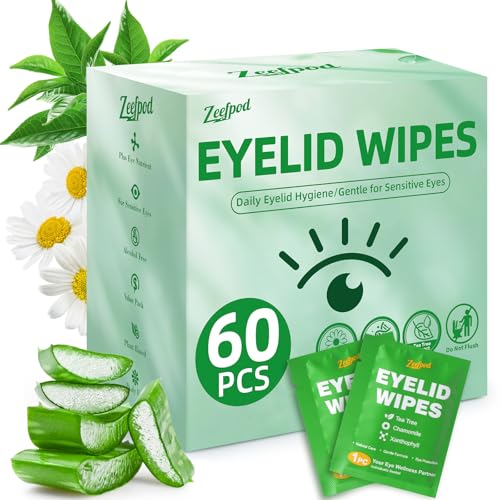
This 60-count wipe is positioned for a sensitive-skin routine and names aloe vera, tea tree oil and xanthophyll. The maker describes it as hydrating and suitable for daily cleansing, with no-rinse use. Those are product claims, not evidence that it treats Demodex or other eye conditions. The pack is a partial match because the text presents general eye-area care rather than a mite-focused use. Consider it only for routine lid cleansing if its ingredients suit you, and avoid use if it triggers stinging, redness or other irritation.
Bottom line: Pick this for a general tea tree wipe routine, not mite treatment.
How to choose tea tree eyelid wipes for mites
Start by distinguishing a Demodex-focused claim from routine lid hygiene: only Cliradex Tea Tree Oil Extract Towelettes explicitly names Demodex, while the other relevant wipes are positioned as general cleansers. Demodex mites are microscopic and can be present on facial skin; symptoms such as itching, redness or crusting at the lash line do not confirm an infestation. An eye-care professional can examine the lashes and lids and recommend appropriate care. Tea tree oil and its components can irritate the eye area, so do not let cleanser enter the eye and stop use if irritation develops. If symptoms persist or vision changes, seek prompt eye-care advice rather than increasing wipe frequency.
Using wipes safely around the lash line
Use a wipe only on the external eyelid and lashes, keeping it out of the eye and off the inner lid surface. The delicate ocular surface can react to cleansers and essential-oil ingredients; a wipe being described as gentle does not remove that risk. Wash hands before handling the eyelids, and do not share wipes or reuse a single-use towelette. Avoid applying a product over contact lenses unless its directions specifically permit it; remove lenses first if needed. Stop if burning, swelling or worsening redness occurs, and rinse the eye with clean water if product gets inside. Severe pain or vision change warrants urgent professional care.
When eyelid symptoms need an eye exam
Persistent lash-line itching, redness, debris or recurrent inflammation deserves an eye-care assessment because several conditions can look alike. Demodex is one possible contributor, but a wipe cannot confirm its presence or establish the cause of symptoms. A clinician may examine the lashes and eyelid margins and decide whether a specific treatment is appropriate; avoid self-treating with concentrated tea tree oil, which can injure or irritate the ocular surface. Seek prompt care for eye pain, light sensitivity, significant swelling or blurred vision. For mild symptoms, arrange routine evaluation if they continue despite gentle external cleansing.
What to expect from wipe counts and packaging
Count and packaging affect convenience, not whether a wipe treats mites: the options here range from 24 to 100 wipes, and several are individually wrapped. A single-use packet can help keep an unused wipe separate from hands and surfaces, but it does not make the formula sterile or appropriate for the eye itself. Use one wipe as directed and discard it after use; do not store a damp, opened wipe for later. The 100-count choice suits people prioritizing supply, while a smaller pack may be easier to carry. Check that the product directions permit your intended eyelid use before beginning a routine.
Frequently Asked Questions
Can tea tree oil wipes get rid of eye mites?
A wipe marketed for Demodex is not proof of diagnosis or a guaranteed treatment. An eye-care professional can assess persistent lash-line symptoms and recommend care; keep tea tree products out of the eye because they can irritate its surface.
How do I know if eyelid itching is from Demodex?
Itching alone cannot identify Demodex because eyelid irritation has multiple possible causes. Crusting or debris at the lash line also warrants assessment if it persists, rather than assuming mites are the cause.
Can eyelid wipes be used while wearing contacts?
Remove contact lenses before cleaning the eyelids unless the product directions specifically allow use with lenses in place. Keep the wipe and its solution away from the eye itself, and reinsert lenses only when the eye is comfortable.
What should I do if a wipe stings my eye?
Stop using the wipe and rinse the eye with clean water if product entered it. Seek prompt professional advice for ongoing pain, light sensitivity, swelling or vision changes.
Can I use tea tree oil directly on my eyelids?
Do not apply undiluted tea tree oil to the eyelids or near the eye; essential oils can irritate or injure the ocular surface. Use only products intended for external eyelid cleansing and seek professional advice for persistent symptoms.