
Tommie Copper Red Light Therapy: Wraps Compared

Tommie Copper Infrared Therapy Knee Wrap is the Tommie Copper red light therapy option for knee and other major-joint use, with 660nm red light and 880nm infrared light. Choose Tommie Copper Infrared & Red Light Therapy Mitt instead for hands or feet; shoppers who need adjustable light modes or a larger pad should consider a different style.
These wearable wraps use LEDs to deliver red and near-infrared light to a treatment area. Product claims about recovery or relief are not guaranteed outcomes.
We earn a commission if you buy through links on this page. As an Amazon Associate I earn from qualifying purchases. Products are compared on manufacturer specifications, not hands-on testing.
- Best overall: Tommie Copper Infrared Therapy Knee Wrap – Designed for knees and other major joints, with 660nm red and 880nm infrared light.
- Best for hands and feet: Tommie Copper Infrared & Red Light Therapy Mitt – The mitt is designed for use on both hands and feet.
- Best for adjustable sessions: CopperRed Flex Wrap – Offers three light modes, eight intensity levels, and an adjustable timer.
| Product | Best for | Wavelengths | Session guidance | Fit or coverage | Shop |
|---|---|---|---|---|---|
| Tommie Copper Infrared Therapy Knee Wrap | Knees and joints | 660nm red; 880nm infrared | 20 minutes; up to 3 sessions daily | Knee and major joints | Check Price on Amazon |
| Tommie Copper Infrared & Red Light Therapy Mitt | Hands and feet | 660nm red; 880nm infrared | 20 minutes; up to 3 sessions daily | Both hands and feet | Check Price on Amazon |
| CopperRed Flex Wrap | Adjustable controls | 660nm red; 850nm near infrared | Adjustable timer; 5-minute increments | Shoulders, back, arms, legs, knees | Check Price on Amazon |
| LOVTRAVEL Large Red and Near-Infrared Pad | Large treatment area | 660nm red; 850nm infrared | — | 15.7 × 8 inches | Check Price on Amazon |
Tommie Copper Red Light Therapy Wraps
Compare the Tommie Copper wraps with two alternative red and near-infrared light devices by treatment area and controls.
Tommie Copper Infrared Therapy Knee Wrap

Tommie Copper Infrared Therapy Knee Wrap is the joint-focused choice, with a design intended for the knee and other major joints. The wrap uses high-powered LED microchips combining 660nm red light with 880nm infrared light. Tommie Copper recommends one 20-minute session daily and says users can do up to three sessions per day per treatment area. Its one-size format may suit shoppers who want a single wearable wrap rather than a larger pad. The main limitation is its joint-oriented fit: choose another style if your priority is hand or foot coverage.
Bottom line: Choose this wrap when knee or major-joint placement is your priority.
Tommie Copper Infrared & Red Light Therapy Mitt

Tommie Copper Infrared & Red Light Therapy Mitt differs from the knee wrap by focusing on hand and wrist use while also being designed for both hands and feet. Its LED microchips combine 660nm red light and 880nm infrared light. Tommie Copper recommends a 20-minute daily session and says up to three sessions per day per treatment area are possible. That guidance makes it a fit for shoppers seeking a wearable option for smaller extremities. The tradeoff is its narrower intended use; choose a broad joint wrap if you need knee placement.
Bottom line: Pick this mitt when hand, wrist, or foot placement matters most.
CopperRed Flex Wrap

CopperRed Flex Wrap stands apart from the Tommie Copper wraps with three light modes, eight intensity settings, and a timer adjustable in 5-minute increments. It uses 660nm red light and 850nm near-infrared light across 120 LEDs with 360 chips total. Its elastic strap and flexible fabric are intended to conform to areas including shoulders, back, arms, legs, and knees. This is a broader-placement alternative for someone who wants control over mode and intensity. The limitation is that its wavelengths differ from Tommie Copper’s 880nm infrared output.
Bottom line: Choose this alternative for mode and intensity adjustment across several body areas.
LOVTRAVEL Large Red and Near-Infrared Pad
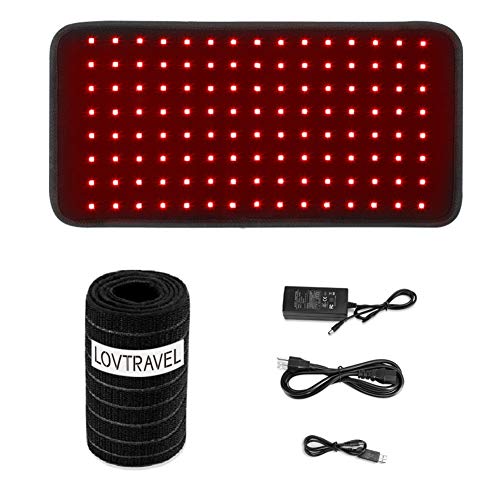
LOVTRAVEL Large Red and Near-Infrared Pad is the pad-style alternative, with a 15.7-by-8-inch treatment area rather than the joint- or mitt-focused shape of the Tommie Copper options. The maker describes an alternating array of 120 red light units at 660nm and 240 infrared units at 850nm, along with 25W LED lights and pulse mode. Its larger area may appeal when coverage matters more than a particular wrap fit. The limitation is the need to position a pad over the target area rather than use a dedicated knee or hand-and-foot wrap.
Bottom line: Pick this pad when its larger stated coverage area suits your target area.
How to choose a red light therapy wrap
Start with the body area and the wavelength, then compare controls. Red light in these products is 660nm; the near-infrared output differs, with Tommie Copper at 880nm and the alternatives at 850nm. A wearable wrap or mitt is shaped for particular placements, while a pad trades that targeted shape for a broader surface. Match the device’s intended area to the area you want to position it over; with an area wider than 8 inches, the LOVTRAVEL pad’s 8-inch width may not cover it in one placement. Wavelength alone does not establish effectiveness or guarantee an outcome. Light-mode, intensity, and timer controls can affect how sessions are set, but do not imply a clinical benefit.
What the wavelengths and controls mean
Red light is visible; near-infrared light is generally invisible to the eye, so do not judge whether infrared is operating by looking for a glow. The wavelengths are close but not identical: Tommie Copper combines 660nm and 880nm, while the alternatives pair 660nm with 850nm. That difference is a specification, not proof that one works better. The CopperRed offers red-only, near-infrared-only, and combined modes, plus eight intensity levels; the other products here do not provide comparable selectable modes in their features. A timer divided into 5-minute increments lets a user set duration more specifically than a single fixed session length. Avoid staring into LEDs, and use eye protection if the device instructions call for it.
Wraps, mitts, and pads compared
Choose a wrap or mitt when its shape matches the target area; choose a pad when its surface coverage better matches the area. A wrap can be easier to keep positioned on a joint, while a pad requires placement and may need repositioning for larger or curved areas. The maker identifies knee and major-joint use for one Tommie Copper model, and hand, wrist, and foot use for the other. The alternatives name more body areas or a measured pad size. Use the chart to narrow by format, not to infer treatment results. Measure the target area before choosing a pad if you need it covered in a single position.
| Need | Format to consider | Decision point |
|---|---|---|
| Knee or major joint | Joint wrap | Placement and joint fit |
| Hands or feet | Mitt | Small-area access |
| Several body areas | Flexible strap wrap | Mode and intensity controls |
| Broader flat coverage | Pad | Compare area with 15.7 × 8 inches |
Session safety and practical use
Follow the device’s own session guidance and avoid exceeding its daily limit. Tommie Copper recommends a 20-minute session and says up to three sessions per day per treatment area are possible; that is maker guidance, not a promise of results. Keep the light aimed at the intended area and do not look directly into LEDs, particularly because near-infrared output may not appear bright. If you take medication that increases light sensitivity, have a condition affected by light, or have questions about use around an injury, consult a healthcare professional before starting. Stop using a device if it causes discomfort, and do not use light therapy as a substitute for medical care.
Frequently Asked Questions
Is 850nm infrared the same as 880nm infrared?
No, 850nm and 880nm are different near-infrared wavelengths. The Tommie Copper wraps list 880nm, while the alternatives here list 850nm; the difference alone does not establish which is more effective.
How long is a typical red light session?
Session duration depends on the device guidance; Tommie Copper recommends 20 minutes per session. Its guidance allows up to three sessions daily per treatment area, so do not assume that timing applies to other devices.
Can I look at red light therapy LEDs?
Avoid staring directly into LED emitters, and use protective eyewear if the device instructions require it. Near-infrared output can be invisible, so lack of visible light does not mean the infrared feature is off.
Should I use red light therapy with photosensitizing medication?
Check with a healthcare professional before use if medication or a health condition makes you sensitive to light. Do not use a light device as a replacement for medical evaluation or treatment.
How do I choose between a wrap and a light therapy pad?
Choose a wrap or mitt when its named body area matches your target; choose a pad when its measured coverage suits the area. For the pad here, compare the target with its 15.7-by-8-inch dimensions before relying on one placement.