
Touch in Sol No Poreblem Primer: Fit and Formula

For a standalone pore-blurring primer, Touch in Sol No Poreblem Primer is the closest fit: its 1.01-ounce tube is presented for mattifying and smoothing before makeup. Choose another option if you also want setting powder or a green base for color correction.
Primer is applied before foundation to create a smoother-feeling makeup base; it does not replace sunscreen or skincare.
We earn a commission if you buy through links on this page. As an Amazon Associate I earn from qualifying purchases. Products are compared on manufacturer specifications, not hands-on testing.
- Best overall: Touch in Sol No Poreblem Primer – A standalone primer in a 1.01-ounce tube, rather than a set with another product.
- Best for setting powder: Touch in Sol Primer and Powder Duo – Pairs the pore-blurring primer with translucent loose powder.
- Best for two primer shades: No Poreblem and Redness Correcting Duo – Combines the pore-blurring primer with a green redness correcting base.
| Product | Best for | Included products | Shade | Size | Shop |
|---|---|---|---|---|---|
| Touch in Sol No Poreblem Primer | Standalone primer | Primer | Pink | 1.01 fl oz | Check Price on Amazon |
| Touch in Sol Primer and Powder Duo | Primer and powder | Primer and loose powder | Translucent | — | Check Price on Amazon |
| No Poreblem and Redness Correcting Duo | Redness correction | Two primers | Light pink and light green | 1.01 fl oz each | Check Price on Amazon |
| No Poreblem Primer and Redness Correcting Set | Two-base set | Two primers | Pink and green | 1.01 fl oz | Check Price on Amazon |
| Touch in Sol Redness Correcting Base | Green correcting base | Green primer | Green | 1.01 fl oz | Check Price on Amazon |
Touch in Sol No Poreblem Primer options
Compare the standalone primer with sets that add powder or a color-correcting base.
Touch in Sol No Poreblem Primer

Touch in Sol No Poreblem Primer is the standalone option among these products, so it suits shoppers looking for the No Poreblem pore primer without a second makeup product. The maker says the formula is lightweight, hydrates skin, helps control sebum, and creates a velvety base before or after makeup. Its size is 1.01 fluid ounces. The formula is also promoted for blurring pores and fine lines, but those are appearance claims, not a change to skin structure. The limitation is that this tube does not add setting powder or a green correcting base.
Bottom line: Choose this if you want the standalone pore-blurring primer rather than a multi-product set.
Touch in Sol Primer and Powder Duo
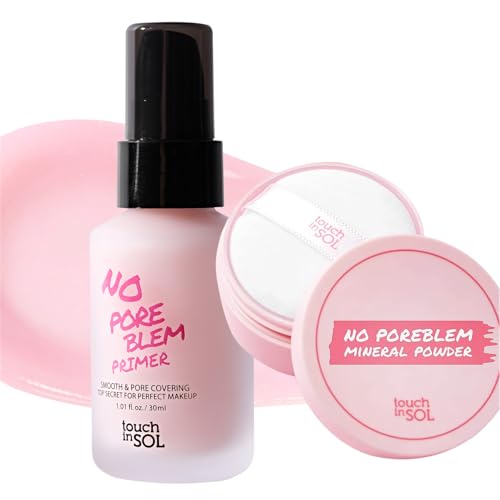
Touch in Sol Primer and Powder Duo adds a translucent loose setting powder to the pore-blurring primer, making it the set to consider if you want a finishing step as well as a base. The maker says the powder provides lightweight oil control and helps makeup resist transfer, while the primer is intended to smooth pores and fine lines and help foundation grip. The set is aimed at oily and combination skin.
Bottom line: Choose this if you want a primer-and-powder combination in one set.
No Poreblem and Redness Correcting Duo
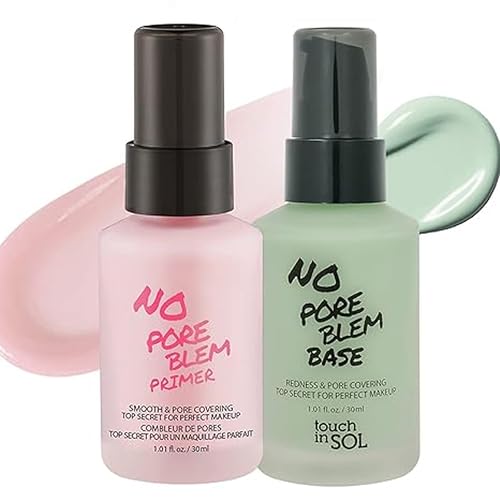
No Poreblem and Redness Correcting Duo pairs the pore-focused primer with a green, Cica-based redness correcting base, unlike the standalone tube. The maker says the green pigments neutralize the appearance of redness and the set is designed for oily skin. Each primer is 1.01 fluid ounces. A two-shade set is useful when you want to choose between a pore-blurring base and a green tone-correcting base, but this is not a powder set. The color-correction claim concerns the look of skin tone; it should not be treated as a claim to calm or treat a skin condition.
Bottom line: Choose this if you want both a pore primer and a green correcting base.
No Poreblem Primer and Redness Correcting Set

No Poreblem Primer and Redness Correcting Set combines a pink No Poreblem primer with a green redness correcting base, so its main distinction is the two-base format. The maker describes the pore primer as smoothing and mattifying, and the green base as a way to neutralize the look of redness. The set is intended for use before foundation. Choose it if you want both functions rather than a single primer. The limitation is that its shared 1.01-fluid-ounce size is given for the pack, so confirm the amount in each container if individual tube size is important.
Bottom line: Choose this if you want a pink pore primer and green correcting base together.
Touch in Sol Redness Correcting Base

Touch in Sol Redness Correcting Base is the green redness correcting base on its own, rather than the No Poreblem primer itself. The maker says its green pigments neutralize visible redness and that the lightweight base moisturizes; the formula is also promoted as pore minimizing. The single 1.01-ounce product suits someone whose priority is a green color-correcting step before foundation. It is not the best match for someone specifically seeking the standalone pink No Poreblem primer, and the maker’s references to rosacea should not be read as a treatment claim.
Bottom line: Choose this if green tone correction matters more than getting the standalone pore primer.
How to choose a pore primer
Choose a primer by the makeup concern it addresses and the step you need. A pore-blurring primer is meant to smooth the appearance of texture under foundation; a color-correcting base adds a tint, while a setting powder is applied after complexion makeup. These are different jobs, so a set with more pieces is not automatically a better fit. If your main goal is a smoother base, prioritize the standalone primer; choose a duo when you will use its additional shade or powder. Apply a thin layer to clean, moisturized skin and let it settle before foundation. If makeup pills, reduce the amount or allow more time between layers rather than adding another coat.
When to choose a green base
Green color corrector is used to visually counter red tones because green and red are complementary colors. Use a small amount only where redness is visible, then blend the edge before applying foundation; a heavy layer can leave a noticeable cast, especially when it is not fully blended. A green primer is different from skincare for rosacea, irritation, or acne scarring, and makeup should not be relied on to treat those concerns. For sensitive skin, patch test a new cosmetic on a small area and stop use if irritation develops. A green base makes sense when redness correction is a specific makeup goal, not simply because it appears in a set.
Primer, powder, and duo formats compared
Pick the format that matches where you want help in your makeup routine. Primer goes on before complexion makeup; setting powder generally comes after foundation or concealer to reduce shine and help set the finish. Color-correcting base is targeted tint, not a substitute for either step. The table shows the practical distinction between the formats in this group.
| Format | Where it fits | Choose when |
|---|---|---|
| Standalone pore primer | Before foundation | You want a pore-focused base |
| Primer and powder duo | Before and after complexion makeup | You want a setting step too |
| Primer and green-base duo | Before foundation | You want pore blurring plus color correction |
For oily skin, a mattifying primer or powder can help manage the look of shine, but layering too much product can emphasize texture. Start with a thin layer and add only where needed.
How to layer primer with sunscreen
Apply sunscreen according to its label and give it time to form an even layer before makeup; rubbing aggressively with primer can disrupt the base underneath. Use a small amount of primer across the areas where you want a smoother makeup surface, then blend foundation rather than dragging it over the skin. If products separate or pill, try less primer and longer settling time. Remove makeup gently at the end of the day, especially around pores and the eye area.
Frequently Asked Questions
Does primer go on before foundation?
Yes, primer is generally applied after skincare and before foundation. Let the skincare layer settle first, then use a thin primer layer so foundation can spread without excess buildup.
Can green primer cover facial redness?
Green-tinted makeup can visually counter red tones when used sparingly and blended well. Apply it only where needed and layer foundation over it; it is cosmetic color correction, not treatment for rosacea or irritation.
Should setting powder go before or after primer?
Setting powder generally goes after foundation or concealer, while primer goes underneath complexion makeup. A thin layer of powder is usually easier to control than applying a heavy amount across the whole face.
Can I use primer over sunscreen?
Yes, primer is commonly layered over sunscreen once the sunscreen has settled. Use a light touch to avoid disturbing the sunscreen film, and do not treat primer as sun protection unless it has a SPF.
How much pore primer should I apply?
Start with a thin layer, concentrating on the areas where you want makeup to look smoother. If foundation pills or feels heavy, use less primer or allow more time between skincare, sunscreen, and makeup layers.