
Trim for Bullnose Corners: Gauges and Blocks

For most trim layouts around 3/4-inch bullnose corners, choose a marking gauge if you need to lay out three-piece trim; choose a corner block if you want to avoid miter cuts at the baseboard. Bullnose corners are rounded drywall outside corners, so the right choice depends on whether you need a layout tool or a finished trim piece.
Pick a different option when the baseboard thickness or height does not match the block, or when your drywall corner radius differs from 3/4 inch.
We earn a commission if you buy through links on this page. As an Amazon Associate I earn from qualifying purchases. Products are compared on manufacturer specifications, not hands-on testing.
- Best overall: Bullnose Trim Gauge 2-Pack – A 2-pack gauge is specified for laying out three-piece trim on 3/4-inch rounded drywall corners.
- Best for thicker baseboards: Primed Pine Bullnose Baseboard Block, 3/4-Inch – The pine corner block fits baseboards up to 3/4 inch thick and 5.5 inches tall.
- Best for thin baseboards: Pine Bullnose Baseboard Block, 1/2-Inch – This pine block is sized for baseboards 1/2 inch thick and 5.5 inches tall.
| Product | Best for | Type | Material | Shop |
|---|---|---|---|---|
| Bullnose Trim Gauge 2-Pack | Three-piece layout | Marking gauge | ABS plastic | Check Price on Amazon |
| Pine Bullnose Baseboard Block, 1/2-Inch | Thin baseboards | Baseboard corner block | Pine | Check Price on Amazon |
| StepOK Bullnose Corner Gauge | Portable layout | Marking gauge | ABS plastic | Check Price on Amazon |
| Bullnose Trim Gauge, Orange | Single-piece gauge | Marking gauge | ABS plastic | Check Price on Amazon |
| Primed Pine Bullnose Baseboard Block, 3/4-Inch | Thicker baseboards | Baseboard corner block | Primed pine | Check Price on Amazon |
Trim for Bullnose Corners
Choose a marking gauge for layout or a corner block to finish a baseboard outside corner without a miter cut.
Bullnose Trim Gauge 2-Pack
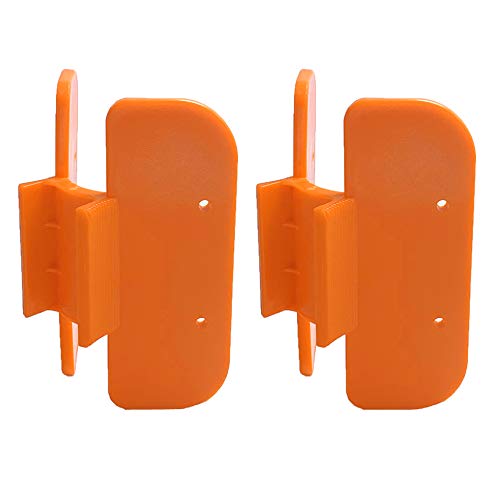
Unlike a finished corner block, this two-piece set is a layout tool for marking trim around a rounded drywall corner. Each gauge is 4.1 by 3.1 by 1.8 inches and made of ABS plastic. The maker says it helps lay out tight-fitting three-piece corners on 3/4-inch bullnose corners, which suits trim work where several pieces meet around the curve. The set does not replace the installed molding; it helps mark it. Choose a corner block instead if you want a pre-shaped baseboard corner piece rather than a marking aid.
Bottom line: Pick this set when you need to mark three-piece trim around a 3/4-inch bullnose corner.
Pine Bullnose Baseboard Block, 1/2-Inch

This pine block is the thin-baseboard option among the corner pieces, with a 1/2-inch thickness and 5.5-inch height. It is intended for standard 3/4-inch-radius bullnose corners, and the maker says it eliminates the need for time-consuming miter cuts. The block can be cut down to match shorter baseboards, making it suitable when the baseboard is no taller than its original height. Its narrow thickness is the limitation: choose another option if the baseboard is thicker than 1/2 inch.
Bottom line: Pick this block for a 1/2-inch-thick baseboard on a standard 3/4-inch bullnose corner.
StepOK Bullnose Corner Gauge

The StepOK gauge is a portable single marking tool for both crown and base molding, unlike the two-piece set. It is made of hard ABS plastic and measures about 102 mm long by 72 mm wide, or about 4.0 by 2.8 inches. The maker says it helps mark 3/4-inch rounded drywall corners for trim measurement and placement. This suits someone who wants one compact gauge for more than one molding task. It is not a baseboard block, so it will not provide a finished corner profile on its own.
Bottom line: Pick this gauge when portability and marking both crown and base molding matter.
Bullnose Trim Gauge, Orange

This single-piece orange ABS gauge is a straightforward choice for marking rounded corners, while the two-pack offers a second gauge. The maker says it is designed for bullnose trim layout on 3/4-inch rounded drywall and for crown molding, baseboard, and three-piece trim work. Its compact form suits a toolbox or drawer when a dedicated marking template is useful. The product name also mentions chair rail, but no additional chair-rail dimensions are given, so confirm the gauge suits your particular profile before relying on it for that use.
Bottom line: Pick this single gauge for basic layout on a 3/4-inch rounded drywall corner.
Primed Pine Bullnose Baseboard Block, 3/4-Inch

This primed pine corner block accommodates thicker baseboards than the 1/2-inch block, fitting stock up to 3/4 inch thick and 5.5 inches tall. It is made for standard 3/4-inch-radius bullnose corners, and the maker says it avoids time-consuming miter cuts. The white primed surface is ready for paint, and the block can be cut down in height for shorter baseboards. Its 5.5-inch original height is a constraint; measure the baseboard height and thickness before choosing it.
Bottom line: Pick this block when the baseboard is up to 3/4 inch thick and no taller than 5.5 inches.
Choosing a bullnose trim gauge or corner block
A gauge helps mark trim, while a corner block is the trim piece that finishes a baseboard outside corner. Use a gauge when the plan calls for several molding pieces to meet around the rounded drywall; choose a block when you want to avoid fitting two baseboard ends with a miter. A 3/4-inch radius is the fit described for these products, so measure the corner radius before selecting one. For baseboard blocks, also measure thickness and height: a block that is too thin or too tall will not align cleanly with the run. Do not treat a marking gauge as a substitute for an installed molding component.
Matching baseboard thickness and height
Match a corner block to the baseboard’s thickness first, then compare its height to the board. One block here is sized for 1/2-inch-thick baseboard; another accepts baseboard up to 3/4 inch thick. Both are 5.5 inches tall and can be cut down for shorter runs. A simple decision rule is to select the 3/4-inch block when the board is over 1/2 inch and no more than 3/4 inch thick; for a 1/2-inch board, use the thinner block. Measure the corner radius as well: the blocks are designed for the standard 3/4-inch bullnose radius, not every rounded corner profile.
The table separates marking tools from installed corner pieces.
| Need | Choose | Check before work |
|---|---|---|
| Mark trim around a curve | Bullnose gauge | 3/4-inch corner radius |
| Finish a baseboard outside corner | Corner block | Baseboard thickness and height |
Planning trim around a rounded drywall corner
Lay out the trim against the actual corner rather than assuming that every bullnose has the same curve. Bullnose corner gauges are useful as marking templates for consistent placement, especially where three pieces meet, but they do not cut or install the molding. For a clean fit, keep the molding profile and height aligned on both sides of the corner and make trial marks before cutting finished stock. Baseboard corner blocks avoid the angled joint used by a miter, but they still need to meet the baseboard edges without a visible step. When the trim is a different thickness or profile than the block, check the transition before installation.
Common bullnose trim fit mistakes
The most common mismatch is buying a block by corner radius alone and overlooking baseboard thickness. A 1/2-inch block is not the right match for a 3/4-inch-thick baseboard, even if both are intended for a 3/4-inch-radius corner. Height is another fit point: these blocks start at 5.5 inches, and cutting them down can accommodate shorter baseboards, not taller ones. A second mistake is expecting a gauge to serve as the visible trim; a gauge marks layout and must be paired with actual molding. Drywall corners can also have damaged or uneven edges, so correct the surface before marking the trim line.
Frequently Asked Questions
How do I measure a bullnose corner radius?
Measure from the point where the rounded corner begins to the point where it returns to the flat wall, using a ruler across the curve as a rough check. These gauges and blocks are specified for a 3/4-inch radius, so confirm the corner profile matches before laying out trim.
Can I use a bullnose gauge for baseboard trim?
Yes, the gauges are described for baseboard or base molding as well as crown molding. A gauge marks the layout; it is not a finished corner block or a cutting tool.
Do bullnose corner blocks eliminate baseboard miter cuts?
The maker says the corner blocks remove the need for time-consuming miter cuts at the outside corner. The baseboard still needs to align with the block, so match thickness and height before installation.
Can a 5.5-inch corner block fit shorter baseboards?
Yes, both blocks can be cut down in height to match shorter baseboards. Their starting height is 5.5 inches, so they are not a solution for baseboards taller than that.
What should I check before buying bullnose baseboard trim?
Check both the corner radius and the baseboard thickness and height. The blocks here fit a 3/4-inch-radius corner and are 5.5 inches tall, with thickness options for 1/2-inch or up to 3/4-inch baseboard.