
Oil Seal Removal Tool: 4 Pullers Compared by Design

XUDYVCO Dual-Hook Seal Puller is the closest fit for most general oil seal removal because its 11-inch handle and two differently angled hooks offer reach and leverage. Choose BILITOOLS Interchangeable-Head Seal Puller instead when recessed seals need interchangeable head profiles; axle-hub work calls for a purpose-built puller.
We earn a commission if you buy through links on this page. As an Amazon Associate I earn from qualifying purchases. Products are compared on manufacturer specifications, not hands-on testing.
- Best overall: XUDYVCO Dual-Hook Seal Puller – Its 11-inch handle and two hook angles suit general oil and grease seal removal.
- Best for recessed seals: BILITOOLS Interchangeable-Head Seal Puller – It includes a pre-installed head plus two interchangeable profiles for awkward access.
- Best for spare blades: DURATECH Seal Puller with Extra Blade – It comes with an extra replacement blade and two hook sizes.
| Product | Best for | Working ends | Shop |
|---|---|---|---|
| XUDYVCO Dual-Hook Seal Puller | General seal removal | 2 hook angles | Check Price on Amazon |
| ecocstm Dual-Hook Seal Puller | Corrosion-resistant finish | 2 hook sizes | Check Price on Amazon |
| DURATECH Seal Puller with Extra Blade | Spare blade included | 2 hook sizes | Check Price on Amazon |
| BILITOOLS Interchangeable-Head Seal Puller | Recessed seal access | 3 head profiles | Check Price on Amazon |
Oil Seal Removal Tools
Compare hook pullers and interchangeable-head designs by access, reach and included replacement parts.
XUDYVCO Dual-Hook Seal Puller

The 11-inch handle sets this puller apart for general oil and grease seal work where extra reach helps. It has two hooks with different curves and angles for reaching seals in varied positions. XUDYVCO says the heat-treated steel tips are 30% thicker than regular models. The maker also cautions that the pointed tips can bend if forced against hard metal, so use controlled leverage rather than treating them like pry bars for rigid parts. This is a straightforward choice for car, SUV and light-truck repairs; buyers needing interchangeable head shapes should consider a different design.
Bottom line: Choose it for general seal work where an 11-inch handle and two hook angles are useful.
ecocstm Dual-Hook Seal Puller

The black chrome finish distinguishes this dual-hook puller from the other hand tools here. It uses heat-treated steel and two hook sizes for oil and grease seal removal. ecocstm says the finish helps resist rust and corrosion, and the smooth surface is easy to clean after greasy work. The tool’s insertion-and-pry approach suits routine access at a seal edge, but its handle length is not available for comparison, so buyers with a tight clearance should confirm the required reach before choosing it. It is a fit for users who value a cleanable finish and two hook options.
Bottom line: Pick it when two hook sizes and a cleanable black chrome finish matter.
DURATECH Seal Puller with Extra Blade
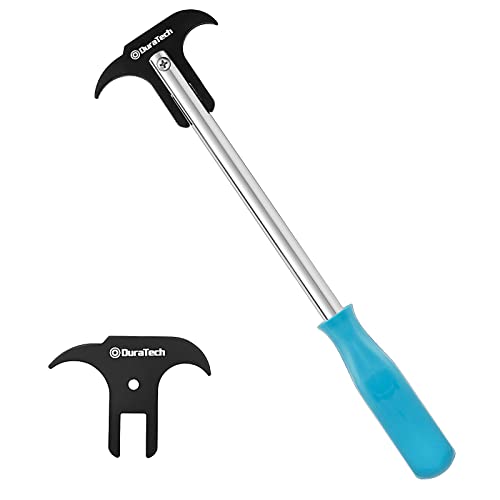
The included spare blade is the main distinction: the package has a replacement ready if the working blade needs changing. The puller also has two hook sizes, heat-treated steel and a chrome-plated finish, making it suited to routine seal removal on cars, SUVs and light trucks. DURATECH says the heat treatment provides the hardness needed for everyday use. Choose it when a replacement blade is more useful than interchangeable head profiles.
Bottom line: Choose it if having a replacement blade on hand is your priority.
BILITOOLS Interchangeable-Head Seal Puller

Interchangeable profiles set this kit apart from fixed dual-hook pullers. It comes with one pre-installed working head and two additional heads with different shapes, intended to reach behind recessed or awkwardly positioned oil and grease seals. The design is aimed at controlled levering while helping reduce the chance of scratching nearby components. That makes it a useful choice when a single hook angle cannot get behind the seal. Buyers who want a simple, fixed tool for routine access may not need the extra head options; the maker does not establish handle length.
Bottom line: Choose it when changing head profiles can improve access behind a recessed seal.
How to Choose an Oil Seal Removal Tool
Choose by the seal’s access path: a fixed dual-hook puller suits an exposed edge, while interchangeable profiles help when a seal sits recessed or behind an obstruction. A lever puller works by placing a hook behind the seal and using the housing edge as a fulcrum, so controlled force matters more than brute force. Protect the shaft and bore from contact; a scratch in a sealing surface can create a leak after installation. For most small automotive seals, start with the smallest hook that clears the edge and reposition rather than levering hard from one point. If the seal is on a truck hub or axle, confirm that a hand hook can reach the seal body before choosing a dedicated hub puller.
Hook Pullers and Interchangeable Heads
Dual-hook tools keep two working angles on one handle, which makes switching between different edge approaches quick. Interchangeable-head kits instead let the user change the profile; that can help with recessed seals, but adds a setup step and spare pieces to manage. A purpose-built hub seal puller is a different tool class: hub models use a longer reach and leverage suited to pulling larger axle seals as a unit. Match the tool to the seal’s position, not just its name. A shallow seal edge accessible from above usually favors a compact hook; a seal deep behind a hub or other obstruction needs the reach and leverage designed for that assembly. Avoid levering against a bearing or machined sealing surface.
| Access situation | Tool approach | Key check |
|---|---|---|
| Exposed seal edge | Fixed dual-hook puller | Hook clears the edge |
| Recessed or awkward edge | Interchangeable-head puller | Head reaches behind seal |
| Truck or trailer hub seal | Dedicated hub puller | Tool fits the axle assembly |
Protecting the Bore and Shaft During Removal
Keep the hook on the seal rather than the shaft, bore or bearing; a gouge on a sealing surface can compromise the replacement seal. Use a thin protective shim where the lever contacts a finished housing surface, provided it stays stable and does not obstruct the hook. Work around the seal in small increments instead of pulling hard from one side, which can cock the seal and wedge its opposite edge. Stop if the tool tip bends, slips or begins contacting a hard component. Seal pullers are for removing seals, not loosening rigid metal parts; pointed hooks can deform under excessive force. Clean away debris before installing the replacement so grit is not carried into the seal lip or housing.
Common Oil Seal Puller Mistakes
The most common mistake is choosing by handle length alone without checking whether the hook can reach the back of the seal. Measure available clearance and look for a clear path to the seal edge; if the hook cannot sit behind the seal, extra leverage will not solve the access problem. Another mistake is levering on a bearing, shaft or thin housing edge, which risks damage unrelated to the old seal. Do not reuse a seal after prying it out: removal can distort the seal body or lip even when no damage is obvious. Match a replacement to the original dimensions and application, and make sure the seal starts square during installation. For large hub seals, use a tool intended for that assembly rather than forcing a small hook puller into service.
Frequently Asked Questions
Can I reuse an oil seal after removing it?
No; replace a seal once it has been pried out because removal can distort its body or sealing lip. Match the replacement to the original dimensions and application.
How do I keep a seal puller from scratching the housing?
Keep the hook behind the seal and the lever contact off the finished bore or shaft. A stable thin shim at the fulcrum can protect the housing surface, but stop if it slips.
Are dual-hook pullers suitable for truck hub seals?
Only when the hook can reach behind the seal and the tool can pull it without contacting the bearing or hub. Large truck and trailer hubs may call for a dedicated hub puller with longer reach.
Should I pull a seal from one side or work around it?
Work around the seal in small increments so it does not cock and wedge against the bore. Repositioning also reduces the need for a hard pull from one point.
What should I check before using a seal puller?
Check that a hook can clear the seal edge and reach behind it without bearing on the shaft or machined bore. For obstructed access, select a different head profile rather than forcing the tip.