
Ulnar Nerve Elbow Brace Options by Support Style

For an ulnar nerve elbow brace with removable splints for adjustable support, start with Hurmoya Elbow Brace, Medium; its two removable metal splints allow a supported or more flexible setup. Choose Adjustable-Angle Cubital Tunnel Brace, Medium instead if you need set elbow angles, or consider TISMOD Elbow Brace, One Size or OXYSAIKO Elbow Brace, One Size if a one size design matters more than angle controls.
We earn a commission if you buy through links on this page. As an Amazon Associate I earn from qualifying purchases. Products are compared on manufacturer specifications, not hands-on testing.
- Best overall: Hurmoya Elbow Brace, Medium – Two removable metal splints allow a more supported or flexible configuration.
- Best for angle control: Adjustable-Angle Cubital Tunnel Brace, Medium – Choose among 120°, 150° or 180° fixed angles, or limit movement across 120°–180°.
- Best for one-size fit: OXYSAIKO Elbow Brace, One Size – The product is offered in one size and has removable splints.
| Product | Best for | Support adjustment | Size | Splints | Shop |
|---|---|---|---|---|---|
| Hurmoya Elbow Brace, Medium | Removable splints | 2 removable metal splints | Medium | 2 removable metal | Check Price on Amazon |
| Adjustable-Angle Cubital Tunnel Brace, Medium | Angle control | 3 fixed angles; 120°–180° range limit | Medium | — | Check Price on Amazon |
| OXYSAIKO Elbow Brace, One Size | One size splint | Removable splints | One size | 2 removable metal | Check Price on Amazon |
| TISMOD Elbow Brace, One Size | Adjustable straps | Adjustable straps | One size | — | Check Price on Amazon |
Ulnar Nerve Elbow Braces
Compare the support mechanisms and fit options to match a brace to your sleep or daytime routine.
Hurmoya Elbow Brace, Medium
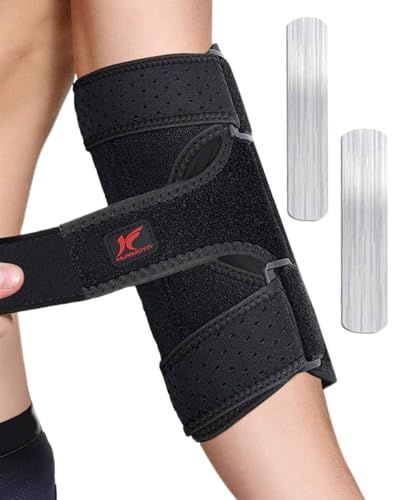
Two removable metal splints distinguish this brace: keep them in for added alignment and support, or remove them for greater flexibility in everyday activities. The medium size is a specific fit, so choose it only if that size suits your arm. Three straps are mentioned, but the feature description cuts off before explaining their arrangement. That makes this a less certain choice if you need a particular strap configuration. The removable support is useful for someone who wants to switch between a more structured night setup and a less rigid brace.
Bottom line: Choose this if medium fits and you want removable metal support.
Adjustable-Angle Cubital Tunnel Brace, Medium

Three fixed angles—120°, 150° and 180°—plus a 120°–180° range-limiting mode set this brace apart. The lever lets the wearer choose a fixed position or limit movement within the range, making it the clearest option here for angle control. The medium size and right- or left-arm fit are specified. The tradeoff is a more prescriptive setup: if you do not need set angles or controlled movement, this adjustment system may be more than you want. Confirm which arm and fit you need before ordering.
Bottom line: Pick this when selecting or limiting elbow angle is the priority.
OXYSAIKO Elbow Brace, One Size
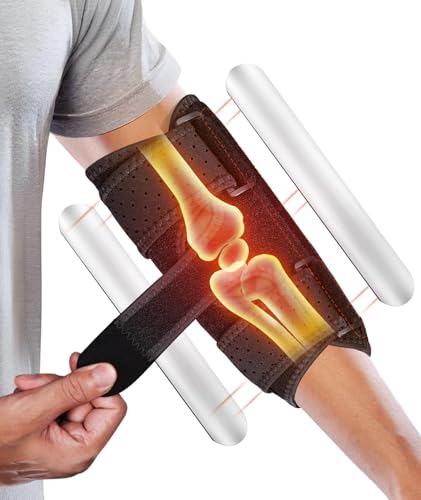
A one size format paired with two removable metal splints makes this a flexible option when you do not want to choose among stated sizes. Its nylon construction is identified as lightweight and breathable. Unlike the angle-adjustable brace, it does not offer specified elbow-angle settings; buyers who need a defined position should compare that distinction carefully. The one size format also makes fit less tailored than a brace sold in a specific size.
Bottom line: Choose it if one size fit and removable splints suit your needs.
TISMOD Elbow Brace, One Size
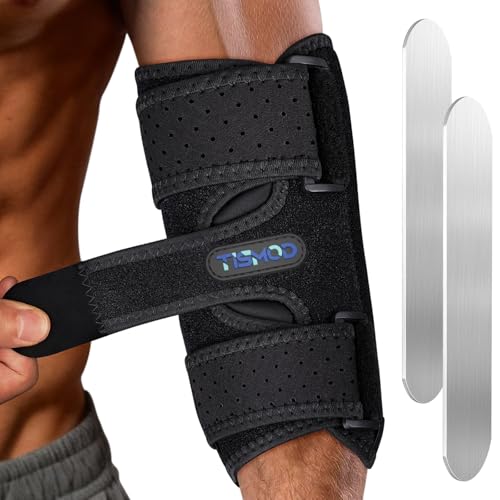
Adjustable straps and a one size design distinguish this brace from options built around removable splints or angle controls. Its uses include sports and everyday activity. No splint system or angle settings are identified, so buyers seeking a rigid night setup or a specific elbow angle should consider another support style. One size may also be less tailored than a size-specific fit.
Bottom line: Pick this for adjustable straps and a less restrictive support style.
How to choose an ulnar nerve elbow brace
Start with how much movement you want to limit: a brace with fixed angles offers more controlled positioning than a compression-style brace. Cubital tunnel symptoms can worsen when the elbow stays deeply bent, especially during sleep; many clinicians advise avoiding prolonged flexion rather than forcing a straight position. A towel wrapped loosely around the elbow can serve as a simple reminder not to bend it tightly overnight. Choose a brace that does not create pressure, tingling or discoloration, and loosen or remove it if those occur. If numbness or weakness persists, seek clinical guidance rather than relying on a brace alone.
| Need | Support style |
|---|---|
| Set elbow position | Angle-adjustable splint |
| Change support level | Removable splints |
| Keep movement freer | Strap-based brace |
Elbow brace sizing and fit
Fit matters because a brace that slides can bunch at the elbow, while straps tightened too far can add pressure. Measure the arm where the manufacturer’s sizing guide specifies, commonly around the elbow or upper forearm, and compare the measurement with the size chart before choosing a size. For a size-specific medium, confirm the chart matches your measurement; for a one size brace, check the adjustment range and return policy before committing. Keep the brace snug rather than constricting: fingers should remain their usual color and temperature, without new tingling. Remove the brace if pressure symptoms develop.
Night splints and daytime elbow braces
Night braces are generally designed to discourage prolonged elbow bending; daytime braces often prioritize mobility and support during activity. An elbow held fully straight can be uncomfortable, so a modest bend may be more tolerable than rigid extension for overnight wear. A removable splint offers a way to alter rigidity, while adjustable-angle hardware provides more specific position control. For daytime tasks, avoid a setting that interferes with safe grip or normal arm movement. If symptoms appear in the ring and little fingers, avoid leaning on the inner elbow, a common source of local pressure.
Using an ulnar nerve brace safely
A brace should not cause worsening numbness, weakness, swelling or skin color change. Check the skin after the first short wear period and again after removing the brace; pressure marks that persist or painful spots are reasons to adjust the fit. Do not use a rigid setting that prevents normal circulation or causes sharp discomfort. Avoid prolonged elbow pressure at desks and in cars, and take breaks from positions that keep the elbow bent. New hand weakness, loss of coordination or persistent symptoms warrant medical evaluation, since a brace cannot determine the cause or severity of nerve symptoms.
Frequently Asked Questions
Should an ulnar nerve brace hold the elbow straight?
Not necessarily; a comfortable slight bend may be easier to tolerate than full extension overnight. The practical goal is to avoid keeping the elbow tightly bent for long periods.
Can I wear an elbow brace all night?
Some braces are designed for night use, but fit and comfort matter. Check the skin after a short initial wear and remove or loosen the brace if numbness, pain, or color change develops.
How tight should a cubital tunnel brace be?
A brace should feel secure without constricting the arm. New tingling, cool fingers, color change, or persistent pressure marks mean the fit needs adjustment.
What activities can aggravate ulnar nerve symptoms?
Prolonged elbow bending and leaning on the inner elbow can increase pressure around the nerve. Take breaks during desk or driving time and avoid resting body weight on that area.
When should I seek care for elbow nerve symptoms?
Seek medical evaluation for persistent numbness or hand weakness, especially if grip or coordination is changing. A brace can limit certain positions but cannot diagnose the cause.