
Ultrasonic Water Leak Detectors: 3 Models Compared

The Underground Pipe Leak Detector with an LCD and two sensor sizes suits most buyers who need to survey pipes and compare a visible signal. The PQWT PQ125A offers a touchscreen and a 16-point location mode for buyers who want to compare readings, while the dual-probe kit is another option for changing site conditions.
We earn a commission if you buy through links on this page. As an Amazon Associate I earn from qualifying purchases. Products are compared on manufacturer specifications, not hands-on testing.
- Best overall: Underground Pipe Leak Detector, Dual Sensors – Its LCD readout and two sensor sizes support visual signal checks and sensor selection.
- Best for point comparisons: PQWT PQ125A – Its location mode captures signals from 16 points for comparison.
- Best for probe choice: Dual-Probe Water Leakage Detector – Its two probes can be switched according to site conditions.
| Product | Best for | Readout | Sensor setup | Shop |
|---|---|---|---|---|
| Underground Pipe Leak Detector, Dual Sensors | Visible signal checks | LCD | Two sensor sizes | Check Price on Amazon |
| PQWT PQ125A | Point comparisons | Touchscreen | 16-point location mode | Check Price on Amazon |
| Dual-Probe Water Leakage Detector | Changing site conditions | — | Two probes | Check Price on Amazon |
Ultrasonic Water Leak Detectors
Compare the readout, sensor arrangement and power approach before choosing a tool for a pipe survey.
Underground Pipe Leak Detector, Dual Sensors
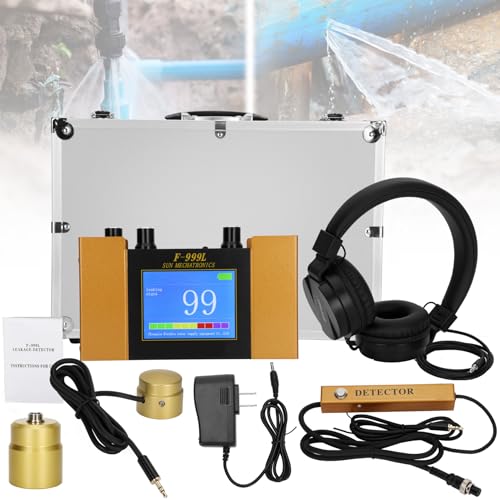
The LCD and two sensor sizes distinguish this underground pipe detector from the touchscreen and dual-probe alternatives. The display presents detection data, and the two sensors are intended for precise positioning on household or outdoor pipelines. The maker cautions that the tool is not for slow drips or hidden seepage: those leaks may produce too little sound for reliable locating. It works best when flow creates a detectable signal; pressurizing the pipe can make leak noise easier to pick up. Choose this model if you want a visual readout, but not for a quiet, intermittent drip.
Bottom line: Choose this if an LCD readout and two sensor sizes suit your pipe survey.
PQWT PQ125A
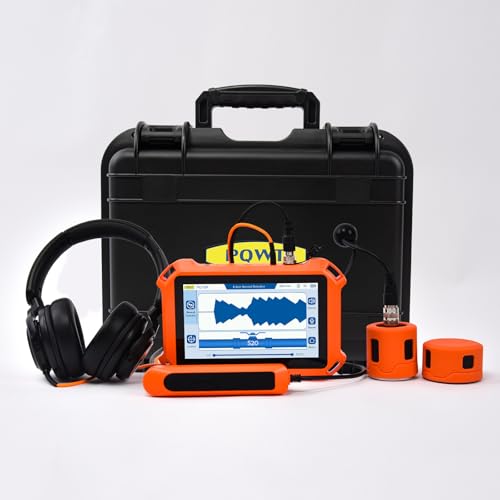
The PQWT PQ125A stands apart with a touchscreen interface and a location mode that retains signals from 16 points for comparison. Its general detection mode is intended for scanning a broader area first, followed by comparing point readings to narrow the location. The maker says the screen includes operating guidance and error pop-ups, which may help users unfamiliar with the controls. This is a fit for buyers who want to compare multiple measurements rather than rely on a single readout. Its multi-step workflow is a limitation for anyone seeking a simpler instrument.
Bottom line: Pick this when comparing readings across multiple points is central to the survey.
Dual-Probe Water Leakage Detector

The rechargeable power setup and two switchable probes set this water leakage detector apart from the display-led models. The maker says the probes can be switched according to site conditions and names water and cement pipes as well as steel pipe among its applications. Included earphones let the operator listen to the detected sound. This suits a survey where probe choice and rechargeable use matter more than a specified screen interface. The probe selection still depends on the site, so buyers who need a digital readout should favor a model that explicitly has one.
Bottom line: Choose this when switchable probes and rechargeable power fit your work.
How acoustic water leak locating works
Acoustic leak detectors locate sound generated as pressurized water escapes through a defect. A contact probe or sensor picks up vibration carried by the pipe or nearby surface, and the operator compares signal strength while moving along the route. Metal pipes generally transmit leak sound farther than plastic pipes, while soil, pipe depth, fittings and background noise can weaken or distort it. A practical rule is to survey several points on the same pipe run and investigate the strongest repeatable signal rather than treating one loud reading as proof. Flow matters too: a larger, pressurized leak usually makes a clearer sound than a slow seep, but the signal still depends on pipe and site conditions.
Choosing a water leak detector by readout and sensor
Choose the interface that matches how you plan to narrow the search: an LCD gives a visible signal, while a touchscreen with stored point readings can support side-by-side comparisons. Sensor design matters because contact and probe placement affect what vibration reaches the detector; keep the contact point consistent when comparing nearby locations. Pipe material, access and background machinery can change the signal more than a display format can. For buried pipes, first identify the likely pipe route and sample at repeated intervals along it, then tighten the spacing around the strongest readings. A detector cannot make a weak acoustic signal reliable, so a quiet leak may call for a different inspection method.
Why slow drips can be hard to find
Slow drips and hidden seepage often make too little sound for acoustic locating, while a flowing leak can create a stronger signal. The Underground Pipe Leak Detector’s maker specifically warns against using it for drip leaks and recommends pressurizing a pipe when a signal is weak or unclear. Pressurization can increase leak noise, but it should be done only within the pipe system’s safe operating limits and by someone qualified to manage the system. Sound also travels differently through metal, plastic, soil and building materials, so a strong reading on one surface may not compare directly with a reading on another. Confirm the leak with a second survey pass before opening a wall or excavation.
Safe setup for a water leak survey
Keep water away from electrical outlets, energized equipment and extension connections; water contacting live electricity can cause shock. Do not handle electrical equipment while standing in water, and isolate the area and power source before investigating a wet electrical space. For a pipe survey, use a stable contact point and avoid moving probes near traffic or active machinery without controlling the work area. Pressurizing a line can improve the acoustic signal, but excess pressure can damage plumbing or create a sudden release; never exceed the pipe system’s rated limit. A repeatable method—same probe placement, comparable points and a second pass—reduces false leads when ambient sound or pipe material changes the reading.
Frequently Asked Questions
Can an acoustic detector find a slow water drip?
Often it cannot locate a slow drip reliably because the flow may create too little sound. A tool suited to quiet seepage may be needed instead of an acoustic pipe detector.
Does pipe material change leak sound?
Yes. Metal pipes generally carry leak vibration farther than plastic, while soil, depth and fittings can weaken the signal. Compare readings along the same pipe type and route.
Will pressurizing a pipe improve leak detection?
It can make leak noise easier to detect when a signal is weak. Keep pressure within the pipe system’s rated operating limit and have a qualified person manage the work.
How should I compare readings along a pipe?
Use the same probe placement and sample multiple points along the same route. Repeat the strongest signal before deciding where to inspect, since surfaces and background noise affect readings.
Is it safe to use a detector near standing water?
Water near live electrical equipment creates a shock hazard. Do not handle electrical equipment while standing in water; isolate the area and power source before investigating.