
VicoHome Bird Feeder Camera: Models Compared

The VicoHome Bird Feeder with Camera is the closest match for shoppers seeking the brand’s 2K live view, AI recognition and app alerts, with claimed identification of 11,000+ bird species. Choose a different option if you prioritize a solar setup with a specified battery capacity or want a feeder from another brand.
We earn a commission if you buy through links on this page. As an Amazon Associate I earn from qualifying purchases. Products are compared on manufacturer specifications, not hands-on testing.
- Best overall: VicoHome 2K Bird Feeder Camera – Pairs 2K live view with AI identification of 11,000+ bird species.
- Best for battery capacity: VicoNature/VicoHome Solar Feeder – Includes a 5,000mAh battery and solar panel.
- Best for feeder capacity: HARYMOR by Birdnee 2L Feeder – Provides a 2L capacity alongside a 2K camera.
| Product | Best for | AI bird ID | Power | Shop |
|---|---|---|---|---|
| VicoHome 2K Bird Feeder Camera | VicoHome shoppers | 11,000+ species | Solar powered | Check Price on Amazon |
| VicoNature/VicoHome Solar Feeder | Battery capacity | 10,000+ species | 5,000mAh battery, solar | Check Price on Amazon |
| HARYMOR by Birdnee 2L Feeder | Feeder capacity | 10,000+ species | Solar powered | Check Price on Amazon |
| HEAPETS 2K Solar Feeder | Recognition trial | 10,000+ species | Solar powered | Check Price on Amazon |
VicoHome bird feeder cameras and alternatives
Compare the camera features, recognition claims and power details that distinguish these feeders.
VicoHome 2K Bird Feeder Camera

This VicoHome model is the direct match for shoppers wanting the brand name and a 2K bird feeder camera. Its features include AI recognition, motion alerts, night vision, two-way audio, Wi-Fi and app control, with cloud and SD storage options. The maker claims identification of more than 11,000 bird species. Solar power and an IP65 waterproof rating suit outdoor placement, while the camera can also provide a live view through the app. Storage preferences are the deciding limitation: buyers should check whether their preferred recording setup needs cloud service or an SD card.
Bottom line: Pick this if VicoHome branding and broad storage choices are priorities.
VicoNature/VicoHome Solar Feeder
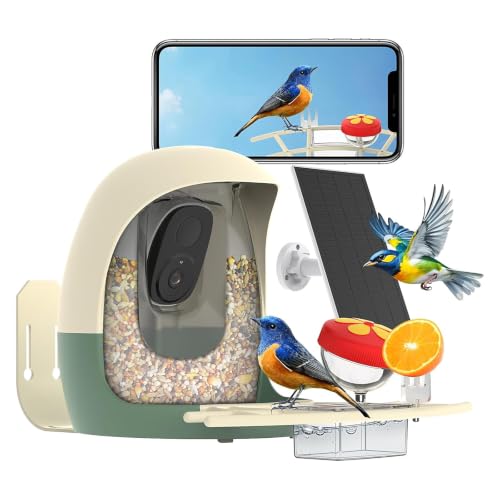
A specified 5,000mAh battery separates this VicoNature/VicoHome feeder from the other options. The maker claims up to six months of low-power use with its solar panel, plus AI identification of more than 10,000 bird species. The camera offers 2K live view, a 140-degree lens, full-color night vision and two-way audio; app-controlled lights and sounds can be activated to deter squirrels. Its identification claim is lower than the direct VicoHome match, so birders choosing mainly by the species count may prefer that model.
Bottom line: Choose this when a named battery capacity and squirrel-deterrent controls matter.
HARYMOR by Birdnee 2L Feeder

The 2L feeder capacity makes this a useful alternative for buyers comparing how much seed the feeder can hold. HARYMOR by Birdnee pairs that capacity with a 2K camera, solar power, arrival alerts and AI recognition of more than 10,000 species. The maker says detailed information for identified birds is available with an app subscription. This is not a VicoHome-branded product, and its identification information carries that subscription condition; choose it for its capacity rather than for an exact brand match.
Bottom line: Pick this alternative if a 2L seed capacity is the deciding factor.
HEAPETS 2K Solar Feeder

HEAPETS differentiates itself with a one-month free trial of AI recognition for more than 10,000 bird species. It also offers 2K live video, arrival alerts and solar power, with a weatherproof design identified by the maker. The trial is the key limitation for buyers who want ongoing recognition: after the month, the maker says a monthly or yearly subscription can be chosen. This is another brand rather than a VicoHome model, so it suits shoppers open to comparing alternatives.
Bottom line: Choose this if you want to try bird recognition before selecting a subscription.
How to choose a bird feeder camera
Choose a camera by its field of view, recording options and feeder capacity as well as resolution. A 2K label indicates video resolution, but framing and distance from the perch affect how much bird detail fills the image. A 140-degree lens captures a broad area but makes distant birds appear smaller than a tighter view. Check whether recognition features require an ongoing subscription, and distinguish a free-trial period from permanent access. A 2L hopper holds about 8.5 cups by volume, but seed type and fill level affect the practical amount. For active feeders, capacity can matter more than a higher claimed species count.
Solar power and battery expectations
Solar panels can reduce how often a camera needs charging, but sunlight and activity affect battery runtime. The VicoNature/VicoHome option pairs a 5,000mAh battery with a claim of up to six months of low-power use; motion recording and frequent live viewing can change power demand. Place a solar panel where it receives several hours of unobstructed sun rather than under dense branches or a roof eave. Before mounting, consider winter sun angle and whether the feeder can be reached for cleaning or charging. A battery capacity is a useful comparison figure, not a guarantee of months between charges.
Mounting and weather protection
Mounting height and a clear approach help keep birds visible and make refilling practical. Many backyard feeders are positioned roughly 5 to 6 feet above ground, with nearby cover giving birds a quick retreat; adjust for local predators and the mounting surface. Keep the camera aimed at the perch rather than the background, and leave room to open the seed compartment. An IP65 rating means dust-tight protection and resistance to water jets, not submersion; weatherproof wording alone is not a numeric rating. Install the unit securely and inspect its mounting after storms, since a solar panel and feeder both catch wind.
Keeping a camera feeder clean
Clean a seed feeder about every two weeks during regular use, and more often when seed is wet, clumped or visibly soiled. Empty old seed, scrub the feeding surface with hot soapy water, rinse thoroughly and let it dry completely before refilling. Do not direct water at camera openings, speakers or charging connections; use a damp cloth for electronics. Moldy seed and accumulated droppings can spread disease among visiting birds, so remove contaminated food promptly. Place the feeder away from windows where possible, or use window decals on nearby glass to reduce collision risk.
Frequently Asked Questions
How often should a bird feeder be cleaned?
Clean a regularly used feeder about every two weeks, and clean it sooner if seed becomes wet or droppings build up. Dry the feeder fully before adding fresh seed.
Does 2K mean a bird will look close up?
No; 2K describes video resolution, not magnification. A bird’s apparent size also depends on camera distance and lens angle, so a wide 140-degree view may show more area but smaller subjects.
How much seed does a 2L feeder hold?
A 2L capacity is about 8.5 US cups by volume. The actual weight varies by seed type because sunflower chips and larger seeds pack differently.
Can an IP65 camera feeder be submerged?
No; IP65 is a dust-tight rating with protection against water jets, not immersion. Keep camera openings and charging connections out of standing water.
Where should a solar bird feeder camera go?
Choose a stable mounting point with several hours of unobstructed sunlight for the panel and a clear view of the perch. A height around 5 to 6 feet is common for backyard feeders, but nearby cover and predator exposure should guide placement.