
Youth Chest Protector Motocross: 4 Fits Compared

For most youth motocross riders, Fox Racing Youth Peewee Titan Roost is the straightforward choice because its adjustable straps, ample coverage and airflow-focused perforations balance fit and ventilation. Choose O’NEAL Pee Wee Chest Protector XS/SM instead for a child ages 2–5; its fit range is narrower, while O’NEAL Split Youth Lite suits riders who want detachable sections and front-and-back EN 14021 certification.
We earn a commission if you buy through links on this page. As an Amazon Associate I earn from qualifying purchases. Products are compared on manufacturer specifications, not hands-on testing.
- Best overall: Fox Racing Youth Peewee Titan Roost – Adjustable straps, ample coverage and perforations designed to promote airflow.
- Best for ages 2–5: O’NEAL Pee Wee Chest Protector XS/SM – Its range is approximately 35–40 inches tall and 28–40 pounds.
- Best for modular wear: O’NEAL Split Youth Lite – Detachable front and back sections allow multiple combinations.
| Product | Best for | Size or fit | Weight | Notable construction | Shop |
|---|---|---|---|---|---|
| Fox Racing Youth Peewee Titan Roost | General youth fit | Small/Medium | 0.8 lb | Perforated, breathable design | Check Price on Amazon |
| O’NEAL Pee Wee Chest Protector XS/SM | Small young riders | XS/SM; ages 2–5 | 0.55 lb | Foam chassis, molded shoulders | Check Price on Amazon |
| O’NEAL Split Youth Lite | Modular protection | One size | 1 lb | Detachable front/back; EN 14021 | Check Price on Amazon |
| StarknightMT Kids Dirt Bike Suit Blue | Broad adjustability | Ages 5–12; waist 28.5–39.2 in | 2.2 lb | PE shell; EVA padding | Check Price on Amazon |
Youth Motocross Chest Protectors
Compare the fit range and construction before choosing protection for a young rider.
Fox Racing Youth Peewee Titan Roost

For a conventional youth dirt bike guard with ventilation emphasized, Fox Racing Youth Peewee Titan Roost combines ample coverage with perforations intended to promote airflow. The moisture-wicking, breathable design and adjustable strap system are useful for young riders whose fit needs a little adjustment over riding layers. Unlike a single-age-size option, this model is identified as Small/Medium, so the label alone does not establish a child’s body measurements. Confirm that the guard sits securely and does not restrict movement before riding; a loose or shifting protector can leave areas uncovered.
Bottom line: Choose this for a young rider who needs adjustable straps and a breathable design.
O’NEAL Pee Wee Chest Protector XS/SM
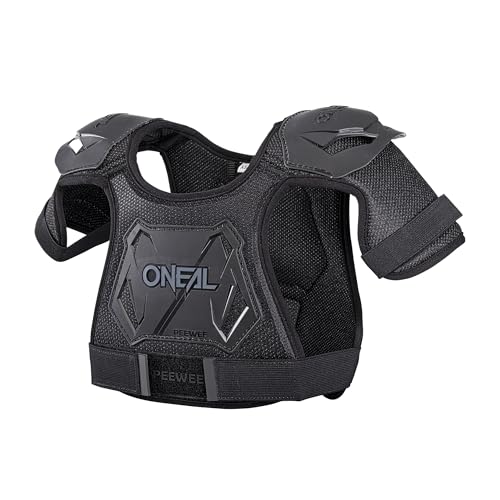
For the youngest riders in this group, O’NEAL Pee Wee Chest Protector XS/SM gives a specific approximate fit range: ages 2–5, about 35–40 inches tall and 28–40 pounds. Its lightweight flexible foam chassis is paired with injected-molded plastic shoulder pads and TPR chest and back protection, a different construction mix from the perforated guard. Adjustable straps help tune the fit, but the age and body range should guide selection rather than age alone. Check that the chest and back sections stay in place without pinching when the child bends or reaches.
Bottom line: Choose this when the rider falls within its preschool-size range.
O’NEAL Split Youth Lite

O’NEAL Split Youth Lite stands apart with detachable front and back sections, allowing multiple combinations, and a slim profile intended for wear under or over a jersey. Its injected plastic parts sit with bio-foam padding, and the maker says the front and back are certified to EN 14021. The one-size format is less tailored than an age-and-body range, so fit is the main limitation for riders outside its comfortable adjustment range. Verify coverage and secure positioning over the layers the rider will actually wear.
Bottom line: Choose this if detachable sections and a slim jersey-compatible profile matter most.
StarknightMT Kids Dirt Bike Suit Blue

StarknightMT Kids Dirt Bike Suit Blue covers more than the torso: its PE shell spans the front, back and shoulders, with breathable EVA and adjustable elastic straps with quick-release buckles. The maker gives an age range of 5–12 and a waist range of 28.5–39.2 inches, plus shoulder and back measurements to compare. That broad intended age range is useful for growth, but the suit weighs 2.2 pounds, more than the other guards. Consider the additional weight and check that the shell remains comfortably positioned throughout the rider’s range of motion.
Bottom line: Choose this for a broader adjustable age range and shell coverage across the shoulders.
How to choose a youth motocross chest protector
Start with fit and secure coverage, then compare construction and ventilation. Motocross chest protectors commonly use a hard plastic shell over foam or flexible chassis material; a guard should stay centered on the chest and back when the rider reaches forward and turns. Chest protectors are not substitutes for a helmet, and no protector eliminates injury risk. For an under-jersey fit, choose a slim profile and check that the jersey does not pull the guard out of position. For over-jersey wear, allow enough room for movement without loose straps or shifting panels.
Certification applies to defined impact protection, not every possible crash outcome. EN 14021 is a stone-shield standard; it should not be mistaken for a guarantee against all impacts. When certification matters, look for the specific standard and protected areas rather than relying on broad words such as “maximum protection.”
Youth chest protector sizing and fit
Use the maker’s height, weight, waist or age range as a starting point, then confirm the actual guard coverage on the rider. Children of the same age can have different torso lengths, so an age label alone is a weak fit check. Measure with the riding layers in place: the front should cover the chest, the back should extend over the torso, and shoulder pieces should not obstruct arm movement. A protector that shifts during a forward riding posture needs adjustment or a different size.
Straps should be snug enough to prevent migration but not so tight that they restrict breathing or movement. Recheck fit as children grow and whenever the base layer changes. For a rider with under 4 inches of comfortable overlap between a guard and the jersey neckline or waist, reassess the size and coverage before use.
Motocross protector materials and standards
Hard molded plastic distributes an impact over a broader area, while foam padding adds cushioning and helps the guard sit against the body. Flexible foam chassis designs generally move more easily with the rider; rigid panels can provide a more structured barrier but may feel bulkier. Perforations and breathable textiles support airflow, though they do not make protective gear cool in every temperature or riding condition.
EN 14021 addresses stone shields used in off-road riding, not every form of chest protection or every injury scenario. Treat the exact certification and covered panels as the useful distinction, and do not infer certification for unmarked sections. A comfortable fit that stays in place matters alongside material: gaps or panels that rotate can compromise the area the protector is meant to cover.
When to replace or inspect a youth chest protector
Inspect a chest protector before each ride for cracks, sharp edges, torn straps, damaged buckles and foam that has separated or compressed. Replace a guard after a significant impact if its shell is cracked or its structure has changed; damage can be difficult to judge by appearance alone. Keep the protector away from direct heat and solvents, which can damage plastics and adhesives.
Growth is another reason to reassess fit: check coverage whenever a rider’s height changes noticeably or the guard begins to shift over riding layers. Clean according to the care label and allow the protector to dry fully before storage. Do not modify shells or drill new holes, since changes can weaken components and compromise how panels stay positioned.
Frequently Asked Questions
Should a youth chest protector go under or over a jersey?
Either placement can work if the guard is designed to fit that way and remains secure. Slim guards are commonly worn under a jersey; over-jersey placement needs enough room that fabric and straps do not pull panels out of place.
How tight should a motocross chest protector fit?
A motocross chest protector should stay centered when the rider leans forward and moves their arms, without restricting breathing. Recheck strap tension with the actual riding layers because thick layers can change how securely the guard sits.
Does EN 14021 protect against every motocross impact?
No, EN 14021 is a stone-shield standard and does not promise protection against every crash or injury. Check which panels are certified, and consider fit and coverage separately.
When should a child outgrow a chest protector?
Replace or resize it when it no longer covers the chest and back securely or begins shifting during movement. Recheck fit as the child grows and whenever riding layers change.
Can a cracked plastic chest guard still be used?
No; a cracked shell or damaged strap can undermine the protector’s structure or secure fit. Inspect it before each ride and replace it after significant impact damage.