
Zigzag Scissors for Fabric: 5 Pinking Shears Compared

For general fabric sewing, the SINGER 9-inch shears stand out for their comfortable grip and stainless-steel zigzag blades. Choose another pair if you need a 5 mm tooth spacing, a left-handed option, or broader craft-material compatibility.
Pinking shears are scissors with sawtooth blades that leave a zigzag edge, which can help reduce fraying on woven fabric.
We earn a commission if you buy through links on this page. As an Amazon Associate I earn from qualifying purchases. Products are compared on manufacturer specifications, not hands-on testing.
- Best overall: SINGER 9-inch Pinking Shears – 9-inch stainless-steel blades and a soft-grip handle suit finishing woven seams.
- Best for left-handed users: Fri4Free 9-inch Pinking Shears – The shears are specified for both left- and right-handed users, with 5 teeth per inch.
- Best for 5 mm teeth: 5 mm Pinking Shears – Precisely spaced 5 mm teeth produce a consistent repeating edge.
| Product | Best for | Length | Tooth spacing | Handle | Shop |
|---|---|---|---|---|---|
| SINGER 9-inch Pinking Shears | Woven seam finishing | 9 in | — | Soft grip | Check Price on Amazon |
| JISTL 9.5-inch Pinking Shears | Mixed craft materials | 9.5 in | 5 mm | Anti-slip grip | Check Price on Amazon |
| Fri4Free 9-inch Pinking Shears | Left-handed cutting | 9 in | 5 teeth per inch | Anti-slip grip | Check Price on Amazon |
| 5 mm Pinking Shears | Uniform decorative edges | 9.5 in | 5 mm | — | Check Price on Amazon |
| 9-inch Pinking Shears | Fabric and crafts | 9 in | — | — | Check Price on Amazon |
Zigzag Scissors for Fabric
Compare blade length, tooth spacing and grip to find pinking shears suited to your sewing or craft work.
SINGER 9-inch Pinking Shears
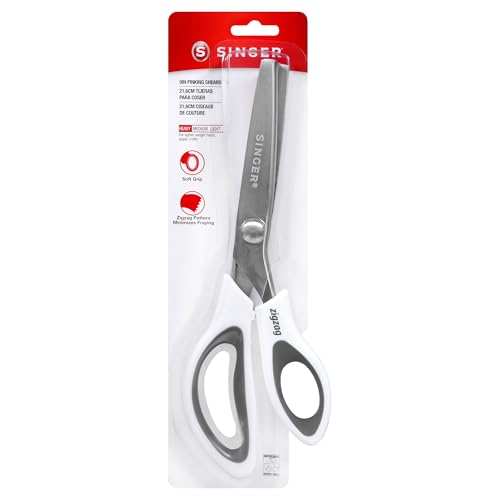
These SINGER shears emphasize a soft-grip handle and woven-seam finishing, unlike the pairs with specified 5 mm teeth. Their 9-inch stainless-steel blades cut a sawtooth edge intended to help minimize fraying on woven fabric seams. The handle has a white grip with grey accents, and the shears are also positioned for decorative paper crafts. Choose them for seam edges when a cushioned grip matters. The tradeoff is that the maker gives no tooth spacing, so shoppers matching a particular zigzag pitch should choose shears with a measurement instead.
Bottom line: Pick these for woven seam finishing when a soft grip matters more than a measured tooth pitch.
JISTL 9.5-inch Pinking Shears

JISTL combines a 9.5-inch length with a 5 mm zigzag blade and a wider range of suggested materials than the seam-focused option. Hardened stainless steel blades pair with an ABS inner handle ring for controlled cutting; the uses include fabric, linings, paper, leather, PU and crafts. This may suit someone alternating sewing and craft projects. The maker notes that the shears may feel big and heavy and that the screw cannot be adjusted, so they are less suitable for anyone who needs a lighter feel or adjustable blade tension.
Bottom line: Choose these if your craft work spans fabric, paper, leather and PU and 5 mm teeth fit the project.
Fri4Free 9-inch Pinking Shears

Fri4Free is the only pair explicitly described as suitable for both left- and right-handed users. The 9-inch shears have hardened stainless-steel blades, an ABS inner handle ring and a soft, anti-slip grip. Their 5 teeth per inch create a closely repeating zigzag pattern, and the shears are described for dressmaking and scrapbook work. This is a useful distinction for left-handed sewists seeking a measured blade pattern. The fabric-fraying benefit applies to raw fabric edges; do not assume pinking prevents fraying in every weave or replaces seam finishing where durability matters.
Bottom line: Pick these if you need left- or right-handed use and prefer a teeth-per-inch measurement.
5 mm Pinking Shears

A 5 mm tooth spacing makes this pair an option when matching a repeating zigzag measurement matters more than choosing by a branded handle design. The hardened stainless-steel blades are described for fabric, lining, paper, PU, leather and crafts, with uses including trimming seams and decorative sewing. At 9.5 inches, the shears share a longer size with the other 5 mm option. Handle material and grip are not characterized in the specifications, so buyers who prioritize ergonomics should compare the grip features of other choices.
Bottom line: Choose these for a measured 5 mm edge across sewing and compatible craft materials.
9-inch Pinking Shears

This pair is framed broadly for fabric and dressmaking, with uses extending to lining, silky materials, paper, PU, leather and compatible crafts. Its 9-inch hardened stainless-steel blades create zigzag cuts for decorative edges and trimming. Unlike the models with tooth spacing, the specifications do not give a pitch measurement; choose it when material range and a 9-inch size matter more than matching a specific zigzag pattern. Grip design is also not characterized, so this is a less targeted choice for shoppers selecting by hand comfort.
Bottom line: Pick these for a 9-inch pair intended for fabric work plus compatible craft materials.
How to choose zigzag scissors for fabric
Choose pinking shears by tooth spacing, blade length and the material you plan to cut. A 5 mm spacing or 5 teeth per inch is a measurable pattern specification; compare like units rather than assuming the patterns are identical. A 9-inch blade length is common among these options, while 9.5-inch pairs provide a modestly longer overall shears size. For woven fabric, pinking can reduce edge fraying, but it is not a substitute for a seam finish when the edge will receive repeated stress or washing. Match the scissors to fabric thickness and work scale: long blades help cover a longer edge per stroke, while precise, controlled strokes matter around curves and notches.
What pinking shears can and cannot do
Pinking shears cut a zigzag edge that can slow fraying on woven fabric by reducing long exposed yarns at the edge. The result depends on the weave and how much the fabric shifts; loosely woven or highly fraying fabric may still need a stitched, bound or otherwise finished edge. Pinking is primarily an edge treatment, not a replacement for a structural seam or a method to secure a raw edge under heavy wear. For comparison, use this need-to-choice guide:
| Need | What to prioritize |
|---|---|
| Woven seam edge | Zigzag blades and a comfortable grip |
| Repeatable decorative pattern | Measured tooth spacing |
| Craft use across materials | Material compatibility named for the shears |
How to cut a clean zigzag edge
Cut a single fabric layer on a flat surface and keep the blades fully engaged through each stroke for a more even pattern. Before trimming a garment or finished project, test a scrap of the same fabric; slippery satin, thick layers and loosely woven cloth can shift differently under patterned blades. Align the cutting line before closing the blades, and avoid repeatedly snipping tiny sections, which can leave an irregular edge. Keep pinking shears separate from general-purpose scissors if you want their patterned cutting edges reserved for cloth; paper and craft materials can dull cutting edges sooner than fabric work.
Care and safe storage for pinking shears
Store pinking shears closed in a dry place so the patterned blades do not strike other tools or collect moisture. Wipe lint from the teeth after fabric cutting; fibers trapped between serrations can interfere with clean closure. Keep fingers outside the blade path and close the shears before handing them to another person, since their serrated cutting edge can catch skin as well as fabric. Do not force the blades through a material they cannot cut cleanly: resistance can strain the pivot or distort the edge. If cutting performance changes, check for lint buildup and blade alignment before using the shears again.
Frequently Asked Questions
Do pinking shears stop fabric from fraying?
Pinking shears can help reduce fraying on woven fabric by cutting a zigzag edge, but they do not guarantee a fray-proof finish. Loosely woven cloth or seams under repeated wear may need stitching or another seam finish.
What does 5 mm mean on pinking shears?
A 5 mm tooth spacing describes the repeated zigzag pattern of the blades. Test the pattern on a scrap first if the finished edge needs to match another cut.
Can pinking shears cut paper as well as fabric?
Some shears are described for paper and craft use, while others focus on fabric seams. Use a pair on paper only when that material is included among its intended uses, since craft materials can dull an edge faster than fabric.
Are pinking shears suitable for left-handed users?
Only choose a pair for left-handed cutting when that suitability is explicitly given. One option here is specified for both left- and right-handed users; otherwise confirm handedness before ordering.
How should I store fabric pinking shears?
Store pinking shears closed and dry, away from other blades that could strike their serrated edges. Remove fabric lint from the teeth after cutting so debris does not prevent a clean closing stroke.