
14 Gauge Invisible Fence Wire: 3 Spools Compared

For most buyers, 14 Gauge Boundary Wire, 1,000 ft is the practical choice because its 1,000-foot spool balances substantial boundary coverage with a direct-burial polyethylene jacket. Choose eXtreme Dog Fence Max Wire, 1,500 ft instead if you need 1,500 continuous feet; eXtreme Dog Fence Pro Wire, 500 ft is the smaller 500-foot option.
Invisible fence wire carries the signal around a containment boundary, so select a spool length that accommodates the complete loop and any layout routing.
We earn a commission if you buy through links on this page. As an Amazon Associate I earn from qualifying purchases. Products are compared on manufacturer specifications, not hands-on testing.
- Best overall: 14 Gauge Boundary Wire, 1,000 ft – A 1,000-foot continuous spool with a polyethylene jacket rated for direct burial.
- Best for larger yards: eXtreme Dog Fence Max Wire, 1,500 ft – Its 1,500-foot continuous spool is claimed to cover up to 2 acres.
- Best for smaller layouts: eXtreme Dog Fence Pro Wire, 500 ft – The 500-foot spool is paired with a 1/3-acre coverage area.
| Product | Best for | Spool length | Jacket | Coverage claim | Shop |
|---|---|---|---|---|---|
| 14 Gauge Boundary Wire, 1,000 ft | Everyday boundaries | 1,000 ft | Polyethylene | — | Check Price on Amazon |
| eXtreme Dog Fence Max Wire, 1,500 ft | Large perimeters | 1,500 ft | 60-mil polyethylene | Up to 2 acres | Check Price on Amazon |
| eXtreme Dog Fence Pro Wire, 500 ft | Compact boundaries | 500 ft | — | Up to 1/3 acre | Check Price on Amazon |
14 Gauge Invisible Fence Wire Compared
Compare spool length and jacket features first, then match the wire to the boundary shape and routing you plan to install.
14 Gauge Boundary Wire, 1,000 ft
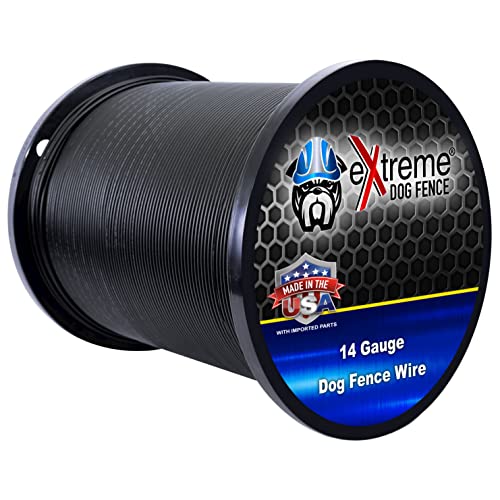
14 Gauge Boundary Wire, 1,000 ft offers a middle-ground 1,000-foot spool for buyers who need more wire than a compact perimeter but not the longest option here. The continuous length avoids joins along the spool itself. Its polyethylene jacket is UV-resistant and rated for direct burial, and the maker says it is compatible with all wired electric dog fence systems. That broad compatibility claim suits replacement-wire shopping, but confirm the control unit uses wired boundary cable before planning the installation. The spool has no stated coverage claim, so yard area alone is not enough to estimate required length; perimeter shape and routing add to the total.
Bottom line: Choose this for a substantial boundary when 1,000 feet is enough.
eXtreme Dog Fence Max Wire, 1,500 ft

eXtreme Dog Fence Max Wire, 1,500 ft is the longest spool among these choices, with a 60-mil polyethylene jacket and yellow color for visibility during above-ground installation. The maker says 1,500 continuous feet can cover up to 2 acres and describes it as suitable for burial, yard-staple installation, or attachment to an existing fence. The maker also says the wire works with all electric dog fence systems and mentions robotic mower use. The acreage figure is a coverage claim, not a guarantee for every property: an irregular perimeter or extra routing can require more wire than a compact layout.
Bottom line: Pick this when the planned route may need more than 1,000 feet.
eXtreme Dog Fence Pro Wire, 500 ft
eXtreme Dog Fence Pro Wire, 500 ft is the compact-spool choice, with 500 feet and a coverage area of up to 1/3 acre. That makes it a plausible fit for a smaller boundary where a longer spool would leave substantial excess. The product name identifies it as 14-gauge DIY Pro Grade perimeter wire for an in-ground dog fence. The available product facts do not establish jacket thickness or installation ratings, so this option is a weaker match for buyers who specifically need a documented burial or UV-resistance specification. Measure the intended wire route before choosing the shorter length.
Bottom line: Choose this for a compact layout if 500 feet covers the full route.
How to Choose 14 Gauge Invisible Fence Wire
Choose by total wire route, not acreage alone: boundary shape, corners, and travel to the control unit affect how much cable a loop needs. The three spools here run from 500 to 1,500 feet, with only the 500- and 1,500-foot options paired with a coverage claim. For a roughly rectangular yard, estimate the perimeter as twice the length plus twice the width, then add routing distance to the control unit. If that total approaches the spool limit, choose the next longer spool rather than relying on an acreage estimate. A 1,000-foot spool is a reasonable starting point for a medium route; unusually shaped or divided yards can use more wire than their area suggests.
Wire Jacket and Installation Fit
Match jacket claims to the installation: direct-burial wire is intended for underground routing, while above-ground runs need secure placement and protection from damage. 14 Gauge Boundary Wire, 1,000 ft is described as polyethylene-jacketed, UV-resistant, and direct-burial rated; eXtreme Dog Fence Max Wire, 1,500 ft has a 60-mil polyethylene jacket and is described for burial, yard staples, or attachment to an existing fence. Product facts for eXtreme Dog Fence Pro Wire, 500 ft do not establish its jacket rating, so confirm the burial requirement before selecting it for a buried route. Keep boundary wire away from locations where digging, edging, or vehicle traffic can cut it. A containment wire transmits a signal; it is not a physical barrier that prevents a dog from crossing.
Spool Length and Coverage Claims
Use coverage figures as a planning reference, not as a substitute for measuring the route. The 500-foot option is associated with up to 1/3 acre, while the 1,500-foot spool is associated with up to 2 acres; these claims do not account for every lot shape or installation path. The 1,000-foot spool falls between those lengths but has no coverage claim among its facts. A narrow, long yard can have more perimeter than a compact yard of equal area. The comparison below makes the length and stated coverage distinction clear.
| Spool choice | Length | Claimed coverage | Useful when |
|---|---|---|---|
| eXtreme Dog Fence Pro Wire, 500 ft | 500 ft | Up to 1/3 acre | Route measures comfortably below 500 ft |
| 14 Gauge Boundary Wire, 1,000 ft | 1,000 ft | — | A longer route needs a mid-size spool |
| eXtreme Dog Fence Max Wire, 1,500 ft | 1,500 ft | Up to 2 acres | Route needs greater length |
Planning a Reliable Boundary Route
Keep a single continuous boundary loop wherever the fence system design calls for one; a break in the wire can interrupt the signal. Mark the planned route before installation and include the distance from the control unit to the perimeter, plus any detours around gates or obstacles. Twisted boundary wire is commonly used on the route between a transmitter and the active perimeter because the paired conductors cancel the signal along that section; follow the specific system wiring diagram for the correct connection. Avoid burying wire where future digging is likely, and test the loop before covering any trench. The dog’s collar system is a training and containment aid, not a substitute for supervision or a secure physical barrier.
Frequently Asked Questions
How much wire do I need for an invisible fence?
Measure the complete perimeter and add the route between the control unit and the boundary. A 500-foot spool is paired with a claim of up to 1/3 acre, but irregular or elongated yards may need more wire for the same area.
Can invisible fence wire be buried underground?
Wire with a direct-burial rating can be installed underground. The first and second choices have burial-related jacket claims; confirm the required rating before burying wire without an established burial specification.
Does 14 gauge wire work with every dog fence?
Compatibility depends on the system’s wired boundary design, not gauge alone. The makers of the 1,000- and 1,500-foot options claim compatibility across wired electric dog fence systems, but verify the control unit accepts boundary wire.
Is an invisible fence a physical barrier for dogs?
No, boundary wire carries a system signal rather than forming a barrier. It should not replace supervision or a secure physical fence, especially where a dog could reach a road or other hazard.
How deep should invisible fence wire be buried?
Use the system manufacturer’s specified trench depth because guidance differs by equipment and yard conditions. Keep the route shallow enough to avoid unnecessary digging while protecting the cable from routine surface damage.