
Body Filler for Plastic: 4 Repair Options Compared

Roberlo Multiplast Lightweight Filler is the closest match for body filler for plastic because its maker positions it for plastic and metal repairs and includes hardener. Choose J-B Weld Plastic Bonder, 25 ml instead for bonding or filling a gap, or Bondo Glazing and Spot Putty, 4.5 oz for small surface flaws; Bondo Original Body Filler, 14 oz is a broader repair filler whose materials do not include plastic.
Plastic body filler is a spreadable repair compound; it differs from an adhesive designed to bond panels. Confirm the vehicle part’s plastic type and the repair product’s compatibility before applying anything.
We earn a commission if you buy through links on this page. As an Amazon Associate I earn from qualifying purchases. Products are compared on manufacturer specifications, not hands-on testing.
- Best overall: Roberlo Multiplast Lightweight Filler – The maker describes it for plastic and metal repair and includes hardener.
- Best for bonding: J-B Weld Plastic Bonder, 25 ml – It is a two-part urethane adhesive for plastics and sets in 15 minutes.
- Best for pinholes: Bondo Glazing and Spot Putty, 4.5 oz – Its putty format targets pinholes, scratches, and minor dings.
| Product | Best for | Repair type | Timing | Package size | Shop |
|---|---|---|---|---|---|
| Roberlo Multiplast Lightweight Filler | Plastic body repairs | Lightweight filler | — | — | Check Price on Amazon |
| Bondo Original Body Filler, 14 oz | Larger surface repairs | Two-part body filler | Cures in 20 min | 14 oz filler | Check Price on Amazon |
| Bondo Glazing and Spot Putty, 4.5 oz | Small surface flaws | Glazing and spot putty | 3 min work; sands in 30 | 4.5 oz | Check Price on Amazon |
| J-B Weld Plastic Bonder, 25 ml | Bonding plastic panels | Urethane adhesive | Sets in 15 min; sands in 30 | 25 ml | Check Price on Amazon |
Body Filler for Plastic Options
Match the repair material to whether you need to rebuild a surface, smooth a flaw, or bond plastic.
Roberlo Multiplast Lightweight Filler

Roberlo Multiplast Lightweight Filler is the only option here specifically positioned by its maker as a plastic and metal body filler. The kit includes Roberlo hardener, and the maker describes the formula as lightweight and easy to sand. That makes it the closest fit when the repair calls for a spreadable filler rather than a bonding adhesive or a small amount of spot putty. The maker gives no work or cure time, so it is harder to plan around a tight repair schedule; confirm the plastic type is compatible before use.
Bottom line: Choose it when you need a filler marketed for plastic and metal.
Bondo Original Body Filler, 14 oz

Bondo Original Body Filler, 14 oz stands apart as the larger-format, general-purpose repair compound rather than a plastic-specific formula. It contains 14 ounces of filler and 0.5 ounce of hardener; the maker says it spreads smoothly, does not shrink, and cures in 20 minutes. The repair materials include wood, steel, aluminum, fiberglass, and concrete, but not plastic, so it is not the safest assumption for a plastic bumper repair. Consider it for compatible listed materials or broader vehicle work, not as a substitute for a plastic-approved repair system.
Bottom line: Pick it for repairs on one of its materials, not unverified plastic.
Bondo Glazing and Spot Putty, 4.5 oz

Bondo Glazing and Spot Putty, 4.5 oz is aimed at finishing small defects, not rebuilding a damaged panel. Its 4.5-ounce tube targets pinholes, scratches, nicks, minor dings, and hairline cracks, and the maker gives a 3-minute work time with sanding possible after 30 minutes. It can be used on metal, fiberglass, wood, and prepared surfaces, but plastic is not among the named substrates. Choose it for minor surface smoothing on a compatible base; larger missing sections or flexible plastic damage call for a different repair approach.
Bottom line: Choose it for small flaws on a compatible surface.
J-B Weld Plastic Bonder, 25 ml
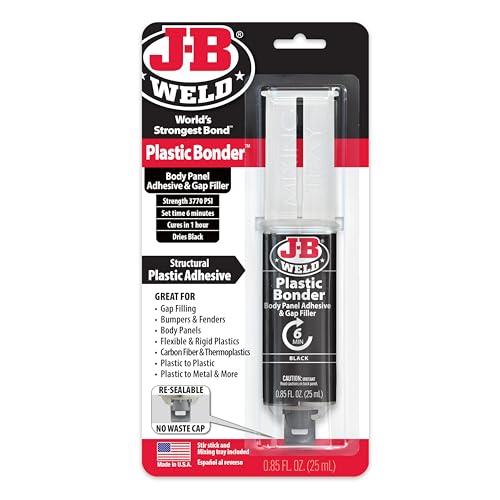
J-B Weld Plastic Bonder, 25 ml differs from conventional filler because it is a two-part urethane adhesive intended to bond plastics and other materials, including carbon-fiber composites and coated metals. The 25 ml syringe uses a 1:1 mixing ratio; the maker says it sets in 15 minutes and can be sanded after 30 minutes. Its black color and adhesive purpose suit bonding or gap-filling tasks better than shaping a broad dent with body filler. Use it when joining compatible parts is the goal, rather than when you need a dedicated surface-filler formulation.
Bottom line: Pick it for a plastic bond or gap-filling repair.
How to choose a plastic body repair material
Choose by damage type first: filler smooths and shapes a surface, while an adhesive bonds parts and can fill a joint. Small pinholes or scratches call for a spot putty; a missing section or larger contour repair needs a compatible repair system. Plastic identification matters because bumper covers can use polypropylene blends, TPO, ABS, or other polymers, and adhesion varies by resin. Look for the exact plastic marking on the part and confirm the material’s compatibility with the repair system. If a repair sits on a flexible bumper, use a system intended for that substrate and flex; a rigid repair can crack as the panel moves.
Plastic identification and surface preparation
Identify the plastic before sanding or applying repair material: molded marks such as PP, TPO, or ABS can guide product selection. Clean the repair area before abrading it, since silicone, wax, and road grime can interfere with adhesion. Many automotive repairs use coarse abrasion around 80 grit to shape or key a repair, followed by finer sanding for finishing; the exact sequence depends on the repair system and coating. Keep repair material out of unabraded paint edges unless the product is approved for that use. Confirm compatibility and preparation requirements before ordering because the products here do not share the same named substrates.
Filler, putty, and adhesive compared
Filler, spot putty, and adhesive solve different problems; choose by the shape and function of the repair. The table separates their intended roles so a small finishing product is not mistaken for a panel-bonding system. A filler adds material for shaping, putty addresses minor surface defects, and adhesive joins surfaces. For flexible exterior plastic, the decisive condition is the plastic type and whether the repair system is designed for that substrate.
| Material | Typical job | Decision rule |
|---|---|---|
| Body filler | Shape a repaired surface | Use only when compatible with the plastic |
| Glazing or spot putty | Fill small pinholes or scratches | Choose for minor finishing flaws |
| Plastic adhesive | Bond parts or fill a joint | Choose when joining is the goal |
Safe sanding and repair handling
Wear eye protection and a properly fitted particulate respirator when sanding cured automotive repair material; sanding creates dust that should not be inhaled. Two-part products also involve reactive hardeners or adhesives, so wear chemical-resistant gloves and provide ventilation while mixing and applying them. Keep uncured material away from skin and eyes, and do not sand before the product’s sand time. A 15-minute set or a 20-minute cure is not the same as full service readiness for every repair, so avoid loading or flexing the repaired area until the material has reached its required cure state.
Frequently Asked Questions
Can regular body filler stick to plastic bumpers?
Some body fillers may not bond reliably to every bumper plastic. Bumpers often use flexible materials such as TPO or polypropylene blends, so identify the resin and use a repair system approved for it.
How do I identify the plastic on a car panel?
Look for molded resin markings on the back of the part, such as PP, TPO, or ABS. If the mark is absent or unreadable, confirm the part material before selecting a repair product.
What grit should I use to prepare a plastic repair?
Around 80 grit is commonly used to create a coarse key or shape a repair, with finer abrasives used for finishing. Follow the selected repair system’s grit sequence, since preparation differs by material and coating.
When can I sand two-part repair material?
Use the maker’s sand time for the exact product: the options here give 30 minutes for sanding the putty and plastic bonder. Cure and set times are not automatically interchangeable, so do not treat a set time as proof a repair is ready for flex or load.
Do plastic repair products need ventilation?
Yes, work with two-part automotive repair products in a well-ventilated area and wear gloves and eye protection. Sand cured material with eye protection and a properly fitted particulate respirator to limit dust exposure.