
Compression Arm Sleeves for Weightlifting Compared by Fit

For weightlifting, Gymreapers 5 mm Elbow Sleeves is the clearest match because its 5 mm neoprene construction is designed for heavy lifts and bench press support. Choose a lighter knit sleeve if you want broader arm coverage or a less structured elbow support instead.
We earn a commission if you buy through links on this page. As an Amazon Associate I earn from qualifying purchases. Products are compared on manufacturer specifications, not hands-on testing.
- Best overall: Gymreapers 5 mm Elbow Sleeves – Its 5 mm neoprene construction is specifically aimed at weightlifting, powerlifting and bench press support.
- Best for gym workouts: Nordic Lifting Elbow Sleeves – It is designed for strength training and powerlifting, with a flexible fit.
- Best for full-arm coverage: JIQUD Full Arm Compression Sleeve – Its extended design covers the upper arm, elbow and forearm.
| Product | Best for | Style | Material | Size | Shop |
|---|---|---|---|---|---|
| Gymreapers 5 mm Elbow Sleeves | Heavy lifting | Elbow sleeve | 5 mm neoprene | Large | Check Price on Amazon |
| Nordic Lifting Elbow Sleeves | Gym strength work | Elbow sleeve | — | Large | Check Price on Amazon |
| JIQUD Full Arm Compression Sleeve | Extended arm coverage | Full-arm sleeve | Copper-infused nylon | Large | Check Price on Amazon |
| CAMBIVO 3D-Knit Elbow Sleeve | Knit elbow support | Elbow sleeve | 3D-knit fabric | Large | Check Price on Amazon |
| CYCLXY Arm & Elbow Sleeve | Medium knit fit | Arm and elbow sleeve | 3D-knit fabric | Medium | Check Price on Amazon |
Compression Arm Sleeves for Weightlifting
Match sleeve coverage and construction to how much support and warmth you want during lifting.
Gymreapers 5 mm Elbow Sleeves

Among these options, Gymreapers 5 mm Elbow Sleeves is the one that specifies a material thickness: 5 mm neoprene. The maker says the sleeves are designed for bench press, overhead lifts and other heavy push movements, with joint warmth and stability while allowing a full range of motion. That construction suits lifters who want an elbow-focused sleeve rather than full-arm coverage. Neoprene can feel warmer and more restrictive than a thin knit sleeve, so it may not suit someone who prioritizes ventilation or broad coverage.
Bottom line: Choose it for elbow warmth and support during heavier push-focused training.
Nordic Lifting Elbow Sleeves

Nordic Lifting Elbow Sleeves emphasizes a snug, flexible fit for gym and home strength workouts, rather than specifying a fabric thickness. The maker says its targeted elbow support is intended for strength training and powerlifting, and that the fit should allow range of motion. Its large size and grey color distinguish it from the other gym-focused option here. Because no material or thickness is provided, lifters choosing specifically for warmth or a measured compression feel should compare those characteristics before settling on this style.
Bottom line: Pick it for flexible elbow support across gym or home strength sessions.
JIQUD Full Arm Compression Sleeve

Unlike the elbow-only gym sleeves, JIQUD Full Arm Compression Sleeve extends over the upper arm, elbow and forearm. Its maker describes a copper-infused nylon 3D-knit fabric and 360-degree coverage, aimed at support during sports and recovery. It is a broader arm sleeve, not the most directly specified choice for weightlifting-specific elbow warmth.
Bottom line: Choose it when you want compression over the upper arm and forearm as well as the elbow.
CAMBIVO 3D-Knit Elbow Sleeve
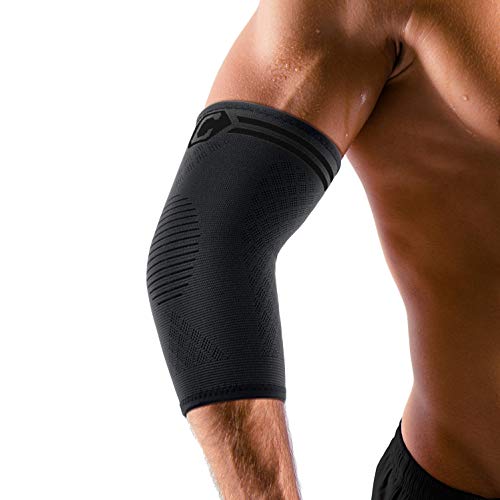
CAMBIVO 3D-Knit Elbow Sleeve is a pull-on, seamless 3D-knit elbow sleeve, contrasting with the thicker neoprene construction of the weightlifting-focused option. The maker describes graduated compression and an anti-slip design intended to stay in place during workouts and daily activity. Its large size is useful to note when comparing fit, though the dimensions do not establish how it will fit an individual arm.
Bottom line: Pick it for a pull-on knit elbow sleeve for training and everyday wear.
CYCLXY Arm & Elbow Sleeve

CYCLXY Arm & Elbow Sleeve is the only medium-size sleeve among these options, and its maker describes upgraded 3D knitting for compression and a stable fit. The product is framed as an arm and elbow support for tennis elbow, golfer’s elbow and weightlifting, making it a versatile knit-style alternative to a 5 mm lifting sleeve. The maker also cautions that excessive compression can affect blood flow. Since the size is medium, check arm measurements against the manufacturer’s sizing guide rather than choosing by label alone.
Bottom line: Consider it if a medium-size knit arm and elbow sleeve fits your measurements.
How to choose compression arm sleeves for weightlifting
Choose by the lifting support you want: elbow warmth, flexible compression or coverage extending along the arm. Weightlifting elbow sleeves are commonly made in neoprene or knit fabric; thickness affects warmth and how substantial the sleeve feels. A 5 mm sleeve is a middle-weight option in the common 3–7 mm range used for training sleeves, while thinner designs generally feel less bulky. If you want measurable warmth for heavy pressing, prioritize a sleeve that gives a thickness; if comfort and airflow matter more, consider a knit style. Sleeves do not replace sound lifting technique or medical care. Remove a sleeve if it causes numbness, tingling, unusual discoloration or increasing pain.
How an elbow sleeve should fit
An elbow sleeve should feel snug and stay in position without cutting off circulation or restricting normal elbow movement. Measure your arm at the point specified by the manufacturer’s size chart; charts may use the biceps, forearm or elbow circumference, so a size label alone is not a reliable cross-brand match. If your measurement falls between sizes, a tighter fit may increase pressure while a looser one may slide during repeated bending. Avoid pulling a sleeve on over jewelry or sharp fingernails that could snag knit fabric. A sleeve that causes tingling, numbness or a cold hand is too tight and should be removed.
Neoprene and knit sleeves compared
Neoprene sleeves typically provide more warmth and a thicker feel, while knit sleeves favor a lighter, fabric-like fit. Construction also changes how much of the arm is covered: an elbow sleeve concentrates material at the joint, whereas an extended arm sleeve reaches farther up the arm or down the forearm. Use the comparison below to match construction to your training preference; it describes typical distinctions, not a guarantee about every design.
| Style | Typical feel | Useful when |
|---|---|---|
| Neoprene elbow sleeve | Warm, substantial | You want focused elbow warmth for pressing |
| Knit elbow sleeve | Lighter, flexible | You prefer a pull-on fabric feel |
| Extended arm sleeve | Coverage beyond elbow | You want support over more of the arm |
When to wear sleeves and when to stop
Wear an elbow sleeve when its fit supports comfort without changing your normal range of motion; it should not be used to push through sharp or worsening pain. Many lifters reserve warmer sleeves for pressing movements and remove them between sets or after training if they become uncomfortable. Compression gear is not a substitute for gradual load increases: increases in training volume or intensity are best made progressively rather than in abrupt jumps. Stop using a sleeve if your hand becomes numb, tingly, unusually pale or cold. Persistent elbow pain, swelling or loss of motion warrants advice from a qualified clinician rather than relying on a tighter sleeve.
Frequently Asked Questions
Are 5 mm elbow sleeves good for weightlifting?
A 5 mm neoprene sleeve is a common middle-weight choice for lifting because it offers more warmth and structure than thin fabric. Whether it feels right depends on your preferred fit and range of motion.
Should elbow sleeves feel tight during lifting?
Elbow sleeves should be snug but should not cause numbness, tingling or a cold hand. Remove a sleeve that causes those symptoms, even if the size matches the label.
Do knit sleeves provide the same warmth as neoprene?
Knit sleeves generally feel lighter and less bulky than neoprene, while neoprene is commonly chosen for added warmth. Thickness and coverage also affect warmth, so compare those features when provided.
How do I measure for an elbow sleeve?
Use the circumference point named in the manufacturer’s sizing chart, such as the biceps, forearm or elbow. Measurements taken at a different point can lead to a poor fit even when the size label seems right.
Can I wear elbow sleeves for every exercise?
You can wear a sleeve for exercises where it stays comfortable and does not restrict normal motion. Remove it if it slips, causes discomfort or produces numbness or tingling.