
Best Glue for Car Door Seals: 4 Options Compared

3M Black Super Weatherstrip Adhesive 03602 is the best glue for most car door seal repairs because it is made to bond rubber weatherstripping to metal and grips in minutes. Choose a flexible silicone sealant instead when filling a gap or sealing a joint is the main task, rather than reattaching a loose seal.
Car weatherstrip adhesive holds flexible rubber seals against a vehicle body; a good match depends on the seal material and the surface it must bond to.
We earn a commission if you buy through links on this page. As an Amazon Associate I earn from qualifying purchases. Products are compared on manufacturer specifications, not hands-on testing.
- Best overall: 3M Black Super Weatherstrip Adhesive 03602 – Made to bond rubber weatherstripping to metal, with a flexible, waterproof seal that grips in minutes.
- Best for multipack repairs: DINGSEN Automotive Adhesive Sealant, 2 × 60 g – Includes two 60 g tubes and is described as staying flexible through hot and cold conditions.
| Product | Best for | Bonding focus | Flexibility | Cure time | Shop |
|---|---|---|---|---|---|
| 3M Black Super Weatherstrip Adhesive 03602 | Rubber-to-metal seals | Rubber to metal | Flexible | Grips in minutes | Check Price on Amazon |
| DINGSEN Automotive Adhesive Sealant, 2 × 60 g | Multi-seal repairs | Weatherstrip and gaskets | Flexible | — | Check Price on Amazon |
| LIKFCBOND Automotive Silicone Sealant, 50 ml | Small gap sealing | Multi-surface sealant | — | — | Check Price on Amazon |
| Automotive Body Adhesive Sealant, Black | Flexible joint sealing | Silicone sealant | Flexible | Initial: 5–10 min | Check Price on Amazon |
Glue for Car Door Seals
Match the adhesive to the repair: reattaching rubber to metal calls for a different emphasis than filling or sealing a joint.
3M Black Super Weatherstrip Adhesive 03602

For a loose rubber seal pulling away from a metal door frame, this is the most directly targeted option in this group. The 1 fl oz tube is formulated for weatherstripping and gaskets, and the maker says it forms a flexible, waterproof bond that resists heat, cold, vibration, oils, solvents and detergents. It can be brushed and spread from the tube, and no clamping is needed. The small tube is a limitation for multiple large repairs; choose a larger pack if you need more material.
Bottom line: Choose this for reattaching a rubber weatherstrip to a metal surface.
DINGSEN Automotive Adhesive Sealant, 2 × 60 g
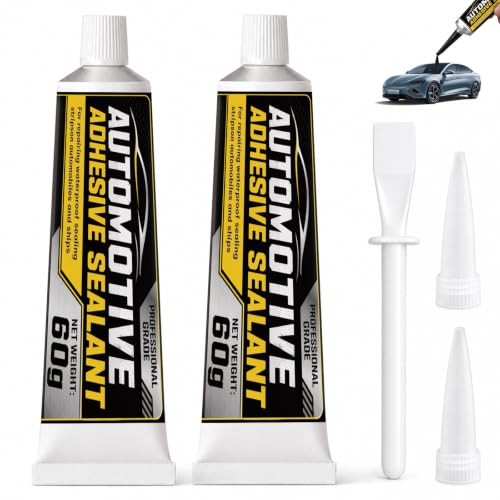
The two-tube pack sets this apart for jobs involving more than one seal. DINGSEN describes its adhesive as a waterproof weatherstrip and gasket bond for car and boat use, with flexibility intended to accommodate vibration and body movement. Its hot- and cold-resistant positioning suits repairs exposed to changing weather. The product is also described for interior trim, metal and plastic, so it may suit mixed-material work. The maker gives no cure-time figure in the specifications, so allow time for the bond to set before stressing the seal.
Bottom line: Choose this when you want two tubes for several weatherstrip or gasket repairs.
LIKFCBOND Automotive Silicone Sealant, 50 ml
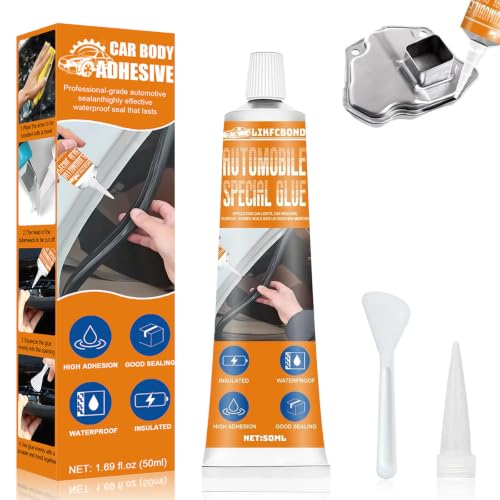
Unlike a dedicated weatherstrip adhesive, this 50 ml product is a silicone sealant aimed at varied repair and gap-filling tasks. The maker says it bonds metal, plastic, vinyl and weather stripping, and describes it as waterproof, weatherproof and temperature-resistant. Its pointed nozzle can help direct material into a narrow joint. That makes it a possible fit when sealing a gap is the priority, but the specifications do not establish a cure time or a specific rubber-to-metal method. For a detached door seal, the dedicated weatherstrip adhesive is the clearer match.
Bottom line: Choose this for a small, targeted sealing or gap-filling job.
Automotive Body Adhesive Sealant, Black

This silicone-based sealant emphasizes flexibility and vibration resistance, rather than a dedicated weatherstrip adhesive application. The maker describes it for bonding metal, plastic and rubber, and gives an initial cure time of 5–10 minutes at room temperature and a full cure time of 24 hours. Its black finish can blend with dark trim. Because its applications also include windshield sealing, confirm compatibility with the particular door-seal material before using it to reattach a loose weatherstrip; this distinction matters most for a seal that must stay bonded under repeated movement.
Bottom line: Choose this when a flexible silicone sealant and its cure window fit the repair.
How to choose glue for car door seals
For a rubber weatherstrip lifting from a metal door frame, choose an adhesive specifically intended for weatherstripping, such as a rubber-to-metal formula. Silicone sealants can be useful for sealing joints or filling gaps, but their general material claims do not establish the same repair method. Check whether the repair joins rubber to painted metal, rubber to plastic, or two rubber surfaces; the substrate changes what adhesive can grip. A useful decision rule is to use a dedicated weatherstrip adhesive for a detached seal and reserve a sealant for a gap or joint where sealing is the goal. Before applying any product, test compatibility on a hidden area if the seal or finish is unfamiliar.
Preparing a car door seal for bonding
Clean, dry contact surfaces are essential: dirt, old adhesive and moisture can keep a new bond from contacting the seal and body properly. Remove loose residue carefully without cutting or stretching the rubber, then let both surfaces dry fully. Many automotive weatherstrips use EPDM rubber, so avoid assuming that a solvent safe for metal is safe for the seal; check compatibility before using a strong cleaner. Keep adhesive off the visible face of the weatherstrip and the painted finish. A neat application matters because excess material can squeeze out when the seal is pressed into place and become difficult to remove after curing.
Applying weatherstrip adhesive without common mistakes
Follow the product’s application method, since contact adhesives and silicone sealants do not necessarily work the same way. Contact-style weatherstrip adhesives commonly call for a thin, even coating on the mating surfaces, a wait until tacky, then firm pressure; do not transfer that method to a product unless its directions call for it. Keep the door seal aligned before pressing it down, and avoid stretching the rubber, which can pull the ends apart later. Allow the bond to cure before washing the vehicle or repeatedly opening and closing the door. Work with ventilation, keep adhesive away from eyes and skin, and store it away from children and heat sources.
Frequently Asked Questions
Can silicone sealant hold a car door weatherstrip?
Some silicone sealants claim to bond rubber, but that alone does not confirm they are suitable for reattaching a moving weatherstrip. For rubber lifting from metal, a product made for weatherstrip bonding is the more direct match.
How long should car door seal glue cure?
Cure time depends on the formula and conditions. One silicone sealant here gives an initial set of 5–10 minutes at room temperature and a full cure of 24 hours; do not treat that timing as universal.
Should I glue the entire car door seal?
Usually, repair only the loose section unless the seal has detached along its length. Align the rubber without stretching it, because tension can pull the ends or corners loose again.
How do I remove old adhesive from a door seal?
Lift loose residue gently with a plastic tool and clean the surface without cutting the rubber or damaging paint. Test any cleaner on a hidden spot first, since some solvents can affect rubber or finishes.