
High Temp Exhaust Sealer: 5 Options Compared

LOCBONDSO 5.3 oz Exhaust Sealant suits most buyers who want a 5.3-ounce non-slumping paste for joints and leaks across exhaust components. Choose NASCA 5.3 oz Repair Kit or Visbella 150 g Repair Sealant Kit instead when reinforcing materials matter; choose LOCBONDSO 2.6 oz Muffler Repair Paste when a smaller 2.6-ounce container fits the repair.
Exhaust sealer is a paste or compound used on exhaust-system joints and damaged areas; it is not a substitute for replacing severely rusted or structurally weakened pipe.
We earn a commission if you buy through links on this page. As an Amazon Associate I earn from qualifying purchases. Products are compared on manufacturer specifications, not hands-on testing.
- Best overall: LOCBONDSO 5.3 oz Exhaust Sealant – A 5.3-ounce non-slumping paste made for joints and leaks across exhaust components.
- Best for larger repairs: NASCA 5.3 oz Repair Kit – Includes 5.3 ounces of sealant, reinforcing mesh, heat-resistant fiber tape, and gloves.
- Best for cars and motorcycles: Visbella 150 g Repair Sealant Kit – The 150-gram repair kit includes compound and fiberglass cloth and names both vehicle types.
| Product | Best for | Package size | Repair materials | Shop |
|---|---|---|---|---|
| LOCBONDSO 5.3 oz Exhaust Sealant | General exhaust repairs | 5.3 oz | Paste only | Check Price on Amazon |
| NASCA 5.3 oz Repair Kit | Reinforced patching | 5.3 oz | Mesh, fiber tape, gloves | Check Price on Amazon |
| NASCA 5.3 oz Exhaust Sealant | Paste-only sealing | 5.3 oz | Paste only | Check Price on Amazon |
| Visbella 150 g Repair Sealant Kit | Car and motorcycle use | 5.29 oz | Fiberglass cloth | Check Price on Amazon |
| LOCBONDSO 2.6 oz Muffler Repair Paste | Smaller repairs | 2.6 oz | Paste only | Check Price on Amazon |
High temp exhaust sealers compared
Compare the paste sizes and included reinforcement to match the repair you need to make.
LOCBONDSO 5.3 oz Exhaust Sealant

LOCBONDSO 5.3 oz Exhaust Sealant is a paste-only option with a larger 5.3-ounce container and a non-slumping formula. The maker says it is rated to 2,012°F and intended for sealing exhaust-system joints, mufflers, tailpipes, and catalytic converters. That broad component range makes it a fit for buyers who need sealant rather than a kit of reinforcing materials. The package does not include mesh or cloth, so choose another option if a hole or damaged area needs a reinforcing layer. Exhaust repairs should be made only after the system has cooled completely.
Bottom line: Choose this for paste-only repairs on exhaust joints or components.
NASCA 5.3 oz Repair Kit

NASCA 5.3 oz Repair Kit stands apart by bundling reinforcing mesh, heat-resistant fiber tape, and gloves with 5.3 ounces of sealant. The maker says the paste withstands temperatures up to 2,012°F and is meant for holes, cracks, and other exhaust leaks. The added materials make it the more relevant choice when a simple paste application may not provide the support a damaged area needs. This kit is bulkier in scope than a paste-only container, and the maker does not give dimensions for the mesh or tape; confirm the repair area can be covered before relying on them.
Bottom line: Pick this when the repair calls for reinforcement as well as paste.
NASCA 5.3 oz Exhaust Sealant

NASCA 5.3 oz Exhaust Sealant is another 5.3-ounce paste-only choice, with the maker describing it as non-slumping and rated up to 2,012°F. The maker also claims a gas-tight bond that will not crack or shrink under intense engine temperatures. Its main distinction from LOCBONDSO 5.3 oz Exhaust Sealant is that the claims emphasize a permanent bond and crack sealing, while no reinforcing materials are included. It suits buyers focused on applying paste to a leak or joint. For a larger hole or structurally weakened pipe, sealing paste alone may not be an adequate repair.
Bottom line: Choose this for a paste-only repair where the claimed gas-tight seal is a priority.
Visbella 150 g Repair Sealant Kit
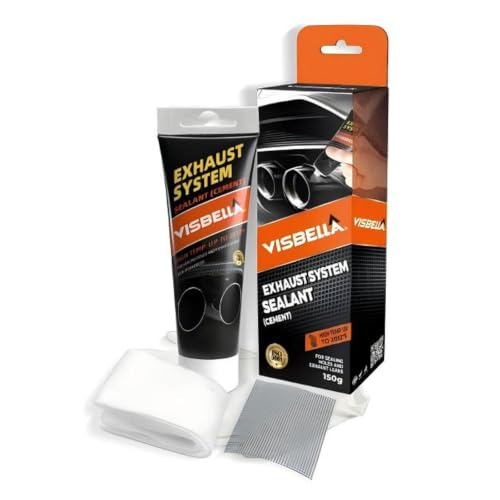
Visbella 150 g Repair Sealant Kit is the only option that explicitly names both cars and motorcycles and includes fiberglass cloth with its compound. Its 150-gram package weighs about 5.29 ounces, less than the 5.3-ounce options, and the maker says it withstands temperatures up to 2,012°F. That combination fits a buyer who wants cloth reinforcement and a product identified for both vehicle types. Check the condition of the pipe first: cloth and compound cannot restore metal that has lost structural strength.
Bottom line: Choose this when fiberglass cloth and car-or-motorcycle compatibility matter.
LOCBONDSO 2.6 oz Muffler Repair Paste

LOCBONDSO 2.6 oz Muffler Repair Paste offers a smaller 2.6-ounce container of non-slumping exhaust paste, compared with the 5.3-ounce paste and kits. The maker says it withstands temperatures up to 2,012°F and is intended for exhaust-system joints, mufflers, tailpipes, and catalytic converters. Its smaller quantity may suit a buyer handling a limited repair who does not need a reinforcement kit. It does not include mesh, tape, or cloth, and the maker does not define how much area one container covers. For a broad patch, a kit with reinforcement may be a better match.
Bottom line: Pick this for a limited repair when a smaller amount of paste is enough.
How to choose an exhaust sealer
Choose by the damage and the materials the repair needs, not by the highest temperature claim alone. Exhaust sealant is commonly used to seal joints and small leaks; a hole that needs support calls for a reinforcement material such as mesh or fiberglass cloth. A pipe with deep corrosion or a loose, broken connection needs repair or replacement rather than a layer of paste. Most options here are paste-only, while two include reinforcing material. Make sure the product suits the metal surface and repair location, and work on a fully cool exhaust system. Hot exhaust components can cause severe burns, and exhaust leaks can let carbon monoxide enter occupied areas.
Use this need-to-choice guide to narrow the format:
| Repair need | Format to consider |
|---|---|
| Joint or limited leak | Paste-only sealer |
| Hole needing a backing layer | Kit with mesh or cloth |
| Severely rusted or weakened pipe | Replace or have the damaged section repaired |
Paste versus reinforcement kits
Paste-only sealers have fewer components to handle, while reinforcement kits pair compound with mesh, tape, or cloth for a patch-style repair. The package contents matter because a paste cannot provide the same physical backing as a fabric or mesh layer. Mesh and cloth also have finite coverage, so kit contents should be checked against the repair area before work begins. These products cite a maximum heat rating of 2,012°F, but a rating alone does not establish that a compound is suitable for every exhaust location or damaged surface. If a repair is near a joint, clamp, sensor, or moving component, consider whether added material could interfere with fit or service access.
Exhaust systems operate at high temperatures and can retain heat after the engine stops. Let the system cool fully before inspection or application; do not test a fresh repair by running the engine in an enclosed space.
Preparing an exhaust leak repair
Preparation affects how well repair compounds contact the surface: the area should be cool, clean, and free of loose rust, oil, and soot before application. Loose scale can separate from the pipe and take sealant with it, while oil or residue can prevent contact. Identify whether the leak is at a joint or through the pipe wall, because the latter may need a backing layer or a replacement section. Avoid covering sensors, drain openings, or connection hardware. Exhaust leaks are not only noisy; carbon monoxide is colorless and odorless, so a cabin odor is not a reliable safety check. If fumes enter the cabin or a leak is near the passenger compartment, stop driving and arrange a professional inspection.
When to replace rather than seal
Replace or professionally repair an exhaust section when corrosion has made the metal thin, a hanger or connection has failed, or the damaged area cannot hold a patch securely. Sealant is for sealing, not restoring missing metal or supporting a pipe under mechanical load. A small local leak on intact metal is a more appropriate candidate for paste or a reinforced patch. Exhaust parts expand as they heat and contract as they cool, so a repair at a stressed joint can be less durable than a repair on a stable surface. Check for recurring noise, soot marks, or fumes after work; any continuing leak calls for further repair, not another layer over a failed patch.
Frequently Asked Questions
Can exhaust sealer fix a hole in a muffler?
A small hole may be a candidate for a compound-and-reinforcement patch if the surrounding metal is sound. Deep rust or a hole with weakened edges usually calls for section replacement because sealant cannot rebuild missing metal.
How long should exhaust sealer cure before driving?
Cure time varies by formulation and conditions, and no single time applies to every exhaust sealer. Use the package’s curing directions and keep the engine off while applying the compound; starting the engine too soon can disturb an uncured repair.
Can exhaust sealer be used on a cold exhaust?
Yes, apply it only after the exhaust has cooled completely so hot metal cannot burn you or affect application. Exhaust components can remain hot after shutdown, so do not judge temperature by appearance.
Is an exhaust leak dangerous inside a car?
Yes, exhaust can contain carbon monoxide, which is colorless and odorless. If fumes enter the cabin, stop driving and have the exhaust system inspected rather than relying on smell to judge exposure.
When should a muffler be replaced instead of sealed?
Replace or professionally repair a muffler when rust has thinned the metal, a connection or hanger has failed, or the repair area cannot support a patch. Sealant can close a leak on sound material but cannot restore structural strength.