
Schultz Grass Seed: 4 Options Compared by Lawn Fit

For a Schultz grass seed option, Schultz Certain Seed is the direct match, with a 3.85-pound bag intended for shade and sunny areas. Choose another option if you need a mix explicitly intended for slopes, patch repair, or a defined sunlight range.
Grass seed blends vary by species and site conditions; the right match depends on sun exposure, intended use, and when soil temperatures support germination.
We earn a commission if you buy through links on this page. As an Amazon Associate I earn from qualifying purchases. Products are compared on manufacturer specifications, not hands-on testing.
- Best overall: Schultz Certain Seed – The Schultz seed is described for partial shade, full shade, and sunny areas.
- Best for measured shade: Pennington Smart Seed Dense Shade Mix – Designed for areas receiving 2 to 6 hours of daily sunlight.
- Best for slopes: Pennington No Mow Mix – The mix is intended for hills and erosion-prone areas and grows to about 12 inches.
| Product | Best for | Bag weight | Sunlight fit | Intended use | Shop |
|---|---|---|---|---|---|
| Schultz Certain Seed | Shade or sun | 3.85 lb | Partial shade to full shade; sunny areas | New lawn, overseeding, or patch repair | Check Price on Amazon |
| Pennington Smart Seed Dense Shade Mix | Measured shade | 7 lb | 2–6 hours daily sunlight | New lawns or overseeding | Check Price on Amazon |
| Pennington No Mow Mix | Low-mow slopes | 3 lb | — | Slopes, hills, erosion-prone areas | Check Price on Amazon |
| Pennington Bare Spot Repair Mix Central | Bare spot repair | 1 lb | 4–8 hours sunlight | Patch repair | Check Price on Amazon |
Schultz Grass Seed and Alternatives
Match the seed to your site’s sunlight and purpose before choosing a bag.
Schultz Certain Seed

Schultz Certain Seed is the only Schultz option in this group, and its claimed fit spans partial shade, full shade, and sunny areas. The 3.85-pound package is intended for establishing lawn grass, overseeding, and repairing patches; its features also describe sandy soil as a suitable setting. That range may suit a yard with mixed light where a single seed choice is preferred. The trade-off is that the product does not give a numeric sunlight range or a named grass species, so buyers planning a precise species match should verify the bag’s seed label before planting.
Bottom line: Choose this for a Schultz-branded seed aimed at mixed light conditions.
Pennington Smart Seed Dense Shade Mix
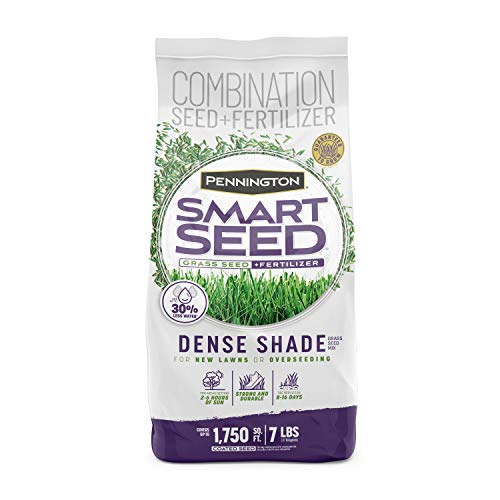
Unlike the Schultz seed, Pennington Smart Seed Dense Shade Mix specifies a daily sunlight window: 2 to 6 hours for heavily shaded areas. The 7-pound mix includes tall fescue, perennial ryegrass, and Kentucky bluegrass, plus a fertilizer coating. The maker says its breeding helps the grass become more drought tolerant after establishment. This option is useful when the shaded lawn fits the light range and you want named grass types. Its intended focus is shade, so it is less suitable than a broader-use seed for a yard that is mostly sunny.
Bottom line: Pick this when your shaded lawn receives 2 to 6 hours of sun.
Pennington No Mow Mix

For difficult terrain rather than shade-first planting, Pennington No Mow Mix is a fescue mix designed for slopes, hills, and erosion-prone areas. The grass can reach 12 inches before naturally flopping to about 6 inches, reducing the need to mow regularly compared with a conventional short lawn. The product also describes the mix as drought tolerant. It is a better fit for hard-to-mow ground than for buyers seeking a sunlight tolerance or a Schultz seed; the taller, looser growth habit will not suit someone who wants a closely clipped lawn.
Bottom line: Choose this for a slope or erosion-prone area where a taller lawn is acceptable.
Pennington Bare Spot Repair Mix Central

Where the main problem is a thin patch, Pennington Bare Spot Repair Mix Central is formulated specifically for central-region bare-spot repair rather than whole-lawn establishment. Its sunlight range is 4 to 8 hours, and the package claims coverage up to 100 square feet with results in 5 to 14 days. That makes it a focused option for filling damaged or sparse areas. A 1-pound bag is less suited to seeding a large new lawn, and the central-region designation means buyers outside that region should confirm the mix fits local conditions.
Bottom line: Choose this for central-region bare spots receiving 4 to 8 hours of sun.
How to match grass seed to sunlight
Match the seed’s light range to the hours of direct sun at the planting area. A useful starting point is to observe the site across the middle of a clear day; tree shade shifts as the sun moves, so a morning-only estimate can misclassify a lawn. Pennington Smart Seed Dense Shade Mix targets 2 to 6 hours daily, while Pennington Bare Spot Repair Mix Central is described for 4 to 8 hours. Those ranges overlap, but their intended uses differ: one is a dense-shade lawn mix and the other a patch-repair mix. Deep shade under dense evergreen canopy can be difficult for turf because grass needs light to sustain growth; consider whether a non-turf ground cover is more appropriate where sunlight is very limited.
When to seed a lawn
Cool-season grasses are generally seeded in late summer or early fall, when soil remains warm for germination and cooler air reduces stress on seedlings. Spring is another option, but seedlings then face summer heat sooner. Pennington Smart Seed Dense Shade Mix gives spring or fall planting when average daily temperatures are 60°F to 80°F. For any seed, prepare loose soil, spread evenly, and keep the seedbed consistently moist during germination; drying out can interrupt establishment. Avoid burying grass seed deeply: most lawn seed needs contact with the soil surface and only a light covering, if any. The exact timing should reflect the grass type and local climate.
Choose between lawn seed uses
Choose based on the job, not only the bag size: shade establishment, slope coverage, and bare-spot repair call for different products. A patch mix can be convenient for localized damage, while a broader lawn project needs enough seed for the full area at the label’s seeding rate. Compare the purpose and stated fit before spreading.
| Site need | Relevant fit | Selection cue |
|---|---|---|
| Shaded lawn | Pennington Smart Seed Dense Shade Mix or Schultz Certain Seed | Use stated light range where available |
| Slopes or hills | Pennington No Mow Mix | Accept taller, lower-mow growth |
| Central-region bare patch | Pennington Bare Spot Repair Mix Central | Match patch area and sunlight range |
For a new lawn, calculate square footage before buying and use the package’s seeding-rate directions; overseeding generally uses less seed per square foot than establishing bare soil. A practical rule is to reserve patch-repair products for areas no larger than their coverage, rather than treating an entire lawn with them.
Prepare and care for newly seeded grass
New grass needs steady surface moisture until seedlings emerge and begin rooting; short, light watering is often more useful than infrequent soaking during germination. Once grass is established, water less often but deeply to encourage deeper roots. Keep foot traffic and mowing off seedlings until they are tall enough to withstand mowing, and use a sharp mower blade to avoid pulling young plants. Pennington No Mow Mix is intended to grow taller and flop naturally, so it is not a conventional close-cut lawn choice. For ordinary lawn mixes, avoid mowing more than one-third of the grass height at once, which limits stress and helps preserve coverage.
Frequently Asked Questions
How many hours of sun does grass need each day?
Many turf grasses perform best with roughly 4 to 6 hours of direct sunlight, though shade-tolerant mixes can handle less. Compare the planting area with the seed’s light range; dense shade may favor a non-grass ground cover.
When should I plant grass seed in spring or fall?
Fall is often the better window for cool-season lawn seed because warm soil supports germination while cooler air reduces stress. Pennington Smart Seed Dense Shade Mix specifies spring or fall planting when average daily temperatures are 60°F to 80°F.
How long should new grass seed stay moist?
Keep the seedbed consistently moist through germination and early rooting, often by watering lightly more than once per day in warm or dry weather. Reduce watering frequency after seedlings are established and roots are growing into the soil.
Can grass seed grow well on a slope?
Grass can establish on slopes, but runoff can wash seed away before roots form. Use a mix intended for slopes such as Pennington No Mow Mix, and water gently so the soil does not erode.
How much grass seed do I need for bare spots?
Calculate the patch area in square feet and compare it with the package’s coverage. Pennington Bare Spot Repair Mix Central claims up to 100 square feet per 1-pound bag, so larger repairs may need a different amount.