
SkyLift Roof Riser Comparison by Height and Saddle

SkyLift 18-Inch, 3-1/2-Inch Saddle is the best starting point for most buyers who need an 18-inch SkyLift riser with a 3-1/2-inch saddle. Choose SkyLift SK24-HD3.5 if you need 24 inches of height, or SkyLift SK18-HD5.5 if your framing calls for a 5-1/2-inch saddle.
A roof riser is structural hardware that elevates a framed patio cover; match both its height and saddle to the roof plan and beam before choosing.
We earn a commission if you buy through links on this page. As an Amazon Associate I earn from qualifying purchases. Products are compared on manufacturer specifications, not hands-on testing.
- Best overall: SkyLift 18-Inch, 3-1/2-Inch Saddle – It combines an 18-inch height with a 3-1/2-inch saddle.
- Best for added height: SkyLift SK24-HD3.5 – Its 24-inch height distinguishes it from the 18-inch options.
- Best for wider saddle: SkyLift SK18-HD5.5 – Its 5-1/2-inch saddle is wider than the other SkyLift options.
| Product | Best for | Height | Saddle width | Finish | Shop |
|---|---|---|---|---|---|
| SkyLift 18-Inch, 3-1/2-Inch Saddle | Standard saddle fit | 18 in | 3-1/2 in | Black | Check Price on Amazon |
| SkyLift SK24-HD3.5 | Higher roof elevation | 24 in | 3-1/2 in | Powder-coated black | Check Price on Amazon |
| SkyLift SK18-HD5.5 | Wider saddle fit | 18 in | 5-1/2 in | Powder-coated black | Check Price on Amazon |
SkyLift Roof Risers
Compare the available SkyLift models by height, saddle width, and finish to narrow down the right fit.
SkyLift 18-Inch, 3-1/2-Inch Saddle

SkyLift 18-Inch, 3-1/2-Inch Saddle pairs an 18-inch rise with a 3-1/2-inch saddle, making it the straightforward choice when both measurements match the patio-cover framing plan. Its dimensions are 25 inches long, 9 inches wide, and 4 inches high, and it weighs about 14.3 pounds. The product is identified for patio-cover and pergola attachments.
The limitation is its fixed height and saddle size: choose another fit if the plan calls for a different rise or beam seat. For a structural roof connection, confirm the engineered layout and attachment requirements before installation.
Bottom line: Choose this when an 18-inch rise and 3-1/2-inch saddle match the framing plan.
SkyLift SK24-HD3.5
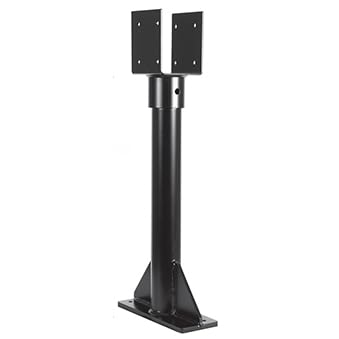
SkyLift SK24-HD3.5 provides a 24-inch rise while retaining a 3-1/2-inch saddle, so it suits plans that need more elevation without changing that saddle width. SkyLift says its bracket hardware supports an elevated wood-framed patio roof cover, and that the higher roof pitch can reduce leaks and debris accumulation while leaving gutters undisturbed for maintenance. It is powder-coated black.
Its 24-inch height is the key constraint; it is not a substitute for an 18-inch riser when the plans call for a lower elevation. Confirm the intended rise, beam fit, and structural attachment before selecting it.
Bottom line: Choose this when the design calls for a 24-inch rise and 3-1/2-inch saddle.
SkyLift SK18-HD5.5
SkyLift SK18-HD5.5 keeps the 18-inch rise used by SkyLift 18-Inch, 3-1/2-Inch Saddle but has a wider 5-1/2-inch saddle. That saddle-width difference is the deciding feature for buyers whose planned beam seat requires the wider size. SkyLift says its bracket hardware is designed to support an elevated wood-framed patio roof cover; the finish is powder-coated black.
The 5-1/2-inch saddle can be a mismatch for narrower framing, and the 18-inch height will not meet a plan calling for 24 inches. Match the saddle and rise to the approved framing design rather than choosing on appearance alone.
Bottom line: Choose this when an 18-inch rise and 5-1/2-inch saddle match the beam.
How to choose a SkyLift roof riser
Choose by the specified rise and saddle width first; finish is secondary to a structural fit. The options here separate into an 18-inch rise with either a 3-1/2-inch or 5-1/2-inch saddle, plus a 24-inch rise with a 3-1/2-inch saddle. A saddle is the seat that receives the beam, so its width needs to correspond to the framing design. Roof risers carry structural loads, and the required number, spacing, and attachment depend on the roof plan and its engineering. Do not infer a safe span from the product height or color. If either the rise or saddle width differs from the plan, pause and confirm the correct hardware before installation.
Match saddle width and roof height
Match both dimensions to the framing plan: the same saddle width does not mean the risers have the same height, and the same height does not mean their saddles fit the same beam. Here, the 18-inch choices have 3-1/2-inch or 5-1/2-inch saddles, while the 24-inch choice has a 3-1/2-inch saddle. If the specified beam seat is 5-1/2 inches, select a model with that saddle rather than assuming a narrower one will fit. Likewise, if the plan specifies an 18-inch rise, do not substitute a 24-inch unit simply to gain clearance. Have the roof design or installer resolve any mismatch before ordering.
The table summarizes the dimension-based choice.
| Plan requirement | Matching option |
|---|---|
| 18-inch rise, 3-1/2-inch saddle | SkyLift 18-Inch, 3-1/2-Inch Saddle |
| 24-inch rise, 3-1/2-inch saddle | SkyLift SK24-HD3.5 |
| 18-inch rise, 5-1/2-inch saddle | SkyLift SK18-HD5.5 |
Plan a safe roof-riser installation
Roof risers are structural connectors, so installation must follow the engineered roof layout rather than a generic spacing guess. Attachment into rafter tails or blocking is a common design approach, but the required connection depends on the framing and approved plans. Confirm the fastener type, attachment location, riser spacing, allowable span, and any required beam overhang from project-specific engineering. A roof cover adds loads that can vary with wind, snow, and local code conditions; a product’s height alone does not establish capacity. If the plans do not specify the connector configuration or the framing differs from the drawings, have a qualified professional determine the correct connection before work begins.
Frequently Asked Questions
Can I use an 18-inch riser instead of a 24-inch riser?
Only if the roof design permits the lower rise. The options compared here differ by 6 inches in height, enough to change the intended roof elevation and pitch.
How do I choose the correct saddle width?
Match the saddle to the beam seat called for in the framing plan. These options use 3-1/2-inch and 5-1/2-inch saddles, so measure the specified beam width and do not assume the sizes are interchangeable.
How far apart should patio roof risers be installed?
Use the spacing in the project’s engineered plans, not a universal interval. Required spacing depends on the roof loads, framing, connection, and local requirements.
Can a roof riser attach to rafter tails?
Some roof-riser designs attach into rafter tails or blocking, but the approved connection must match the framing and engineering. Verify the attachment point and fasteners before installation.
Do taller roof risers reduce leaks?
A higher roof pitch can help shed water, but the riser alone does not guarantee a leak-free roof. Roof pitch, flashing, roofing material, and the wall connection also affect water management.