
Long Flexible Pipe Cleaning Brush: 4 Options Compared

For a long flexible pipe cleaning brush, the 67-inch double-ended set is the broadest match for varied tube diameters, while the 60-inch brush suits buyers who want a single nylon-bristle head with an extraction loop. Choose a different style if the job is removing hair from an open household drain rather than scrubbing inside a tube.
We earn a commission if you buy through links on this page. As an Amazon Associate I earn from qualifying purchases. Products are compared on manufacturer specifications, not hands-on testing.
- Best overall: 67-Inch Double-Ended Drain Brush Set – 67-inch reach and two differently sized brush heads cover narrow and thicker tubing.
- Best for varied tube sizes: Bozenu 66-Inch Brush Set – The set includes 66- and 58-inch brushes plus two short straw brushes.
- Best for controlled retrieval: ICEYLI 60-Inch Flexible Tube Brush – The 60-inch brush has a loop end intended to help pull it back out.
| Product | Best for | Length | Brush heads | Set contents | Shop |
|---|---|---|---|---|---|
| 67-Inch Double-Ended Drain Brush Set | Mixed tube sizes | 67 in | Two sizes | 1 long brush + 2 straw brushes | Check Price on Amazon |
| Bozenu 66-Inch Brush Set | Multiple brush lengths | 66 in; 58 in; 8 in | 0.4, 0.5, 0.6, 1.2 in | 2 long brushes + 2 straw brushes | Check Price on Amazon |
| ICEYLI 60-Inch Flexible Tube Brush | Loop-end retrieval | 60 in | One size | 2 brushes | Check Price on Amazon |
| 3-Piece Flexible Long Drain Brush Set | Several head sizes | 67 in | Five sizes | 3 brushes | Check Price on Amazon |
Long Flexible Pipe Cleaning Brushes
Compare overall reach, brush-head sizes and the number of brushes before choosing a tube cleaner.
67-Inch Double-Ended Drain Brush Set

The 67-inch set combines long reach with two different brush heads on one flexible tool, making it the most adaptable pick here for tubes of differing widths. It also includes two 8.2-inch straw brushes. The maker describes it for refrigerator defrost tubes, aquarium filters, sinks and other narrow tubing. Choose it when reach and more than one head size matter; its compact set contents may not replace a dedicated clog-removal tool for an open drain.
Bottom line: Choose this set when one long tool needs to handle more than one tube diameter.
Bozenu 66-Inch Brush Set

The Bozenu set is the only option here with two separate long brushes as well as two short straw cleaners. Its 66-inch dual-ended brush has 0.6- and 1.2-inch bristle heads, and the 58-inch brush has a 0.5-inch head; each straw brush is 8 inches long with a 0.4-inch head. Nylon bristles and flexible shafts suit cleaning tubes with different openings. The longest reach is slightly shorter than the 67-inch options, which matters when the tube is especially deep.
Bottom line: Pick this set if separate long brushes and several stated head diameters are useful.
ICEYLI 60-Inch Flexible Tube Brush
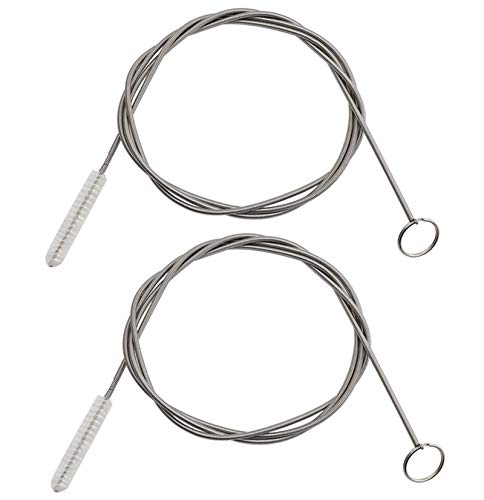
The ICEYLI brush pairs a single nylon-bristle head with a loop at the opposite end, a useful distinction for retrieving a flexible cleaner from tubing. The stainless-steel shaft measures 60 inches and is described as flexible enough for curved tubing with bends under 90 degrees. The set contains two brushes. Its single head size offers less sizing choice than multi-head sets, so match the bristles to the tube opening before using it.
Bottom line: Choose it for a simple long brush with a loop end and a two-piece pack.
3-Piece Flexible Long Drain Brush Set

The three-piece set emphasizes five different brush-head sizes, from 0.39 to 2.26 inches, for buyers who need to match different openings. Its uses include kitchen pipes, fish tanks, water-pump accessories, sunroofs and refrigerator tubes. The set uses stainless-steel hose shafts and plastic brush heads. The maker does not fully describe each brush’s dimensions or arrangement, so choose it for head-size variety rather than a particular head layout.
Bottom line: Pick this set when the range of stated head sizes is the main deciding factor.
How to Choose a Long Flexible Pipe Cleaning Brush
Choose by tube opening, reach and brush-head material before considering the number of pieces. A head that is too wide can jam in a narrow tube; a head that is too small may not scrub the wall effectively. Measure the tube’s inside diameter and compare it with the brush-head diameter where given. For a deep tube, select a brush longer than the reach you need so you can hold and withdraw its end.
Flexible wire shafts bend around gentle curves, but a tight turn can snag bristles or kink a shaft. Nylon bristles are commonly used for tubing because they scrub without the cutting action of metal bristles; avoid forcing any brush through a bend. For delicate or easily scratched tubing, use light pressure and stop if resistance rises.
Brush Head Sizes and Tube Fit
Match bristle diameter to the tube’s inside opening, not its outside measurement. A brush should enter freely while its bristles still contact the inner wall; when only one diameter is provided, test the fit gently at the tube entrance before feeding it deeper. If a tube narrows or has an internal connector, use a smaller head than the widest opening allows.
The sizes shown below are brush-head diameters where the specifications provide them; “multiple” means more than one head size is included, not that every head diameter is known.
| Cleaning need | Brush choice | Fit rule |
|---|---|---|
| One narrow tube | Single-head brush | Head enters without force |
| Different tube openings | Multiple-head set | Choose the closest smaller head |
| Deep tubing | Long flexible shaft | Shaft exceeds required reach |
Using a Flexible Brush Without Damaging Tubing
Feed a flexible brush slowly and rotate it gently rather than pushing hard. If the shaft meets firm resistance, pull it back slightly and change its angle; forcing it can lodge the brush or damage soft tubing. Keep a hand on the exposed end throughout cleaning, especially when the brush has no retrieval loop.
For appliance drain tubes, disconnect power before accessing parts that require opening an appliance, and do not push debris farther down a drain. Remove loosened residue with water only if the appliance or tube’s care guidance allows it. A long pipe brush is for scrubbing accessible tubing, not for clearing a solid obstruction deep inside plumbing.
Cleaning and Storing Pipe Brushes
Rinse nylon bristles after each use and remove visible residue before storing the brush dry. Moist debris left on a brush can transfer back into the next tube, while a damp metal shaft stored in a closed space may remain wet longer. Keep brushes used on drains separate from brushes used on drinking-water equipment or food-contact items.
Inspect the bristles and shaft before each use. Retire a brush with loose bristles, a sharp exposed wire end or a kink that prevents smooth movement; a damaged shaft can scratch a tube or become difficult to retrieve. Keep long tools away from children, and do not leave a brush inserted where someone could pull or trip over it.
Frequently Asked Questions
How long should a pipe cleaning brush be?
Choose a brush at least as long as the tube section you need to reach, with extra shaft left outside for control and retrieval. The options here measure 58 to 67 inches for the long brushes.
What brush head size fits a narrow tube?
Measure the tube’s inside diameter and select a bristle head that enters without force while still touching the inner wall. For a tube with a bend or connector, choose a smaller head than the tightest opening.
Can a flexible brush clean a curved hose?
A flexible shaft can follow gentle curves, but tight bends can snag bristles or kink the wire. Feed it slowly and withdraw it if resistance increases rather than forcing it through.
Are nylon bristles safe for plastic tubing?
Nylon bristles are generally less abrasive than metal bristles, making them a common choice for plastic tubing. Use light pressure and stop if the tube surface catches or the brush binds.