
Spray Guns for Popcorn Ceilings Compared by Type

Wagner Power Tex V2 is the spray gun to consider first for popcorn ceilings because it is an electric texture sprayer with a dedicated acoustical-popcorn nozzle. Choose a hopper gun instead if you already have a compatible air supply or want a larger hopper.
These tools spray texture material through a nozzle to form a surface pattern; ceiling work calls for controlled overhead handling and a mix that will flow through the selected nozzle.
We earn a commission if you buy through links on this page. As an Amazon Associate I earn from qualifying purchases. Products are compared on manufacturer specifications, not hands-on testing.
- Best overall: Wagner Power Tex V2 – Electric operation and an included acoustical-popcorn nozzle make it the most directly matched option.
- Best for larger hopper: Kxuyola 3L Texture Hopper Gun – Its 1.45-gallon hopper holds more material than the other models.
- Best for knockdown work: InoKraft TexCraft Texture Spray Gun – It includes a knockdown knife and sponge along with three nozzles.
| Product | Best for | Power type | Hopper capacity | Nozzle sizes | Shop |
|---|---|---|---|---|---|
| Wagner Power Tex V2 | Electric application | Electric | 1 gallon | Popcorn, knockdown, orange peel | Check Price on Amazon |
| Kxuyola 3L Texture Hopper Gun | Large hopper | Air-powered hopper gun | 1.45 gallons | 4, 6, 8 mm | Check Price on Amazon |
| 1.5-Gallon Air Hopper Texture Sprayer | Adjustable control | Air-powered hopper gun | 1.5 gallons | 4, 6, 8 mm | Check Price on Amazon |
| KCNKCN Air Texture Gun | Stainless nozzles | Air-powered hopper gun | 1.5 gallons | 4, 6, 8 mm | Check Price on Amazon |
| InoKraft TexCraft Texture Spray Gun | Knockdown accessories | Air-powered hopper gun | 1.32 gallons | 4.5, 6, 8 mm | Check Price on Amazon |
Spray Guns for Popcorn Ceilings
Compare the application style, hopper capacity and nozzle sizes before choosing a tool for ceiling texture.
Wagner Power Tex V2

Unlike the air-powered hopper guns, this electric sprayer has a built-in air turbine and an interchangeable nozzle for acoustical popcorn texture. Its 1-gallon hopper can also be repositioned for ceiling or wall work, and a built-in arm rest supports handling. The three included nozzles cover popcorn, knockdown and orange-peel patterns, so it suits a buyer who wants those texture options in one electric tool. The smaller hopper means more frequent refills than the larger-capacity alternatives, which matters on broad ceilings.
Bottom line: Choose this if you want an electric tool with a popcorn-specific nozzle.
Kxuyola 3L Texture Hopper Gun

With a 1.45-gallon hopper, this gun offers the largest capacity among these options. Its three nozzles—4 mm, 6 mm and 8 mm—are intended for several textures, including popcorn, while the elbow adapter is designed to help with ceiling angles and tight spaces. Adjustable flow provides another way to control application. This is a fit for users who prioritize fewer refills and ceiling-oriented handling. It is a hopper gun rather than a self-contained electric sprayer, so confirm the compressor connection and air requirements before buying.
Bottom line: Choose this for a larger hopper and an included ceiling elbow adapter.
1.5-Gallon Air Hopper Texture Sprayer

The adjustable spray valve and air valve set this air hopper gun apart for users who want controls for both material flow and air. Its 1.5-gallon hopper and 4 mm, 6 mm and 8 mm interchangeable nozzles support ceiling, wall and textured drywall work, including popcorn. The trigger is described as lightweight and easy to pull, which may matter during overhead passes. The material includes furniture and cabinet applications as well, so check that your intended ceiling compound is suitable for the chosen nozzle and tool.
Bottom line: Choose this if separate spray and air adjustments matter to your workflow.
KCNKCN Air Texture Gun
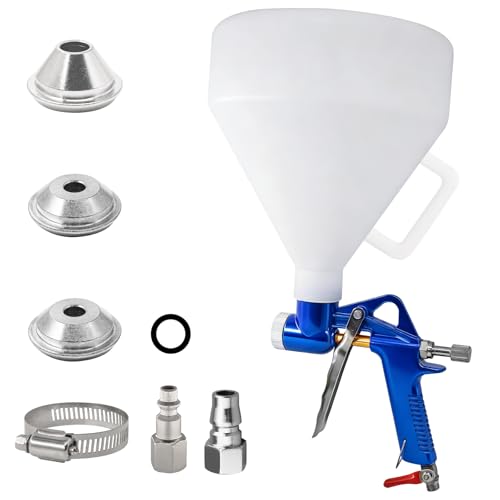
This model distinguishes itself with stainless steel 4 mm, 6 mm and 8 mm nozzles for fine, medium or heavy texture patterns. Its 1.5-gallon hopper suits larger areas, and heavy-duty clamps are intended to keep the hopper coupled during spraying. The maker advises hand-tightening the soft-copper air inlet connector with a washer and using diluted mixtures to help prevent nozzle blockage. Those setup steps make it especially important to prepare the compound correctly. As with the other air hopper options, verify compressor compatibility before committing.
Bottom line: Choose this for stainless steel nozzle options and a 1.5-gallon hopper.
InoKraft TexCraft Texture Spray Gun
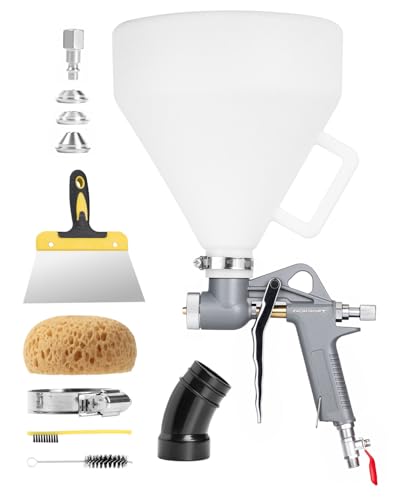
The included knockdown knife and sponge give this kit a finishing option beyond spraying, unlike the nozzle-only kits. Its 1.32-gallon hopper holds 5 liters, and the three nozzles measure 4.5 mm, 6 mm and 8 mm; the kit also includes an elbow hose. The self-locking trigger is intended to let the user release a hand from holding the trigger continuously. This suits a project that may combine popcorn-style application with knockdown or sponge finishes. Its 4.5 mm smallest nozzle differs from the 4 mm options on several alternatives.
Bottom line: Choose this if you also need knockdown or sponge finishing accessories.
How to Choose a Popcorn Ceiling Spray Gun
Start by deciding whether you want an electric texture sprayer or an air-powered hopper gun: the electric option has its own turbine, while the hopper guns rely on an air connection. Nozzle size affects the pattern and the material that can pass through, so match the nozzle to the compound and texture rather than assuming one opening suits every mix. These products include nozzle sizes from 4 mm to 8 mm, with one kit starting at 4.5 mm. For a large ceiling, favor a hopper of at least 1.3 gallons to reduce refill interruptions; for a small patch, handling and control may matter more than capacity. Before selecting an air-powered model, confirm the compressor’s required pressure and airflow against the tool’s requirements.
Match Nozzles and Texture Material
Nozzle openings of 4 mm, 6 mm and 8 mm are common choices in these kits, but the same millimeter size does not guarantee the same pattern across different guns and compounds. Thicker material generally needs a larger opening or additional thinning, while a finer opening can clog if the mixture is too coarse. Use a small test area on scrap drywall before spraying the ceiling, and adjust the material consistency and distance to get a stable pattern. Keep the gun moving at a steady pace; pausing in one spot can build up a heavier patch. A uniform ceiling also depends on mixing the compound evenly and keeping the hopper supply consistent.
Prepare the Ceiling Safely
Older popcorn ceilings can contain asbestos, especially in homes built before the 1980s, so do not scrape, sand or spray over a suspect surface until its status is checked. Disturbing asbestos-containing material can release hazardous fibers; use a qualified professional if testing or removal is needed. On a cleared surface, cover floors and nearby walls because texture overspray is difficult to remove after it dries. Protect eyes and breathing with suitable protective equipment, and keep people out of the work area while spraying. For overhead work, stabilize your footing and take breaks before arm fatigue affects control. Check that the ceiling is sound and dry before applying new texture.
Set Up and Clean a Texture Gun
Correct setup reduces clogs and uneven spray: assemble the hopper securely, fit the nozzle for the intended texture and prepare a consistent batch of compound. On air-powered hopper guns, verify the air fitting and compressor specifications before starting; air demand can vary by gun and setup. The KCNKCN model calls for hand-tightening its soft-copper air inlet with a washer, not using a wrench. During application, refill before the hopper runs nearly empty so material feed stays steadier. Clean the hopper, nozzle and passages promptly after use, before compound hardens. Follow the tool maker’s cleaning directions for its materials and components, and do not force a blockage with a sharp object.
Frequently Asked Questions
Can a popcorn ceiling spray gun apply other textures?
Yes, several of these tools include nozzles for popcorn, knockdown and orange peel patterns. The Wagner kit names all three patterns, while the hopper kits include nozzle sizes intended for multiple finishes; test the compound and setting on scrap drywall first.
What compressor do air hopper texture guns need?
Check the required pressure and airflow for the exact gun before using an air hopper model. Compressor output must meet the tool’s requirements under continuous use, not just its maximum pressure rating; these specs are not provided for the air-powered options here.
How do I avoid clogging a texture gun nozzle?
Use a smooth, consistently mixed compound that matches the nozzle opening, and strain out lumps if appropriate for the material. Thicker mixes need more room to pass than fine nozzles allow; clean the passages promptly after spraying.
Should I spray over an old popcorn ceiling?
First determine whether the existing texture contains asbestos, particularly in a home built before the 1980s. Do not scrape, sand or disturb a suspect ceiling before testing; arrange qualified help if asbestos is present.
How much hopper capacity do I need?
A hopper of 1.3 gallons or more is a practical choice for reducing refill pauses on larger areas, while a smaller job may not need that capacity. The guns range from 1 gallon to 1.5 gallons, so also weigh the added material load when working overhead.