
Removable Composite Toe Inserts: 4 Options Compared

HEALSOPTHY Composite Toe Caps is the closest match for removable composite toe inserts because it is identified as a composite toe cap; the other toe-cap options here are steel. The search specifically names removable composite inserts, and the specifications do not establish that any option is certified protective footwear.
Choose a different type if you need a complete safety shoe rather than a loose insert or cap. For workplace protection, check your employer’s requirements and use footwear certified for the hazards involved.
We earn a commission if you buy through links on this page. As an Amazon Associate I earn from qualifying purchases. Products are compared on manufacturer specifications, not hands-on testing.
- Best overall: HEALSOPTHY Composite Toe Caps – It is the only option identified as composite.
- Best for steel toe coverage: Removable Steel Toe Inserts – The pair is described as steel and includes a fit-check caution.
- Best for measured caps: DOITOOL Steel Toe Caps – Its steel caps measure 3.93 inches long and 2.16 inches wide.
| Product | Best for | Toe material | Length | Width | Shop |
|---|---|---|---|---|---|
| HEALSOPTHY Composite Toe Caps | Composite cap option | Composite | 3.34 in | 2.63 in | Check Price on Amazon |
| Removable Steel Toe Inserts | Steel toe pair | Steel | — | — | Check Price on Amazon |
| DOITOOL Steel Toe Caps | Measured steel caps | Steel | 3.93 in | 2.16 in | Check Price on Amazon |
| Gadpiparty Steel Toe Inserts | Industrial steel caps | Steel | 3.93 in | — | Check Price on Amazon |
Removable composite toe inserts and alternatives
Compare the composite cap with related steel inserts, keeping in mind that an insert is not the same as certified protective footwear.
HEALSOPTHY Composite Toe Caps
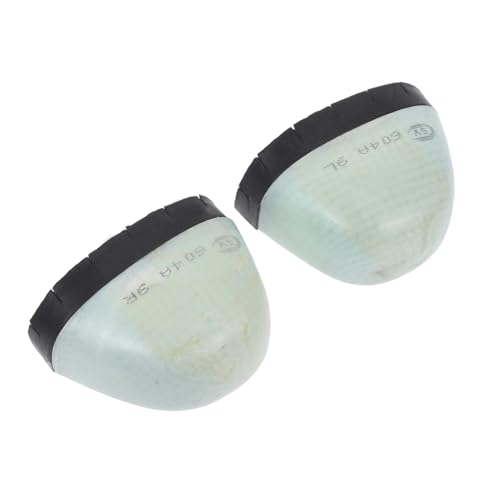
HEALSOPTHY Composite Toe Caps is the only option here identified as composite, while the other toe-cap inserts are steel. It is presented for use with work boots in industrial and construction settings. Its dimensions include a 3.34-inch length and 2.63-inch width; compare those measurements with the shoe interior before relying on a fit. The product is an attachment, not a complete safety shoe. A loose cap does not establish that the footwear meets workplace protective-toe requirements, so this may not suit jobs requiring certified protective footwear.
Bottom line: Choose this if you specifically want a composite toe-cap insert and can confirm it fits your footwear.
Removable Steel Toe Inserts

Removable Steel Toe Inserts is a steel pair rather than a composite insert, which is the main distinction from the closest match. The specifications describe use with work shoes and boots and advise comparing shoe size with insert dimensions before purchase. Confirm the insert’s dimensions and your shoe’s interior space before ordering. The steel construction may not suit someone seeking a nonmetallic composite cap, and an add-on insert should not be treated as a substitute for protective footwear certified for the job’s hazards.
Bottom line: Choose this if steel construction is acceptable and you can verify the fit before ordering.
DOITOOL Steel Toe Caps

DOITOOL Steel Toe Caps gives specific dimensions for its steel toe caps, unlike the other steel pair in this comparison. Each cap measures 3.93 inches long, 2.16 inches wide, and 1.96 inches high. Checking the available toe-box space is practical, but the measurements alone do not prove compatibility with a particular shoe. The product is described as a universal-size accessory for men and women; actual footwear shapes still differ. This option is steel, not composite, and it is not a complete safety shoe or evidence of footwear certification.
Bottom line: Choose this if you want steel caps and the dimensions fit your shoe’s toe box.
Gadpiparty Steel Toe Inserts
Gadpiparty Steel Toe Inserts is another steel option, with a 3.93-inch length and use described for industrial and construction settings. Its length matches the measured DOITOOL option, but only that other product provides width and height measurements, so side-to-side fit is harder to assess for this pair. The product also describes protection against impact and sharp hazards; those claims do not establish a tested protective-footwear rating. Pick this only if steel is suitable and you can confirm its fit. It is not the composite cap the search phrase asks for.
Bottom line: Choose this if steel is acceptable and you can verify its fit for your footwear.
How to choose removable composite toe inserts
Start by deciding whether you need a loose insert or complete protective footwear: a cap inserted into a shoe is not equivalent to a shoe tested as a protective unit. ASTM F2413 covers performance requirements for protective footwear, including impact and compression resistance; do not assume a separate insert meets that standard. Compare the cap’s material, shape, and dimensions with the shoe’s toe box, then confirm workplace rules with the employer. Composite and steel describe different toe-cap materials, but material alone does not establish a protection rating. If your work requires certified footwear, choose footwear marked for the required hazards rather than relying on an add-on cap.
How to check toe-cap fit inside a shoe
Measure the inside toe box and compare its usable length, width, and height with the cap, allowing room for the foot and the shoe’s lining. The dimensions are in inches for two products and centimeters for one; convert before comparing, using 1 inch = 2.54 centimeters. For example, 8.50 × 6.70 × 4.20 centimeters is about 3.35 × 2.64 × 1.65 inches. A cap that presses against toes or shifts during walking is a poor fit. Do not assume “universal” means suitable for every shoe shape; confirm fit before wearing it at work.
Composite and steel toe inserts compared
Composite and steel caps differ by material, but neither material by itself proves a loose insert meets a workplace safety standard. Steel caps are the material named for three options here; one option is identified as composite. Use the table to narrow the material and dimension match, then check the applicable footwear requirement separately. A complete protective shoe is evaluated as footwear, so a loose cap should not be counted as a certified toe-protection system without explicit evidence.
| Need | Option type | Check before choosing |
|---|---|---|
| Composite cap | Composite insert | Fit and required footwear certification |
| Steel cap | Steel insert | Toe-box dimensions and workplace rules |
| Certified protection | Protective footwear | Required markings and hazard rating |
Common mistakes with removable toe caps
The main mistake is treating a removable cap as certified safety footwear. ASTM F2413 applies to protective footwear, and a cap’s material or impact-protection wording alone does not demonstrate compliance. Another mistake is comparing only shoe size: toe-box interiors vary by shape, lining, and available height, so compare actual dimensions where available. A cap that shifts or crowds the toes can interfere with fit, and a mismatch can make footwear uncomfortable or unsuitable for work. If your employer specifies a footwear rating, ask whether a retrofit cap is acceptable before using one on the job.
Frequently Asked Questions
Are removable toe caps the same as safety shoes?
No. A removable cap is an accessory, while protective footwear is evaluated as a complete shoe under standards such as ASTM F2413. Use footwear that satisfies the hazard and marking requirements for your job.
Does composite mean a toe cap is certified?
No. Composite identifies a material, not a certification. Check the footwear’s required markings and rating rather than inferring protection from the cap material.
How do I measure a shoe for a toe insert?
Measure the usable interior length, width, and height of the toe box, then compare all available cap dimensions. Leave enough room that the cap does not press against the toes or shift while walking.
Can steel toe inserts fit every work boot?
No. Boot toe boxes differ in shape and interior dimensions, even when an insert is called universal size. Compare the cap’s length, width, and height with the boot before use.
What does ASTM F2413 cover for footwear?
ASTM F2413 sets performance requirements for protective footwear, including impact and compression resistance. A removable insert alone does not show that the complete footwear meets the standard.