
Best Outdoor Tile Sealer: 4 Options Compared

Miracle Sealants 511 Impregnator suits most outdoor tile when you want an invisible, no-sheen sealer with coverage up to 500 square feet per pint. Choose a different option if you need a high-gloss finish for Saltillo or terra-cotta, or primarily want grout coverage.
Outdoor tile sealer either penetrates porous material or leaves a finish on the surface; the right type depends on the tile and the appearance you want.
We earn a commission if you buy through links on this page. As an Amazon Associate I earn from qualifying purchases. Products are compared on manufacturer specifications, not hands-on testing.
- Best overall: Miracle Sealants 511 Impregnator Pint – Invisible, no-sheen penetrating protection with coverage up to 500 square feet per pint.
- Best for Saltillo gloss: Glaze ‘N Seal Olé Mexican Tile Sealer Gallon – Made for Saltillo and terra-cotta and builds a high-gloss finish.
- Best for grout: AQUA-X Grout Sealer 16 Oz. – Indoor/outdoor grout sealer with a natural finish and stated coverage up to 75 linear feet per 16-ounce coat.
| Product | Best for | Sealer type | Finish | Coverage | Shop |
|---|---|---|---|---|---|
| Miracle Sealants 511 Impregnator Pint | Invisible protection | Penetrating | Invisible, no sheen | Up to 500 sq ft/pint | Check Price on Amazon |
| AQUA-X Grout Sealer 16 Oz. | Grout coverage | Grout sealer | Natural finish | Up to 75 linear ft/coat | Check Price on Amazon |
| Glaze ‘N Seal Olé Mexican Tile Sealer Gallon | Glossy Saltillo | Water-based acrylic blend | High gloss | — | Check Price on Amazon |
| Stain Proof Premium Impregnating Sealer Quart | Stone and patios | Impregnating | — | — | Check Price on Amazon |
Outdoor Tile Sealers Compared
Match the sealer type and finish to your tile, grout and desired appearance.
Miracle Sealants 511 Impregnator Pint

For an invisible, no-sheen treatment on stone and tile, this penetrating sealer is the broadest fit among these options. The maker says its oil- and water-resistant barrier protects against stains, resists weather elements and is UV transparent; coverage is up to 500 square feet per pint. It is also described as safe around food-prep areas and will not yellow.
Choose it when preserving the surface’s natural appearance matters more than adding gloss. Very porous travertine is the key exception: the maker recommends 511 Porous Plus for that surface, so this pint may not be the right match.
Bottom line: Pick this for porous outdoor stone or tile when you want an invisible finish, except very porous travertine.
AQUA-X Grout Sealer 16 Oz.

For grout-focused sealing, AQUA-X is the option here that gives a linear-foot coverage figure: up to 75 linear feet per 16-ounce coat. The maker says it dries clear, has a natural appearance, and forms a moisture barrier that makes dirt and stains easier to rinse off. It is labeled for indoor and outdoor use and has a spray-on application.
This suits jobs where grout is the main target and a natural look is preferred. The coverage is per coat, so plan around the number of coats needed; wipe overspray from glazed tile as directed by the maker. It is not the gloss-building choice for unglazed clay tile.
Bottom line: Choose this when grout is the main surface to seal and a natural finish is wanted.
Glaze ‘N Seal Olé Mexican Tile Sealer Gallon

Unlike the penetrating options, Olé is made for porous, unglazed Mexican paver tile, including Saltillo and terra-cotta, and builds a high-gloss finish. The maker says its acrylic polymer blend resists oil, grease and food stains, hardens tile against chipping and abrasion, and includes UV inhibitors. It is water-based, under 100 g/L VOC, and cleans up with water.
Choose it when a glossy look is part of the goal for suitable clay tile, including patios and entries. The finish is the central tradeoff: it is not the pick for buyers who want an invisible, no-sheen appearance. Confirm the tile is compatible with a gloss-forming sealer before applying.
Bottom line: Pick this for compatible Saltillo or terra-cotta when you want a high-gloss finish.
Stain Proof Premium Impregnating Sealer Quart
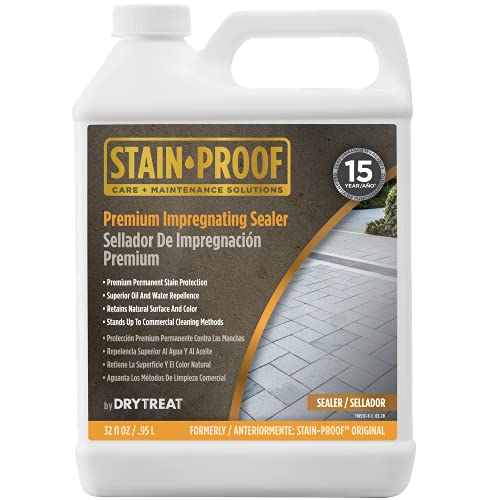
Stain Proof Premium is an impregnating sealer aimed at natural stone, concrete, tile and brick, with outdoor uses including patios, walkways and building facades. The maker says it protects against water- and oil-based stains, water damage and dissolved salts, and that treated surfaces are easier to clean. The quart size makes it a distinct option for projects spanning several kinds of masonry surface.
Choose it when the project includes stone, cement or brick as well as tile and you want an impregnating product.
Bottom line: Choose this for mixed outdoor masonry surfaces when an impregnating sealer fits the material.
How to Choose an Outdoor Tile Sealer
Choose by tile porosity first, then decide whether the surface should keep its natural look or gain a finish. A penetrating sealer enters absorbent tile or grout; a film-forming sealer leaves a surface layer that can change sheen. Glazed tile usually has a less absorbent face than unglazed clay, so grout may need attention even when the tile face does not. Test an inconspicuous spot with a few drops of water: if the surface darkens or absorbs the drops, it is porous. If water beads, that face may not need a penetrating sealer. With a glossy-look requirement, consider a finish-forming product only when it is made for that tile type.
Match the Sealer to Tile and Grout
Outdoor tile and grout can need different treatment, so identify both before choosing a container. Unglazed Saltillo and terra-cotta are porous clay and can take a sealer designed to build a finish; glazed tile has a less absorbent surface, and coating it can affect appearance or adhesion. Grout joints are porous even alongside glazed tile, making grout sealer a targeted option. This table helps narrow the product type by material and finish goal.
| Surface or goal | Sealer type to consider |
|---|---|
| Stone or porous tile, natural appearance | Penetrating, no-sheen |
| Grout joints, natural appearance | Grout sealer |
| Saltillo or terra-cotta, glossy appearance | Tile-specific gloss sealer |
| Mixed stone, concrete or brick surfaces | Impregnating sealer rated for those materials |
When under 4 inches of clearance around a joint or edge makes application awkward, use a small applicator instead of spraying broadly, and protect nearby glazed surfaces.
Outdoor Sealing and Surface Preparation
Apply sealer only to clean, dry tile and grout; trapped moisture can interfere with penetration or leave an uneven finish. Outdoor work also needs a dry weather window long enough for the product to cure, so avoid rain, dew and washing during that period. Sweep grit away first, then clean residue from joints; dirt sealed into grout is difficult to remove. Use a small test patch to check both absorption and the final appearance, especially on unglazed clay, where a coating can change sheen. On very porous tile, expect greater absorption than on dense stone, and do not assume a coverage rate from one surface will apply unchanged to another.
Common Outdoor Tile Sealing Mistakes
The most common mistake is applying a gloss-forming sealer to tile that should retain a natural look. A second is sealing glazed tile faces when only the grout needs treatment. Excess sealer left on a surface can dry into residue or an uneven film, so remove excess within the product’s application window. Outdoors, sealer does not repair loose tiles, cracked grout or failed drainage; correct those problems before sealing. Avoid assuming a sealer makes any tile freeze-proof or waterproof. Check the tile maker’s compatibility guidance before coating a valuable surface, and confirm the expected finish and cure conditions for the chosen sealer.
Frequently Asked Questions
How can I tell if outdoor tile needs sealer?
Place a few drops of water on a clean, dry spot and watch for darkening or absorption. If the face stays unchanged and the drops bead, it may not need a penetrating sealer, though porous grout can still benefit from treatment.
Can I seal glazed tile and grout together?
Grout may absorb sealer even when glazed tile does not, so grout-only application is often the more suitable approach. Wipe overspray from glazed tile promptly; a surface coating may affect its appearance or adhesion.
How often should outdoor tile sealer be reapplied?
There is no single interval for all tile and sealers; foot traffic, sun, weather and cleaning can shorten protection. Recheck a porous area with a water-drop test, and reseal when it darkens or absorbs water rather than beading.
Does outdoor tile sealer prevent freeze damage?
Sealer should not be treated as a guarantee against freeze damage. Water in porous tile or grout can freeze and expand, so sound drainage and tile rated for the local freeze-thaw conditions matter as much as sealing.
Should outdoor tile be dry before sealing?
Yes, start with clean, dry tile and grout so moisture is not trapped beneath a coating or in pores. Choose a forecast window without rain or dew during application and curing.