
Best Incubator Thermometer Hygrometer: 3 Options Compared

The IncuTherm Plus Remote-Probe Thermometer Hygrometer suits most incubators because its remote-probe can stay inside while the display remains outside for viewing. Choose IncuTherm Digital Thermometer Hygrometer instead if a magnetic back or pop-out stand fits your setup better; chicken eggs typically need close monitoring around a species-specific temperature and humidity range.
We earn a commission if you buy through links on this page. As an Amazon Associate I earn from qualifying purchases. Products are compared on manufacturer specifications, not hands-on testing.
- Best overall: IncuTherm Plus Remote-Probe Thermometer Hygrometer – Its remote-probe lets you keep the sensor in the incubator and the display outside.
- Best for flexible placement: IncuTherm Digital Thermometer Hygrometer – The magnetic back and pop-out stand offer two ways to position the display.
- Best for Celsius readings: TeqyAqs 4-Pack Mini Thermometer Hygrometers – It switches between Fahrenheit and Celsius and reports ±1°C temperature accuracy.
| Product | Best for | Probe placement | Shop |
|---|---|---|---|
| IncuTherm Plus Remote-Probe Thermometer Hygrometer | Remote monitoring | Remote sensor probe | Check Price on Amazon |
| IncuTherm Digital Thermometer Hygrometer | Flexible placement | Built-in display sensor | Check Price on Amazon |
| TeqyAqs 4-Pack Mini Thermometer Hygrometers | Multiple readings | Built-in sensor | Check Price on Amazon |
Incubator Thermometer Hygrometers
Compare placement options, units, and stated temperature accuracy to find a monitor suited to your incubator.
IncuTherm Plus Remote-Probe Thermometer Hygrometer

The remote-probe sets this monitor apart: place the sensor in the incubator and keep the display outside for viewing. It combines temperature and humidity readings, and its min/max memory records highs and lows for both measurements. The display reads in Celsius or Fahrenheit. This arrangement suits an incubator that is difficult to open or see into. One limitation is that the maker gives no accuracy figure, so buyers who need a tolerance for comparing readings should choose a model with one.
Bottom line: Choose this if you want an indoor sensor with an outside display and min/max tracking.
IncuTherm Digital Thermometer Hygrometer
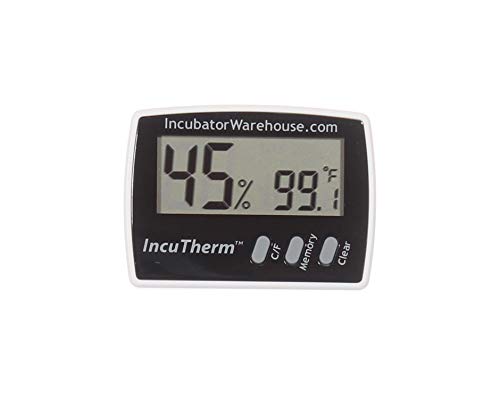
The magnetic back and pop-out stand distinguish this compact monitor from the remote-probe option. It combines temperature and humidity readings, stores minimum and maximum values, and switches between Celsius and Fahrenheit. A battery is included. This design suits incubators where the display can sit or attach inside, with readings checked through a window or during routine access. It does not offer the remote-probe arrangement described for IncuTherm Plus Remote-Probe Thermometer Hygrometer, so it is a less convenient fit when you need to keep the display outside the incubator.
Bottom line: Choose this if a magnetic mount or stand is more useful than a remote-probe.
TeqyAqs 4-Pack Mini Thermometer Hygrometers
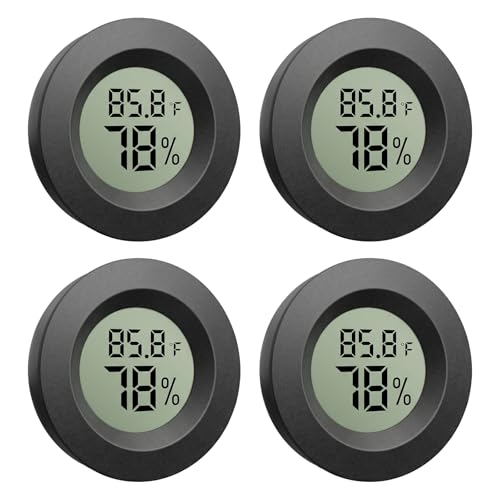
The four-unit pack and stated ±1°C temperature accuracy make this a distinct choice for monitoring more than one spot. Each compact gauge measures temperature and humidity, and its button switches between Fahrenheit and Celsius. The maker gives humidity accuracy as ±5% RH. The set suits an incubator where you want to compare conditions at several locations; readings can differ within one enclosure, especially near a heater or vent. The maker does not give a temperature range, so confirm the operating range suits your incubator before relying on it.
Bottom line: Choose this for multi-point checks when Celsius conversion and an accuracy matter.
How to choose an incubator thermometer hygrometer
For chicken eggs, a forced-air incubator typically runs near 99.5°F; still-air models commonly use about 102°F measured at the top of the eggs. That difference makes placement and incubator type important before comparing monitors. Choose a remote-probe if the display needs to remain outside; a built-in sensor is simpler when you can read the device in place. For humidity, many chicken-egg schedules use roughly 45–55% RH through day 18, then about 65–70% RH during hatch. These are common targets, not universal settings: species and incubator design can change them.
Use this quick guide to match a monitoring feature to a practical need.
| Need | Feature to prioritize |
|---|---|
| Display outside the incubator | Remote sensor probe |
| Display mounted inside | Magnetic back or stand |
| Compare more than one location | Multiple gauges |
Where to place the sensor in an egg incubator
Place the sensor near egg height, not against a wall, heater, water tray, or vent. In a still-air chicken incubator, the common 102°F target is measured at the top of the eggs; placing the thermometer higher or lower can produce a misleading comparison. Forced-air models circulate heat with a fan and commonly target about 99.5°F. A remote-probe helps separate sensor placement from display visibility, but keep the probe from touching an egg or incubator surface. Check readings in more than one spot if the enclosure has uneven airflow, and use the incubator’s own temperature-control guidance alongside the monitor.
How chicken-egg humidity changes during incubation
Chicken-egg humidity usually starts around 45–55% RH and rises to about 65–70% RH for the final hatch period. Many schedules make that change around day 18, when turning stops and eggs enter lockdown. The correct humidity depends on egg species, shell characteristics, and moisture loss, so those figures are typical chicken-egg targets rather than a fit for every egg. A hygrometer’s accuracy matters because a few percentage points can change how readings compare with a target. Avoid treating one brief reading as a trend: check for stable conditions over time and consider the incubator’s water surface area and ventilation when humidity shifts.
How to use min/max memory without misreading it
Min/max memory helps reveal temperature or humidity extremes between checks, but it does not show when a change occurred or how long it lasted. Reset the memory at a consistent point—such as the beginning of a monitoring interval—so older highs and lows do not obscure current conditions. Chicken eggs are commonly turned several times daily until about day 18, then left unturned during hatch; opening the lid for checks can briefly change the reading. Use a monitor’s extremes as a prompt to inspect placement, airflow, and lid fit rather than making a large adjustment from one number. Keep the sensor clear of water and condensation.
Frequently Asked Questions
What temperature should a chicken egg incubator show?
A forced-air chicken incubator typically targets about 99.5°F, while a still-air model commonly targets about 102°F at the top of the eggs. Confirm the target for the incubator design because sensor height changes the reading.
What humidity should I use for chicken eggs?
A common chicken-egg schedule uses about 45–55% RH through day 18 and 65–70% RH during hatch. Egg species and incubator conditions can change those targets.
When should I raise incubator humidity?
For many chicken-egg schedules, humidity rises around day 18, when turning stops and hatch lockdown begins. Maintain the higher hatch-period target through emergence rather than raising humidity early.
Where should an incubator thermometer probe sit?
Place the probe at egg height without touching an egg or incubator surface. In still-air chicken incubators, the common temperature target is measured at the top of the eggs.
How often should I check incubator temperature?
Check readings at least daily and review min/max values during each check to spot swings since the previous review. A remote-probe can reduce the need to open the incubator just to view the display.