
Best Screw-In Studs for Tires: 4 Options Compared

JEEKVISEN 8 × 10 mm Studs suits most buyers seeking screw-in studs for tires because its 8 × 10 mm size, tungsten carbide tip and included installation tool offer a clear fit starting point. Choose Grip Studs Model 1400 instead for ice-resurfacer tires, or Frienda 4 × 12 mm Studs when a smaller 4 × 12 mm stud is the needed dimension.
Screw-in tire studs are threaded traction inserts that bite into tire lugs; stud length and tread depth must match so the insert does not protrude too far or sit too shallow.
We earn a commission if you buy through links on this page. As an Amazon Associate I earn from qualifying purchases. Products are compared on manufacturer specifications, not hands-on testing.
- Best overall: JEEKVISEN 8 × 10 mm Studs – 8 × 10 mm size, carbide tip and included tool suit a broad range of tire applications.
- Best for small-diameter studs: Frienda 4 × 12 mm Studs – The 4 mm diameter and 12 mm length provide a smaller stud profile.
- Best for ice resurfacers: Grip Studs Model 1400 – Model 1400 is designed for ice-resurfacer tires and penetrates 13.5 mm into the lugs.
| Product | Best for | Stud size | Tip or core | Installation tool | Shop |
|---|---|---|---|---|---|
| JEEKVISEN 8 × 10 mm Studs | General tire use | 8 × 10 mm | Tungsten carbide tip | Included | Check Price on Amazon |
| Grip Studs Model 1400 | Ice resurfacer tires | Model 1400; 13.5 mm penetration | Solid tungsten carbide core | Included | Check Price on Amazon |
| Frienda 4 × 12 mm Studs | Smaller stud diameter | 4 × 12 mm | Carbide alloy | Included | Check Price on Amazon |
| Marrkey 7 × 9.9 mm Studs | Drill installation | 7 × 9.9 mm | Cemented carbide | Not included | Check Price on Amazon |
Screw-In Studs for Tires
Match stud dimensions and purpose to the tire lug before choosing a set.
JEEKVISEN 8 × 10 mm Studs

JEEKVISEN 8 × 10 mm Studs stands out with an included installation tool and a tungsten carbide tip brazed to its steel body. Its 8 × 10 mm size is the key fit check: measure the lug depth and compare it with the stud before installing. The notched sides support tool engagement for installation and removal, while wide-auger threads are designed to hold in rubber. This option suits buyers adding traction to compatible bikes, scooters, autos or other tire types. Its size is less suited to a lug that requires a smaller stud or a precisely specified application-specific model.
Bottom line: Pick it for a broad-use stud with an included installation tool.
Grip Studs Model 1400

Grip Studs Model 1400 is the purpose-specific choice here: Model 1400 is made for ice-resurfacer tires and penetrates 13.5 mm into the tire lugs. The solid tungsten carbide shaft and wide-auger threads are designed for grip and retention on solid ice, and a tool that fits a cordless drill is included. The penetration depth makes lug depth especially important before installation. This is a narrower fit than general-purpose studs, so buyers outfitting a bicycle, car or other tire type should choose a model intended for that application instead.
Bottom line: Pick it for ice-resurfacer tires with lugs suited to 13.5 mm penetration.
Frienda 4 × 12 mm Studs

Frienda 4 × 12 mm Studs differs from the other general-use options with a 4 mm diameter and 12 mm length, plus a pack of 400 studs and an installation tool. Its compact diameter may suit tire lugs where a wider insert is unsuitable, but the 12 mm length still requires a lug-depth check before fitting. The studs are made from carbon steel, aluminum and hard alloy. This package is aimed at buyers who need a large quantity and smaller-diameter inserts; those seeking a shorter stud or a dedicated ice-resurfacer model should compare dimensions and intended use first.
Bottom line: Pick it when a 4 mm diameter and 12 mm length fit the lug.
Marrkey 7 × 9.9 mm Studs
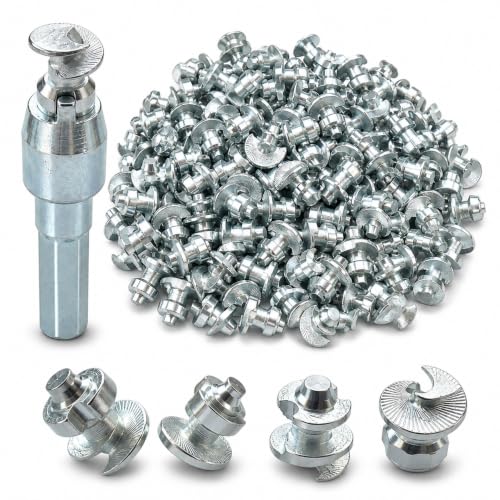
Marrkey 7 × 9.9 mm Studs provides 100 studs in a 7 × 9.9 mm size, with hard carbon steel and cemented carbide construction. Installation uses a drill and a metal sleeve supplied with the studs, but the drill itself is not included. Measure tread depth and select a stud size that fits the lug rather than relying on the broad vehicle list. This option suits buyers who already have a compatible drill and want an intermediate-width stud. Its smaller count and separate drill requirement matter to people equipping several tires or starting without tools.
Bottom line: Pick it if 7 × 9.9 mm matches the tread and you have a drill.
How to choose screw-in tire studs
Choose a stud by matching its diameter and penetration to the tire lug, then check that its intended application fits the tire. A stud that is too long can extend through the tread or interfere with the casing; one that is too short may not seat securely. Measure lug depth at several points because tread blocks can vary across a tire. For example, Grip Studs Model 1400 specifies 13.5 mm penetration, so the lugs must accommodate that depth. Metal screw-in studs are intended for traction on ice or snow, but they can damage pavement and should not be treated as a year-round road solution. For road use, verify local rules before fitting studs because restrictions differ by jurisdiction.
Stud size and tire lug fit
Stud dimensions are not interchangeable: compare both the body diameter and length with the lug, not just the overall tire size. The options here range from 4 × 12 mm to 8 × 10 mm, while Grip Studs Model 1400 gives a 13.5 mm penetration depth rather than a width-and-length pair. Measure the lug’s usable depth and confirm the stud will remain contained within the rubber. A useful decision rule is to reject any stud whose insertion depth exceeds the measured lug depth; use a shorter model or a tire with deeper lugs. Screw-in studs are generally placed in substantial tread blocks, not thin areas between blocks or near the casing.
Use this comparison to identify which measurement each option supplies.
| Option | Specified dimension | Fit emphasis |
|---|---|---|
| Frienda 4 × 12 mm Studs | 4 × 12 mm | Smaller diameter |
| Marrkey 7 × 9.9 mm Studs | 7 × 9.9 mm | Drill installation |
| JEEKVISEN 8 × 10 mm Studs | 8 × 10 mm | Included tool |
| Grip Studs Model 1400 | 13.5 mm penetration | Ice-resurfacer lug depth |
Installing screw-in studs safely
Install studs only in suitable tread lugs and keep the insertion depth within the available rubber. A drill-mounted tool can speed installation, but controlled, straight engagement matters more than speed; forcing a stud at an angle can damage the lug or leave poor retention. Marrkey 7 × 9.9 mm Studs requires a drill and metal sleeve, while JEEKVISEN 8 × 10 mm Studs and Grip Studs Model 1400 include installation tools. Check the tire’s construction and the stud maker’s application guidance before modifying a tire, especially if the tire will carry a road vehicle. Studs create hard contact points, so avoid using a studded tire on surfaces where metal tips could reduce control or damage the pavement.
When to remove or replace tire studs
Remove screw-in studs when ice traction is no longer needed or when the tire will be used on bare pavement, if the tire and stud design allow removal. The notched design on JEEKVISEN 8 × 10 mm Studs supports removal with its tool; Grip Studs Model 1400 also describes reversing its installation process. Inspect the tread before each use for loose, missing, bent or damaged inserts, and replace damaged studs rather than leaving uneven traction across the tire. Keep a consistent stud pattern across the tire so the contact points are not concentrated in only a few lugs. For a vehicle used on public roads, confirm applicable seasonal stud restrictions before fitting or leaving studs installed.
Frequently Asked Questions
How deep should a screw-in tire stud go?
The stud should fit within the usable lug depth without reaching the tire casing or protruding excessively. Measure the tread lug first; Grip Studs Model 1400 specifies 13.5 mm penetration, so its intended lug must accommodate that depth.
Can I use screw-in studs on any tire?
No; the tire needs suitable tread lugs with enough rubber depth and width to retain the stud. Check the tire construction and intended application, and do not place studs where the rubber is thin or close to the casing.
Do screw-in studs damage pavement?
Metal studs can wear or damage bare pavement and may reduce grip on hard, dry surfaces. Use studded tires for appropriate snow or ice conditions and check local seasonal rules for road vehicles.
Can tire studs be removed after winter?
Many screw-in studs can be backed out with the appropriate tool, but removal depends on the stud design and tire condition. A notched stud can engage a removal tool, and the tire should be inspected for damaged lugs afterward.
How many studs should go in each tire?
The required count depends on the tire’s lug pattern, size and intended use, so no single count fits every tire. Distribute inserts consistently across suitable lugs rather than crowding a small area, and follow the tire or stud maker’s application guidance.