
Best Heat Tape for Water Pipes: 5 Options Compared

For most exposed pipe runs, choose 30-Foot Self-Regulating Heat Tape because its 30-foot length, self-regulating design and overlap-safe installation cover a broad range of needs. Choose a shorter cable for a small isolated section, or a longer run if 30 feet will not reach; measure the pipe first.
Heat tape, also called a pipe-heating cable, warms water-filled plumbing to reduce freezing risk. It is an electrical device, so check pipe compatibility and installation requirements before use.
We earn a commission if you buy through links on this page. As an Amazon Associate I earn from qualifying purchases. Products are compared on manufacturer specifications, not hands-on testing.
- Best overall: 30-Foot Self-Regulating Heat Tape – Its 30-foot self-regulating cable is rated at 5 watts per foot and allows cross-overlap.
- Best for long runs: 50-Foot Pipe Heating Cable – The 50-foot cable provides the longest reach among these options.
- Best for short runs: Frost King HC6A 6-Foot Kit – The six-foot, thermostatically controlled kit suits a small pipe section.
| Product | Best for | Length | Output | Low-temperature claim | Shop |
|---|---|---|---|---|---|
| 30-Foot Self-Regulating Heat Tape | General pipe runs | 30 ft | 5 W/ft | -40°F | Check Price on Amazon |
| 50-Foot Pipe Heating Cable | Long pipe runs | 50 ft | 5 W/ft | -40°F | Check Price on Amazon |
| YURNOMY 18-Foot Self-Regulating Heat Tape | Overlap-needed runs | 18 ft | 5 W/ft | -40°F | Check Price on Amazon |
| Frost King HC6A 6-Foot Kit | Short pipe sections | 6 ft | 7 W/ft | -40°F | Check Price on Amazon |
| BDDFOTO 3-Foot Heat Tape | Very short sections | 3 ft | 8 W/ft | — | Check Price on Amazon |
Heat Tape for Water Pipes
Match the cable length to the pipe run, then compare output and temperature-control features.
30-Foot Self-Regulating Heat Tape

The 30-foot length and stated cross-overlap safety distinguish this option from the shorter cables. Its 120-volt self-regulating design is rated at 5 watts per foot, and the maker says it is intended for indoor and outdoor water pipes, including plumbing at RVs, cabins, farms and barns. The maker also claims freeze protection down to -40°F. It suits a longer or irregular run where the overlap feature matters. The limitation is length: measure the full pipe path, including turns, because a 30-foot cable may not cover a larger system.
Bottom line: Choose this for a medium or longer run where self-regulation and overlap permission are priorities.
50-Foot Pipe Heating Cable

The 50-foot reach is the defining advantage of this cable, making it the longest option here. It is rated at 120 volts and 5 watts per foot, and the maker says it works on water-filled metal and plastic pipes down to -40°F. The described construction includes an aluminum-alloy shield, a TPE jacket and a grounded plug with an indicator light. Choose it when one long run needs coverage. Its length is less useful for a short isolated section, and the maker warns against use on fuel lines or gutters and says the cable must not be used where no water is present.
Bottom line: Choose this when the measured pipe path needs up to 50 feet of cable.
YURNOMY 18-Foot Self-Regulating Heat Tape

The 18-foot self-regulating cable offers a middle length between the 6-foot kit and the 30- and 50-foot choices. It is rated at 120 volts and 5 watts per foot, and the maker says it fits PVC, PEX and metal pipes, protects to -40°F, and is safe to overlap. That combination suits a moderate run where material compatibility and the overlap feature help with routing. The maker gives no separate control thresholds, so buyers who need a specific thermostat set point should verify that requirement before choosing this cable.
Bottom line: Choose this for an 18-foot-or-shorter run where the pipe materials fit.
Frost King HC6A 6-Foot Kit
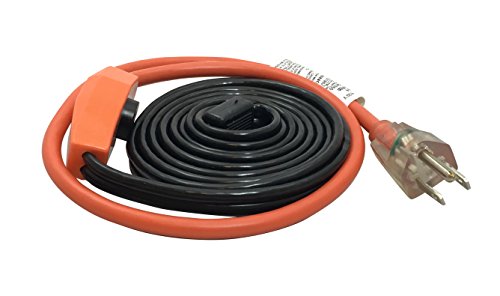
The Frost King HC6A is a compact six-foot kit with thermostatic controls, unlike the longer continuous runs in this group. It operates at 120 volts and 7 watts per foot; the maker says it keeps water flowing down to -40°F and works on metal and plastic water pipes. The short length can suit a vulnerable exposed section or a localized freeze-prone spot. It is not the right choice for a long path: measure the pipe and route before purchase, since extensions or improvised connections should not be assumed compatible.
Bottom line: Choose this for a short exposed section that falls within its six-foot reach.
BDDFOTO 3-Foot Heat Tape
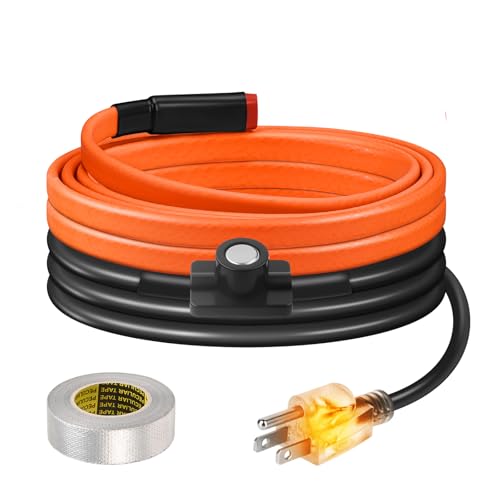
The BDDFOTO is the shortest cable here, with a three-foot heating section and a separate three-foot power cord. The maker describes it as a 110-volt, IP65-waterproof cable with a temperature sensor and an 8-watt-per-foot output; it also says the package may incorrectly show 5 watts per foot. Temperature control switches the cable on below 5°C and off above 15°C, according to the maker. That compact reach suits a very short pipe section, but the wattage discrepancy makes it important to verify the actual rating and electrical requirements before installation.
Bottom line: Choose this only for a very short run after confirming its correct wattage and supply requirements.
How to Choose Pipe Heat Tape
Start with the measured pipe path and the cable’s control type; a longer cable is not automatically a better fit. Measure along the pipe, including bends and the route to the power connection, then leave room to place the cable as its instructions require. These options span 3 to 50 feet and 5 to 8 watts per foot, so confirm both coverage and output rather than choosing by length alone. Self-regulating cable adjusts output with surrounding temperature, while thermostatic kits use a sensor or control to switch heating based on temperature. Do not assume every cable can cross or overlap itself: only 30-Foot Self-Regulating Heat Tape and YURNOMY 18-Foot Self-Regulating Heat Tape explicitly claim overlap safety here. The maker of 50-Foot Pipe Heating Cable warns against use on dry lines and gutters.
Pipe Material and Cable Fit
Pipe compatibility is product-specific, so check whether the cable is intended for the pipe material in your home. Frost King HC6A 6-Foot Kit names metal and plastic pipes; YURNOMY 18-Foot Self-Regulating Heat Tape names PVC, PEX and metal, while 50-Foot Pipe Heating Cable names copper, PVC and PEX. A cable sized for a straight pipe may not cover a longer routed section with bends, valves or branches. Choose a cable only for the water pipe segment it is meant to protect, and do not substitute it for a different application such as a fuel line. Pipe insulation can reduce heat loss after cable installation, but cable placement and whether insulation may cover the cable depend on that cable’s instructions. For electrical safety, use a GFCI-protected outlet for outdoor or damp-area use and keep connections protected from water.
Heat Tape Lengths and Controls Compared
Short thermostatic kits and long self-regulating cables serve different run sizes; match the cable to the vulnerable section, not the entire plumbing system by default. Use this table as a first cut, then verify the specific pipe material and installation limits for the chosen cable. The shortest option here is only 3 feet, while the longest reaches 50 feet. Output also varies from 5 to 8 watts per foot, and only some entries provide a low-temperature claim. A higher wattage number by itself does not establish a better fit because run length, pipe exposure and control method also matter.
| Need | Option | Key distinction |
|---|---|---|
| Very short section | BDDFOTO 3-Foot Heat Tape | 3 ft; temperature thresholds stated by maker |
| Short section | Frost King HC6A 6-Foot Kit | 6 ft; thermostatic controls |
| Medium run | YURNOMY 18-Foot Self-Regulating Heat Tape | 18 ft; overlap-safe claim |
| Medium to long run | 30-Foot Self-Regulating Heat Tape | 30 ft; self-regulating and overlap-safe claims |
| Long run | 50-Foot Pipe Heating Cable | 50 ft; grounded plug with indicator light |
Safe Installation and Common Mistakes
Heat tape is an electrical heating product, so a poor fit or damaged cable can create a shock or fire hazard. Inspect the cable and plug before installation, and do not use a damaged unit or route it where it can be crushed, cut or exposed to an incompatible surface. Follow the specific cable’s instructions for spacing, attachment and insulation; rules for overlap differ, so never infer that one model’s allowance applies to another. Use a GFCI-protected circuit in damp or outdoor locations, and keep plugs and connections out of standing water. The maker of 50-Foot Pipe Heating Cable warns that its cable requires water in the pipe and must not be used on fuel lines or gutters. Unplug a cable before inspecting or repositioning it.
Frequently Asked Questions
Can heat tape be used on PEX water pipes?
Some heat cables are intended for PEX, but compatibility is model-specific. YURNOMY 18-Foot Self-Regulating Heat Tape names PEX, PVC and metal pipes; verify the chosen cable permits PEX before installation.
Can water pipe heat tape overlap itself?
Only when the particular cable is designed for overlap. The makers of 30-Foot Self-Regulating Heat Tape and YURNOMY 18-Foot Self-Regulating Heat Tape say their products allow cross-overlap; do not apply that claim to other models.
Does heat tape need a GFCI outlet outdoors?
Use GFCI protection for electrical equipment in outdoor or damp locations. Keep the plug and electrical connections away from standing water, and do not use damaged cable.
How do I measure heat tape for a pipe?
Measure along the pipe route rather than taking a straight-line distance. Include bends and the path to the power connection, then choose a cable long enough for that route without assuming it can be extended.
Can pipe insulation go over heat tape?
Insulation may be used with some pipe-heating setups, but the permitted material and placement depend on the cable. Follow the cable’s installation requirements and do not cover a thermostat or sensor unless its instructions allow it.