
Bike Trainer Front Wheel Stands Compared by Fit

For tires up to 2 inches wide, Flexzion Front Wheel Block is the closest match, with a 1.5-inch lift and a rubber-padded base. Choose Thinvik Front Wheel Riser Block or Reinforced PP Front Wheel Block instead if your tire is no wider than 1.8 inches; a front wheel stand cradles the tire to support the front end on a stationary trainer.
Measure your tire before choosing: a block that is too narrow may not seat the wheel securely, while a lift that differs from your rear trainer’s setup can leave the bike tilted.
We earn a commission if you buy through links on this page. As an Amazon Associate I earn from qualifying purchases. Products are compared on manufacturer specifications, not hands-on testing.
- Best overall: Flexzion Front Wheel Block – Its fit extends to 2 inches wide, and the lift is 1.5 inches.
- Best for narrow tires: Thinvik Front Wheel Riser Block – It fits tires up to 1.8 inches wide and has a non-slip rubber base.
- Best for broad bike compatibility: GEEDIAR Front Wheel Riser Block – It is described as suitable for 95% of road and mountain bikes, excluding beach cruisers.
| Product | Best for | Max tire width | Lift | Base or size | Shop |
|---|---|---|---|---|---|
| Flexzion Front Wheel Block | Wider tires | 2 in. | 1.5 in. | 8.85 × 4.52 in. | Check Price on Amazon |
| Thinvik Front Wheel Riser Block | Narrow tires | 1.8 in. | 1.4 in. | 9 × 5 in. | Check Price on Amazon |
| GEEDIAR Front Wheel Riser Block | Road and MTB | — | — | 9.06 × 4.72 in. | Check Price on Amazon |
| Reinforced PP Front Wheel Block | Road and hybrid | 1.8 in. | 1.4 in. | 8.97 × 4.46 in. | Check Price on Amazon |
| 1.5-Inch Front Wheel Riser Block | Wide tire fit | 2 in. | 1.5 in. | 9.1 × 4.7 in. | Check Price on Amazon |
Bike Trainer Front Wheel Stands
Compare these front wheel blocks by tire clearance, lift, and the details that affect their fit with your indoor setup.
Flexzion Front Wheel Block

Among these blocks, the Flexzion has the broadest tire fit, reaching 2 inches wide. Its 1.5-inch rise and rubber-padded base suit riders who want a wider tire range and a grippy floor contact point.
The molded plastic body measures 8.85 × 4.52 inches, and the maker says it is compatible with common road and mountain bike tire widths through 50c. A useful limit is that the maximum remains 2 inches; riders with wider tires should choose a different support. Confirm the actual tire width before selecting it.
Bottom line: Pick this if your tire is up to 2 inches wide and you want a 1.5-inch rise.
Thinvik Front Wheel Riser Block

The Thinvik is a compact choice for standard-width tires, with a maximum width of 1.8 inches and a 1.4-inch rise. Its graduated interior is a distinguishing feature intended to help seat the wheel, while the rubber base adds grip beneath the block.
The molded plastic stand measures 9 × 5 inches and is described for road bikes and some narrow-tire mountain bikes. It is not compatible with fat tires, so measure the tire rather than relying only on the bike category. The 1.4-inch lift is also lower than the 1.5-inch options here, which matters when matching the rear trainer height.
Bottom line: Choose it for a tire no wider than 1.8 inches and a 1.4-inch lift.
GEEDIAR Front Wheel Riser Block
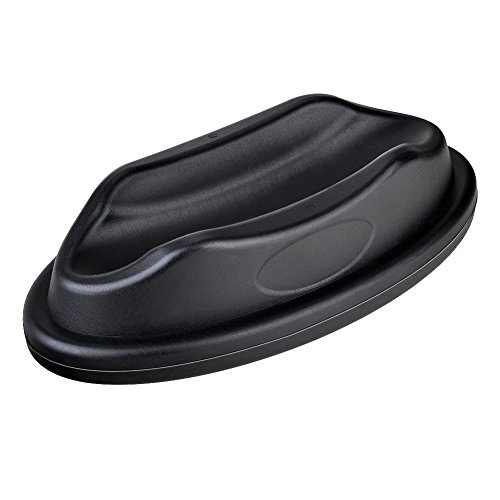
The GEEDIAR stands out for its broad stated bike-category compatibility: the maker says it suits 95% of road and mountain bikes, except beach cruisers. Its molded-plastic interior is designed to stabilize the wheel, and anti-slip feet are intended to limit movement and handlebar vibration during stationary workouts.
That makes it a better fit when the bike is within the categories and its dimensions can be checked before use.
Bottom line: Consider it for a road or mountain bike when its fit can be confirmed.
Reinforced PP Front Wheel Block

The reinforced polypropylene support is the differentiator here, paired with four anti-slip pads rather than a single described base treatment. It fits road, mountain, and hybrid bikes with tires up to 1.8 inches wide, and its 1.4-inch lift is intended to bring the front wheel level with a rear trainer stand.
The size is 8.97 × 4.46 × 2.24 inches. Fat-bike tires are excluded, so this is not the choice for tires wider than its limit. Its lower lift than a 1.5-inch block is worth considering if you are trying to keep the bike level with the trainer at the rear.
Bottom line: Choose it for road, MTB, or hybrid tires up to 1.8 inches wide.
1.5-Inch Front Wheel Riser Block

This riser pairs a 2-inch tire-width limit with a 1.5-inch lift, matching the broadest tire range in the group. Its rubber base is intended to reduce slipping and vibration and help protect indoor flooring, while the molded-plastic body keeps the construction simple.
The block measures 9.1 × 4.7 inches and is described for road and mountain bike setups. Like other fixed-height supports, it may not suit a setup where the rear trainer height calls for a different front rise. Measure the tire and compare the front support height with the rear trainer arrangement before riding.
Bottom line: Pick it for tires up to 2 inches wide and a 1.5-inch rise.
How to choose a bike trainer front wheel stand
Match tire width first, then match the front lift to the rear trainer setup. The blocks here specify maximum widths from 1.8 to 2 inches, while two give a 1.4-inch rise and two give 1.5 inches. A 0.1-inch lift difference is small, but the wheel support should keep the bike level rather than noticeably nose-up or nose-down.
Measure the tire at its widest point, including tread, and compare it with the block’s maximum width. Tire labels such as 28c are nominal sizing, so the mounted tire’s actual width can differ with rim width and tire design. If your measured tire exceeds 1.8 inches, choose a block explicitly rated for 2 inches rather than assuming a nominal tire label will fit.
Need-to-fit guide
| Measured tire width | Choice |
|---|---|
| Up to 1.8 in. | Any block with a 1.8-in. or 2-in. limit |
| Over 1.8 to 2 in. | Only a block rated to 2 in. |
| Over 2 in. | None of these stated limits |
Why front wheel lift and trainer height matter
A front wheel block supports the tire while a rear trainer supports or drives the back wheel; the two supports together determine the bike’s pitch. Most blocks in this group raise the front wheel 1.4 or 1.5 inches, so check the rear trainer’s wheel or axle height and whether it is adjustable before choosing a fixed block.
Keep the tire centered in the block’s cradle and the block on a firm, level floor. A small mismatch can change saddle angle and hand position, while a wheel sitting off-center can move under pedaling. If the front tire is not fully seated or the block rocks when pressed by hand, correct the setup before riding. A riser supports the front wheel; it does not replace the rear trainer’s attachment or stability requirements.
Front wheel blocks and tire fit limits
Width limits are more useful than broad labels such as road or mountain bike when selecting a wheel support. A road bike can use a wider tire, and mountain bike tire width varies substantially; select by the mounted tire’s measured width rather than the bike’s category alone. The maximums for these products are 1.8 or 2 inches, and one explicitly excludes fat tires.
Wheel diameter and tire profile also affect how a tire sits in a cradle, even where a product gives a width range. These fields do not give a common diameter range, so confirm the block’s intended fit if your wheel is unusually small or large. Do not force a tire into a channel that pinches the sidewalls or leaves the wheel perched above the support surface.
Safe setup for indoor trainer riding
Before mounting the bike, place the block on a clean, dry, level floor and check that its base does not slide. Rubber pads can improve grip, but sweat, dust, or a slick floor can still reduce traction. After seating the front tire, apply gentle side pressure to check for rocking, then verify the rear trainer is secured according to its own setup requirements.
During a hard interval or sprint, body movement can increase side loads on the bike, so stop if the block shifts or the wheel climbs out of its channel. Keep the support away from loose rugs and cords, and avoid riding with a damaged or cracked plastic block. These supports stabilize a front wheel but are not substitutes for a properly secured trainer or a stable floor.
Frequently Asked Questions
How do I measure a bike tire for a wheel block?
Measure across the widest part of the mounted tire, including its tread, in inches. Choose a block whose maximum is at least that wide; a 1.9-inch tire exceeds a 1.8-inch limit.
Does the front wheel block raise the bike?
A front wheel block raises the front tire, not the whole bike by a fixed amount. These options specify lifts of 1.4 or 1.5 inches, and the resulting bike angle also depends on the rear trainer height.
Can I use a front wheel block with fat tires?
Only if the block explicitly accommodates the tire’s measured width. The blocks here top out at 2 inches, and one specifically excludes fat tires, so tires wider than 2 inches are outside the fit.
Should the bike sit level on a trainer?
The front and rear supports should avoid an unintended steep tilt. Compare their support heights and adjust the trainer setup where possible; a 1.4-inch front lift is 0.1 inch lower than a 1.5-inch lift.
How can I keep a wheel block from sliding?
Use a clean, level, dry floor and make sure the wheel is centered in the cradle. Rubber bases or pads help grip, but stop riding if the block moves under hand pressure or the tire starts climbing out.