
Srixon Marathon Golf Balls: Fit and Features Compared

Srixon Marathon White, 15-Pack is the direct match for Srixon Marathon golf balls, and its 15-ball pack and ionomer cover are the deciding features. Choose another option if you want a different ball construction or alignment aid, or if you specifically want a urethane cover.
We earn a commission if you buy through links on this page. As an Amazon Associate I earn from qualifying purchases. Products are compared on manufacturer specifications, not hands-on testing.
- Best overall: Srixon Marathon White, 15-Pack – The only Marathon match here, supplied as a 15-ball pack with an ionomer cover.
- Best for alignment: TaylorMade Distance+ White, 12-Pack – Includes a Plus Alignment Aid for lining up shots.
- Best for soft feel: Amazon Basics Core Soft, 12-Pack – Uses a low-compression design and has a side-stamp alignment feature.
- Best for urethane cover: Srixon Q-Star Tour 6 White – Features a thin premium urethane cover and a FastLayer core.
| Product | Best for | Pack size | Cover | Construction or feature | Shop |
|---|---|---|---|---|---|
| Srixon Marathon White, 15-Pack | Marathon buyers | 15 balls | Ionomer | Energetic Gradient Growth Core | Check Price on Amazon |
| TaylorMade Distance+ White, 12-Pack | Alignment aid | 12 balls | Ionomer | Two-layer; Plus Alignment Aid | Check Price on Amazon |
| Amazon Basics Core Soft, 12-Pack | Low compression | 12 balls | Durable white cover | Low compression; side-stamp alignment | Check Price on Amazon |
| Srixon Q-Star Tour 6 White | Urethane cover | 12 balls | Premium urethane | FastLayer core | Check Price on Amazon |
Srixon Marathon Golf Balls Compared
Compare the Marathon ball with related golf balls by pack size, cover material and the features that set each option apart.
Srixon Marathon White, 15-Pack

Srixon Marathon White, 15-Pack is the direct Srixon Marathon match, with 15 white recreational golf balls in the pack. The ball has an ionomer cover, and Srixon says its Energetic Gradient Growth Core promotes energy transfer for distance. Its package dimensions are 8.82 x 5.47 x 1.69 inches; those are package measurements, not the ball’s diameter. This option suits golfers who want the Marathon model and a pack count that differs from the dozen-ball alternatives. The maker does not identify a compression rating, so golfers choosing by compression should verify that before ordering.
Bottom line: Choose this if you specifically want the Srixon Marathon in a 15-ball pack.
TaylorMade Distance+ White, 12-Pack

TaylorMade Distance+ White, 12-Pack differs from the Marathon by adding a Plus Alignment Aid and specifying two-layer construction. The TaylorMade ball has an ionomer cover and a REACT Speed Core; TaylorMade says its Extended Flight Dimple Pattern is designed to help the ball stay airborne longer. This is a fit for golfers who value a visible alignment feature alongside a distance-oriented design. It comes as a dozen rather than 15 balls, and it is a different model and brand, so it is not a direct substitute for someone set on buying the Marathon.
Bottom line: Choose this if the Plus Alignment Aid matters more than matching the Marathon model.
Amazon Basics Core Soft, 12-Pack
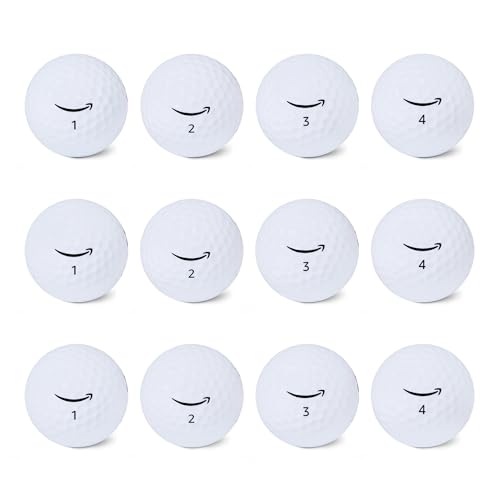
Amazon Basics Core Soft, 12-Pack is the alternative here that explicitly identifies a low-compression design and a side-stamp alignment feature. Its maker says the 12-ball set is intended to provide distance and a soft feel, with short-game control from its core and cover design. The white cover is described as durable, and the product is identified as USGA conforming. This ball may suit a golfer prioritizing low compression and a simple alignment mark over the Marathon’s specified ionomer cover and 15-ball pack.
Bottom line: Choose this if low compression and a side-stamp alignment mark are your priorities.
Srixon Q-Star Tour 6 White

Srixon Q-Star Tour 6 White is another Srixon, but it differs from the Marathon by using a thin premium urethane cover and a FastLayer core. Srixon says the cover is designed for greenside spin, feel and control, while the core’s compression effect is intended to support ball speed and distance. Its cover also uses biomass, according to the maker. The product suits golfers seeking the urethane-cover design rather than the Marathon’s ionomer construction.
Bottom line: Choose this if you want the premium urethane cover rather than the Marathon’s ionomer cover.
How to choose a golf ball
Start with cover and construction, then consider feel and any alignment feature. Ionomer covers are common on recreational and distance-oriented balls, while urethane covers are often chosen for their greenside feel and spin; the ball’s design still matters, so cover alone does not predict performance. Two-piece balls pair a core with a cover, while multi-layer models add layers that can tune feel and spin. A practical decision rule: if a urethane cover is a must-have, choose a model that explicitly identifies one; if pack count matters more, compare the number of balls before comparing features. No single material or layer count makes a ball right for every golfer.
Golf ball size and rules
Conforming golf balls must weigh no more than 1.620 ounces and measure at least 1.680 inches in diameter under the Rules of Golf. Those limits matter if you play under the Rules; package measurements are not ball measurements, so do not use the Marathon package dimensions to judge ball size. The rules set limits rather than requiring one exact ball dimension. Ball construction, cover and dimple design can differ within those limits. For casual play, choosing a ball that suits your preferences may matter more than small size differences; for competition, confirm that the specific ball is on the applicable conforming-ball list.
Cover materials and ball features
Cover material is a useful first comparison because it is a concrete design difference, but it does not by itself guarantee distance or control. Ionomer is a common durable cover material, while urethane is commonly used on balls emphasizing greenside feel and spin. Alignment markings are separate from construction: a side stamp or printed aid can help with visual setup, but does not change the ball’s rules dimensions. Use this quick comparison to narrow the type you want before weighing pack size and model preference.
| Priority | What to compare | Decision rule |
|---|---|---|
| Marathon model | Model name and pack count | Choose the direct Marathon match |
| Alignment | Printed aid or side stamp | Choose a ball with the marking you prefer |
| Greenside-focused cover | Cover material | Look for a urethane cover |
Common golf ball buying mistakes
Do not treat a package’s length, width and height as the ball’s size; packaging dimensions describe the container. Also, do not assume that every ball from one brand shares the same cover, core or feel: compare the named model’s construction. Pack counts can vary, so check whether a package contains a dozen or another quantity before deciding how many balls you want. Finally, claims about distance, spin or feel are design aims, not guarantees for every swing. For competitive play, check the ball’s conforming status rather than inferring it from a brand or cover material.
Frequently Asked Questions
How many golf balls are in a standard dozen?
A dozen contains 12 golf balls. Compare pack count directly when you need a specific quantity, since some packages use a different count.
What is the maximum legal golf ball weight?
A conforming golf ball can weigh no more than 1.620 ounces under the Rules of Golf. Its diameter must also be at least 1.680 inches.
Does a urethane cover guarantee more spin?
No, a urethane cover alone does not guarantee a particular spin result. Cover formulation, ball construction and the shot itself all affect performance.
What does low compression mean in a golf ball?
Compression describes how much a ball deforms under an applied force, and low-compression models are generally designed to feel softer. A number-based comparison requires a compression rating.
Do alignment marks change a golf ball’s performance?
Alignment marks are visual aids for aiming and do not change a ball’s dimensions. Their usefulness depends on whether you find a side stamp or a longer alignment graphic easier to line up.