
Glue for Windshield Molding: 5 Options Compared

Automotive Body Adhesive Sealant, 100 mL is the closest match for windshield molding because its silicone formula is described for weatherstrip, door rubber and plastic trim. Choose a polyurethane windshield adhesive instead when the job is bonding glass to the vehicle frame, not merely securing exterior molding.
Windshield molding is trim around the glass; it may be flexible rubber or plastic, so adhesive compatibility with the trim and vehicle surface matters.
We earn a commission if you buy through links on this page. As an Amazon Associate I earn from qualifying purchases. Products are compared on manufacturer specifications, not hands-on testing.
- Best overall: Automotive Body Adhesive Sealant, 100 mL – Its uses include weatherstrip, door rubber and plastic trim.
- Best for glass bonding: Berkland Polyurethane Windshield Adhesive – Polyurethane adhesive is specified for windshield, rear-window and side-glass bonding.
- Best for a larger cartridge: Urethane Windshield Adhesive, 10.5 oz – The 10.5 oz urethane format is larger than the 50 mL and 100 mL options.
| Product | Best for | Adhesive type | Container size | Color | Shop |
|---|---|---|---|---|---|
| Automotive Body Adhesive Sealant, 100 mL | Flexible trim bonds | Silicone | 100 mL | Clear | Check Price on Amazon |
| Berkland Polyurethane Windshield Adhesive | Auto glass bonding | Polyurethane | — | Black | Check Price on Amazon |
| Urethane Windshield Adhesive, 10.5 oz | Glass installation | Urethane | 10.5 oz | Black | Check Price on Amazon |
| Polyurethane Windshield Adhesive, 50 mL | Small glass repairs | Polyurethane | 50 mL | Black | Check Price on Amazon |
| Polyurethane Windshield Adhesive, 310 mL | Larger glass jobs | Polyurethane | 310 mL | Transparent | Check Price on Amazon |
Glue for Windshield Molding Compared
These options differ in whether they target flexible trim bonds or permanent automotive-glass bonding.
Automotive Body Adhesive Sealant, 100 mL

Unlike the glass-focused urethanes, this clear silicone sealant is described for weatherstrip, door rubber and plastic trim, making it the most directly relevant choice for molding. The 100 mL container suits a localized trim repair. The maker says it initially cures in 5–10 minutes at room temperature and fully cures within 24 hours. Its material range includes metal, plastic and rubber, but the specifications do not confirm compatibility with every windshield molding or painted finish; verify those surfaces before applying it. Silicone is flexible, which can suit trim that moves with vibration.
Bottom line: Choose it for a flexible trim or rubber bond after confirming surface compatibility.
Berkland Polyurethane Windshield Adhesive

This polyurethane adhesive targets windshield, rear-window and side-glass installation rather than an ordinary molding-to-body repair. The maker says it reaches handling strength in hours and remains flexible after curing, with resistance to temperature changes, vibration and weather. The black sealant can make sense at a glass perimeter where a glass-bonding product is needed. Its package size is not clear from the unit field, so it is harder to plan quantity than with a measured tube. For trim-only work, its glass-installation focus is a mismatch.
Bottom line: Pick it when the job is bonding vehicle glass, not just attaching molding.
Urethane Windshield Adhesive, 10.5 oz

This 10.5 oz urethane is positioned for permanent windshield bonding, while molding-only repairs call for a trim-compatible adhesive. The maker says it works on windshield edges, sunroofs, sidelights and backlights, and that the package includes gloves and an applicator tip. Those features are relevant to glass installation, not proof that the product bonds every plastic or rubber molding. Its larger cartridge format may suit a glass job that needs more material; for a small trim section, the format may be less convenient. The maker also says no primer is needed.
Bottom line: Choose it for a windshield or other auto-glass bonding job.
Polyurethane Windshield Adhesive, 50 mL
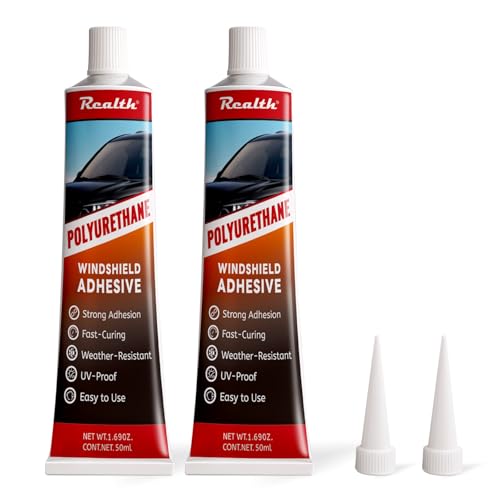
The 50 mL size sets this polyurethane option apart from the larger glass adhesives, but its purpose remains automotive-glass bonding rather than molding attachment. The maker says the formula is non-drip for vertical and overhead applications and withstands temperatures from -50°C to 180°C. That temperature claim belongs to the maker; it does not establish adhesion to a particular trim material. The smaller tube may suit a limited glass repair, while a long molding run could require more material. Confirm that the application involves glass bonding before choosing it.
Bottom line: Consider it for a small glass-bonding repair, not trim alone.
Polyurethane Windshield Adhesive, 310 mL

This polyurethane adhesive is sold in a 310 mL format and is described for automotive glass, with vibration resistance and vertical or overhead use among its claims. Its transparent color distinguishes it from the black glass adhesives, but it is still a windshield sealant rather than a trim-specific glue. A larger cartridge may be practical for a broader glass installation; it can be excessive for a short molding repair. The maker says the formula is moisture-curing and seals gaps around glass edges. Do not treat that as confirmation that it bonds every molding material.
Bottom line: Choose it for a larger automotive-glass sealing or bonding job.
How to Choose Glue for Windshield Molding
For molding-only repairs, start with the trim material and use a product whose applications include rubber or plastic trim; glass-bonding urethane is intended for a different joint. Flexible silicone is used for flexible seals, while polyurethane windshield adhesive is designed to bond glass to a vehicle frame. Decide whether the molding is loose along a short section or whether the glass itself has shifted: a glass bond is a safety-critical installation, not a cosmetic trim fix. Clean, dry surfaces are a common prerequisite for adhesive bonding, and old adhesive residue can interfere with contact. Before ordering, confirm the adhesive works with both the molding and the vehicle surface; compatibility is not universal.
| Repair need | Product direction |
|---|---|
| Loose rubber or plastic molding | Trim- or weatherstrip-compatible flexible adhesive |
| Glass-to-frame bond | Automotive windshield polyurethane or urethane |
Windshield Molding Fit and Surface Compatibility
Windshield molding can be rubber, flexible plastic or a trim assembly attached near the glass, and the adhesive must suit both sides of the joint. A silicone sealant may stay flexible, while a glass urethane is formulated for the structural glass-to-frame connection; those roles are not interchangeable. A useful decision rule is to use trim adhesive only when the glass remains firmly seated and the problem is confined to the molding. If the windshield moves, leaks at the glass bond, or has a damaged perimeter, stop treating it as a trim repair and have an auto-glass professional assess the installation. Confirm compatibility with painted surfaces and existing sealant, since an incompatible adhesive can leave a poor bond or complicate later repair.
Silicone and Windshield Urethane Compared
Silicone and urethane differ by intended joint: silicone is commonly used for flexible seals and trim, while automotive urethane bonds windshield glass to the body. Windshield bonding is structural; the glass contributes to vehicle body strength and can affect airbag support, so a casual bead of trim glue is not a substitute for proper glass installation. Molding may also be retained by clips or a channel rather than adhesive, so identify how the loose part attaches before applying anything. The products here include one sealant explicitly aimed at weatherstrip and plastic trim, plus four glass-focused adhesives. Read the repair need first, not just a product’s windshield wording, and don’t use a trim repair to mask a compromised glass bond.
Applying Adhesive to Windshield Trim
Adhesive bonds work best when mating surfaces are clean, dry and free of loose residue; moisture, dust and old adhesive can weaken contact. Apply only enough material to secure the molding without pushing sealant onto visible glass or paint, and hold the trim in its intended position while it cures. Cure time is not the same as safe drive-away time: windshield urethane installations have vehicle- and product-specific safe-drive requirements, so they should be handled according to professional glass-installation procedures. Avoid handling or washing the repair until the adhesive has cured as directed. If trim will not stay seated without force, inspect for a broken clip, distorted molding or incorrect fit rather than adding more glue.
Frequently Asked Questions
Can windshield urethane hold loose molding in place?
Windshield urethane is made for bonding glass to the vehicle frame, not as a universal molding adhesive. For trim-only repairs, use an adhesive specified for the molding material and the surface it meets.
Does windshield molding need adhesive or clips?
Some molding is retained by clips or a channel, while other trim uses adhesive; identify the attachment style before applying glue. A broken clip or distorted trim will not be fixed reliably by adding a bead of sealant.
How long should molding adhesive cure before driving?
There is no single drive time for all molding adhesives; the maker’s cure time and the type of repair determine handling. Windshield urethane is a structural glass bond and has a separate safe-drive requirement, so a glass installation should be assessed by an auto-glass professional.
Can silicone sealant be used on rubber molding?
Some silicone sealants are formulated for rubber and trim, but compatibility varies by rubber compound and vehicle surface. Confirm both materials are approved for the adhesive before applying it.
Should old adhesive be removed before replacing molding?
Loose residue and contamination can interfere with a new adhesive bond, so clean the contact area before repair. Avoid scraping or cutting near the glass edge, where tools can damage glass or paint.