
Best Dry Erase Markers for Acrylic: 3 Options Compared

For most acrylic boards, EXPO Chisel Tip Dry Erase Markers is the strongest match because its dry-erase ink is made for nonporous surfaces including acrylic and it has a versatile chisel tip.
Choose SFSASO 1 mm Liquid Chalk Markers instead if fine 1 mm writing and wet erasing suit your routine; check whether your board is intended for wet-erase ink before choosing chalk markers.
We earn a commission if you buy through links on this page. As an Amazon Associate I earn from qualifying purchases. Products are compared on manufacturer specifications, not hands-on testing.
- Best overall: EXPO Chisel Tip Dry Erase Markers – Its dry-erase ink is designed for glass and acrylic, and the chisel tip makes multiple line widths.
- Best for fine notes: SFSASO 1 mm Liquid Chalk Markers – The 1 mm liquid chalk marker tips suit small writing on acrylic.
| Product | Best for | Ink type | Tip | Count | Shop |
|---|---|---|---|---|---|
| EXPO Chisel Tip Dry Erase Markers | Versatile line widths | Dry erase | Chisel | 12 | Check Price on Amazon |
| SFSASO 1 mm Liquid Chalk Markers | Fine wet-erase notes | Liquid chalk, wet erase | 1 mm fine | 10 | Check Price on Amazon |
| Magnetic 1 mm Liquid Chalk Markers | Board-side storage | Liquid chalk, wet erase | 1 mm fine | 8 | Check Price on Amazon |
Dry erase markers for acrylic
Compare ink type, tip shape and intended surface before choosing a marker for an acrylic board.
EXPO Chisel Tip Dry Erase Markers
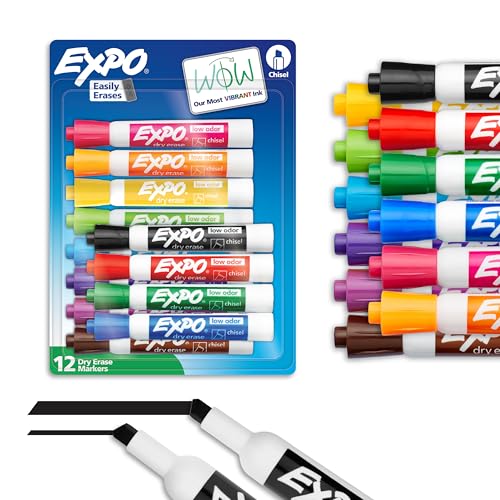
Among these choices, this is the one whose surface range explicitly includes acrylic alongside glass. The 12-count assortment has a chisel tip that makes multiple line widths, useful when a board needs both prominent headings and smaller notes. EXPO says the ink erases with an EXPO eraser or dry cloth and is designed to show vividly from a distance. The limitation is the chisel shape: it is less suited than a fine point for consistently narrow lettering or compact calendar entries.
Bottom line: Choose this if you want an acrylic-compatible dry-erase marker with adjustable line width.
SFSASO 1 mm Liquid Chalk Markers

For the finest point among the acrylic-focused options, these liquid chalk markers have 1 mm tips and come in 10 colors. They are intended for smooth, nonporous surfaces including acrylic boards, glass, mirrors and windows, making them suitable for small calendar writing or colorful labels. Their wet-erase format differs from ordinary dry-erase ink, so removal requires a wet method rather than assuming a dry cloth will work. Confirm that wet-erase marks fit your board and cleanup routine before choosing them.
Bottom line: Pick these for fine, multicolor writing when wet cleanup is acceptable.
Magnetic 1 mm Liquid Chalk Markers

These markers combine a fine 1 mm point with magnetic storage, a useful distinction for a calendar kept on a metal-backed surface. The set has eight colors and is intended for acrylic boards, clear glass boards, windows and mirrors. The maker cautions against use by children 13 and under, so keep the set out of reach in homes with younger children. These are wet-erase liquid chalk markers, not interchangeable with dry-erase pens; choose them only if your board and cleaning method suit wet-removable ink.
Bottom line: Choose these when magnetic cap storage and wet-erase fine writing matter.
How to choose dry erase markers for acrylic
Choose by ink-removal method and the board surface, not color count alone. Dry-erase ink is intended to wipe from a compatible nonporous board, while wet-erase ink is removed with moisture; liquid chalk pens often fall into the latter category. Acrylic is a hard, nonporous surface, but formulations and finishes vary, so an ink designed for glass is not automatically guaranteed for every acrylic board. For ordinary dry-wipe use, choose a marker that explicitly names acrylic. If you write small calendar entries, a 1 mm point is more precise; for large headings, a broad bullet or chisel line is easier to see at a distance. Test a small corner first when board compatibility is uncertain.
Line shape also changes how much control a marker gives: chisel tips make narrow or broad strokes depending on angle, while bullet tips produce a more uniform stroke. A fine tip is practical for dense writing, but its narrow line may be less legible across a room.
Dry erase and wet erase markers compared
Dry-erase markers suit quick changes, while wet-erase markers trade easier resistance to casual smudging for moisture-based cleanup. Acrylic calendars and clear boards are often used for both, so select according to how often writing changes and whether a damp cloth is convenient. A marker’s surface claims matter: some are specifically made for acrylic, others are optimized for glass, and one set here warns that color can appear lighter on acrylic. Do not infer compatibility from color or tip size alone. This table separates the main choice by ink type and use; confirm the board maker’s allowed ink type if unsure.
| Type | Removal | Best fit |
|---|---|---|
| Dry erase | Dry cloth or eraser | Frequent changes |
| Wet erase / liquid chalk | Damp cloth | Fine notes kept until wiped wet |
For daily edits, favor dry erase; for writing that should remain until deliberate damp wiping, wet erase may better fit the routine.
Choosing a marker tip and line size
Use a 1 mm tip for compact entries and a broad point for headings that must read from several feet away. Fine points give more room for letters on a small calendar grid, while chisel points can vary line width with the angle of the marker. Bullet points create a broader, steadier stroke but offer less width variation. A practical rule is to choose fine tips when a typical writing box is under 1 inch wide; use a broader tip when headings need to stand out. Tip size is not a guarantee of visible contrast: color, board background and ink formula also affect legibility. Try a short sample before filling a large acrylic surface.
For clear boards, high contrast matters more than having many colors. A bright color that contrasts with the area behind the writing is easier to read than a similar hue against that background.
Cleaning acrylic boards without damage
Use the removal method intended for the ink: dry-erase marks generally wipe with a soft dry cloth, while wet-erase marks need moisture. Avoid abrasive pads and gritty cleaners on acrylic because they can scratch or dull the surface. For routine cleanup, start with a clean microfiber cloth and water, then dry the board to reduce streaks. Do not use a solvent or household cleaner unless the board maker approves it, since acrylic can react differently from glass. If a mark resists, identify whether it is wet-erase or dry-erase before applying stronger cleaning. A small test area helps protect a visible board from accidental haze.
Keep markers capped when not in use, and store them away from small children; liquid ink and small caps can pose age-related safety concerns.
Frequently Asked Questions
Can dry erase markers write on every acrylic board?
No marker is guaranteed for every acrylic finish. Choose one that explicitly names acrylic, and test a small corner before writing across the board.
How do wet erase markers come off acrylic?
Wet-erase ink is removed with moisture, commonly a damp soft cloth. Wipe promptly and avoid abrasive pads that can scratch acrylic.
Which marker tip works best for small acrylic calendars?
A fine point around 1 mm is suited to compact entries. For headings meant to be read from several feet away, choose a broader line instead.
Are glass whiteboard markers safe for acrylic?
Not automatically: glass and acrylic are different surfaces, even when both are smooth and nonporous. Prefer a marker that names acrylic or confirm compatibility with the board maker before use.
How can I make acrylic marker writing easier to read?
Use strong contrast against the background and test a short line before filling the board. A broad bullet or chisel stroke is easier to see at a distance than a fine point.