
Lucas Stratus Collection Luggage: Sizes and Styles Compared

For one versatile piece in the Lucas Stratus collection, choose Lucas Stratus 20-Inch Carry-On if you want a 20-inch expandable hard-side carry-on that weighs 7 pounds. Choose a different option if you need a coordinated set or a larger checked suitcase; the softside alternatives also suit shoppers who prefer fabric construction.
We earn a commission if you buy through links on this page. As an Amazon Associate I earn from qualifying purchases. Products are compared on manufacturer specifications, not hands-on testing.
- Best overall: Lucas Stratus 20-Inch Carry-On – The 20-inch expandable hard-side case weighs 7 pounds and is sized for carry-on use.
- Best for a hard-side set: Lucas Stratus 3-Piece Hard-Side Set – Includes 20-, 27-, and 31-inch expandable hard-side suitcases.
- Best for a large hard-side case: Lucas Stratus 31-Inch Hard-Side Case – A 31-inch expandable suitcase with eight spinner wheels.
| Product | Best for | Configuration | Shell type | Weight | Shop |
|---|---|---|---|---|---|
| Lucas Stratus 3-Piece Hard-Side Set | Hard-side set | 20, 27, 31 inches | PC+ABS hard-side | — | Check Price on Amazon |
| Lucas Stratus 20-Inch Carry-On | Carry-on trips | 20 inches | ABS + PC hard-side | 7 pounds | Check Price on Amazon |
| Lucas Stratus 31-Inch Hard-Side Case | Large checked trips | 31 inches | Hard-side | 10.5 pounds | Check Price on Amazon |
Lucas Stratus Collection Luggage Compared
Compare the hard-side Stratus pieces with the softside Lucas options to choose a configuration that matches your packing needs.
Lucas Stratus 3-Piece Hard-Side Set
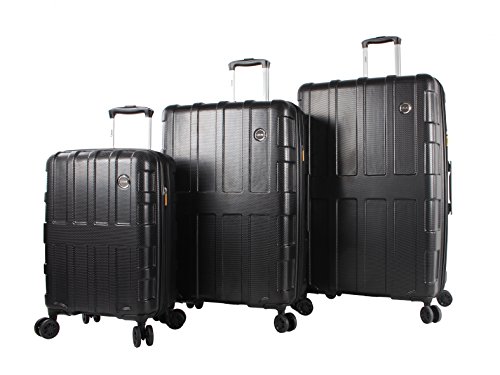
Unlike the single-case options, this Stratus set groups three expandable hard-side suitcases in 20-, 27-, and 31-inch sizes. The maker identifies extra-thick PC+ABS construction and spinner wheels, making the set suitable for travelers who want multiple case sizes in a matching finish. It is the only included option with a 27-inch case. The tradeoff is that the set includes sizes beyond a carry-on; choose a single case instead if you only need one suitcase or want a case weight for packing calculations.
Bottom line: Choose this set if you need three hard-side sizes in Stratus Black.
Lucas Stratus 20-Inch Carry-On

The 20-inch Stratus carry-on is the only option here with a 7-pound weight and compact carry-on configuration. Its ABS + PC hard-side shell is expandable and scratch resistant, and it has eight spinner wheels for 360-degree movement, according to the brand. The dimensions are 23.5 by 14 by 9.5 inches, so compare those measurements with your airline’s current cabin-bag limits before flying. Expansion can increase the packed case depth, so travelers relying on a strict carry-on size limit should account for that extra space.
Bottom line: Pick this case for a single Stratus hard-side carry-on.
Lucas Stratus 31-Inch Hard-Side Case
For a single large Stratus hard-side suitcase, this 31-inch case differs from the carry-on by offering an expandable checked-size format. It suits longer trips or travelers who pack more, but its large format is not a cabin-bag substitute. Check the airline’s checked-bag size and weight allowance before packing.
Bottom line: Choose this large case when a carry-on’s capacity will not suffice.
How to Choose Lucas Stratus Collection Luggage
Start with the number of cases and shell style you need: the Stratus options here are hard-side, while the related Designer cases are softside. A carry-on makes sense for trips that fit within the airline’s cabin allowance; a 31-inch case is for checked travel, and a three-piece set gives more size flexibility. Airline carry-on limits commonly fall around 22 by 14 by 9 inches, including wheels and handles, but carriers set their own rules. Measure the full exterior rather than relying on the nominal inch size. If your airline limit is 22 by 14 by 9 inches or less, verify the 20-inch case’s 23.5 by 14 by 9.5-inch dimensions before choosing it.
Hard-Side and Softside Suitcases Compared
Hard-side shells provide a structured exterior, while softside luggage has a flexible fabric body that can make exterior pockets or compression easier, depending on the design. PC/ABS blends combine polycarbonate and ABS plastics; shell thickness and build affect durability, so avoid assuming every hard case performs the same. Softside fabrics are often polyester or nylon, but confirm fabric type when abrasion resistance matters. This guide’s Stratus cases are hard-side, while the two Designer alternatives are softside.
| Type | Typical advantage | Tradeoff |
|---|---|---|
| Hard-side | Structured shell around packed items | Usually no flexible exterior pocket |
| Softside | Flexible fabric body | Fabric can show wear from abrasion |
Choose hard-side if a firm shell is your priority; choose softside if flexibility matters more.
Carry-On Fit and Checked-Bag Sizing
Measure luggage from the floor, including wheels and handles, because airlines count exterior protrusions toward size limits. A common US carry-on benchmark is 22 by 14 by 9 inches, but airline rules differ and can be smaller for regional aircraft. Checked-bag allowances commonly cap combined length, width, and height at 62 linear inches, with weight limits often around 50 pounds on domestic economy itineraries; route and fare rules can differ. Measure expanded luggage before departure, since the extra depth can push a case beyond a limit. For a 20-inch case whose height is 23.5 inches, confirm the airline’s exact allowance rather than assuming the nominal size qualifies.
Using Spinner Wheels and Telescoping Handles
Spinner wheels rotate in multiple directions and allow a suitcase to roll upright beside you, while two-wheel designs are generally pulled tilted behind the traveler. Eight-wheel wording usually means four dual-wheel assemblies, but wheel construction and replacements vary by model. Use a suitcase’s telescoping handle to steer, not lift; use its grab handles for lifting over curbs or into a vehicle. Keep heavy items low and near the wheels to reduce tipping, and do not overload a case beyond airline weight limits. On rough pavement, lift or pull the case carefully rather than forcing small spinner wheels over large cracks.
Frequently Asked Questions
Do airlines allow a 20-inch carry-on suitcase?
Many US airlines use a carry-on limit near 22 by 14 by 9 inches, counting wheels and handles. Compare the full exterior dimensions with your carrier’s current rule, especially if the suitcase is expanded.
How do I measure a suitcase for an airline?
Measure the outside height, width, and depth, including wheels, handles, and any bulging pockets. For checked luggage, some carriers use a 62-linear-inch limit, calculated by adding those three measurements.
Does expanding a suitcase change its airline size?
Yes, expansion increases the suitcase’s depth and can push it past cabin or checked-bag size limits. Measure the expanded case before travel and compare it with the carrier’s allowance.
What is the difference between spinner and two-wheel luggage?
Spinner luggage can roll upright in multiple directions, while two-wheel luggage is usually pulled at an angle. Spinners maneuver easily on smooth floors, but larger cracks and rough surfaces may be harder on small wheels.
How much can I pack in a checked suitcase?
Many domestic economy checked bags have a 50-pound weight limit, though airline, fare, and route rules vary. Weigh the packed suitcase and check the carrier’s allowance before leaving.