
Bed Head 3 Barrel Waver Models Compared for Wave Style

Bed Head Wave Affair Jumbo Waver is the best fit for most people who want a Bed Head 3 barrel waver, with 10 heat settings and a maximum temperature of 410°F. Choose Bed Head A Wave We Go Adjustable Waver instead if changing wave depth matters more than a fixed three-barrel design, or Bed Head Wave Artist Deep Waver for a deep, defined wave.
A three-barrel waver presses hair between heated barrels to create repeated wave patterns; select a temperature suitable for your hair and work in small sections.
We earn a commission if you buy through links on this page. As an Amazon Associate I earn from qualifying purchases. Products are compared on manufacturer specifications, not hands-on testing.
- Best overall: Bed Head Wave Affair Jumbo Waver – Ten digital heat settings and a maximum temperature of 410°F give a broad range of styling control.
- Best for adjustable waves: Bed Head A Wave We Go Adjustable Waver – Adjustable barrel plates create different wave depths, from crimp-like texture to deeper waves.
- Best for deep waves: Bed Head Wave Artist Deep Waver – The deep-barrel design is made for beachy waves and reaches 400°F.
| Product | Best for | Maximum temperature | Heat control | Shop |
|---|---|---|---|---|
| Bed Head Wave Affair Jumbo Waver | Flexible heat control | 410°F | 10 digital settings | Check Price on Amazon |
| Bed Head Wave Artist Deep Waver | Defined deep waves | 400°F | Multiple settings | Check Price on Amazon |
| Bed Head A Wave We Go Adjustable Waver | Variable wave depth | 400°F | Multiple settings | Check Price on Amazon |
Bed Head 3 Barrel Wavers
Compare the three Bed Head options by temperature, heat control and the wave shape each design supports.
Bed Head Wave Affair Jumbo Waver
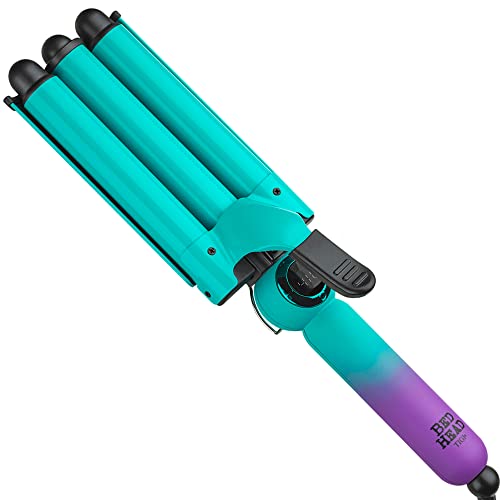
Bed Head Wave Affair Jumbo Waver stands out for its 10 digital heat settings, the largest setting count among these Bed Head choices. Its three-barrel design is intended for quick styling, and the tourmaline ceramic coating is described by the maker as helping protect against heat damage while adding shine. The temperature reaches 410°F, and a heat-protective glove is included. This suits people who want to adjust heat in smaller steps; the fixed barrel shape is less suited to anyone seeking adjustable wave depth.
Bottom line: Choose this if you want the broadest heat-setting range in the Bed Head group.
Bed Head Wave Artist Deep Waver

Bed Head Wave Artist Deep Waver uses a deep-barrel design for a more defined wave pattern rather than adjustable wave depth. The maker says its double dose of tourmaline ceramic technology adds shine and helps reduce frizz, and the tool reaches 400°F with instant heat recovery. A plate-locking switch helps with storage, while worldwide dual voltage can be useful for travel. This is a good match for someone focused on deep, beachy waves; its fixed barrel design offers less shape flexibility than an adjustable waver.
Bottom line: Pick this for a fixed deep-wave shape and worldwide dual-voltage capability.
Bed Head A Wave We Go Adjustable Waver
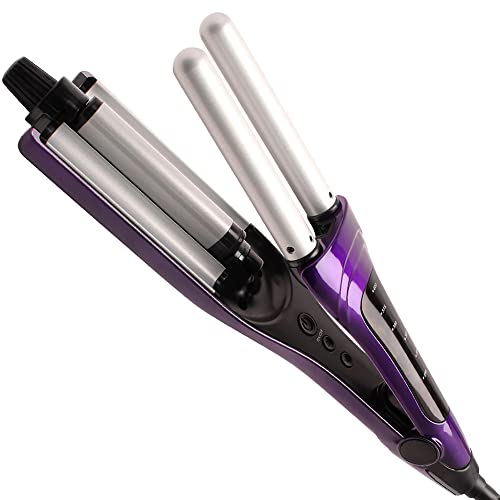
Bed Head A Wave We Go Adjustable Waver is the Bed Head option with adjustable barrel plates, so users can change the wave depth instead of working with one fixed profile. The maker describes lower, middle and highest adjustments as producing crimp-like, defined and deeper waves. Digital heat control reaches 400°F, and the tool has universal dual voltage, auto shut-off and a 6-foot swivel cord. Its adjustability suits people who want to vary their texture; choose a fixed-shape waver if you prefer a simpler barrel setup.
Bottom line: Choose this when adjusting wave depth is more important than a fixed barrel profile.
How to choose a Bed Head 3 barrel waver
Choose by the wave shape and heat adjustment you need, not by barrel count alone. A fixed deep-barrel waver makes a consistent pattern, while an adjustable plate design lets you change wave depth; smaller crimps and broad waves do not look interchangeable. Hair texture and condition also affect heat choice. As a cautious starting point, fine or fragile hair generally needs lower heat than coarse hair, and higher settings should not be the default. Use the lowest setting that produces the shape you want, then increase only if needed. For the most stepwise control among these models, choose Bed Head Wave Affair Jumbo Waver; for adjustable shape, choose Bed Head A Wave We Go Adjustable Waver.
What heat setting should you use
Start low and raise the temperature gradually because repeated high heat can damage hair. A common styling rule of thumb is about 250–300°F for fine or fragile hair, 300–350°F for average hair, and 350–400°F for coarse or resistant hair; the right setting also depends on hair condition and how quickly a section responds. Do not assume the maximum temperature is the recommended setting for every head of hair. Keep hair fully dry before using a heated waver, section it evenly, and avoid holding the tool in one spot longer than needed. A tool that reaches 410°F offers headroom, not a reason to use that temperature routinely.
How to make waves evenly
Even sections and consistent placement create more uniform waves than pressing large, uneven sections. Start near the roots without touching the scalp, clamp briefly, then reposition the barrels so the next press meets the previous wave; keep the tool away from skin and ears because hot plates can burn. Work through dry hair in sections that fit fully between the barrels, and let each section cool before brushing or separating it. For softer waves, use looser sections and avoid pressing too close to the ends; for a more defined pattern, keep the placement consistent from section to section. A heat-protective glove helps reduce accidental contact but does not make hot barrels safe to touch.
What to check before using a hair waver
Check the voltage rating before travel, since dual voltage only helps when the tool is compatible with the destination’s electrical supply and plug shape. A plug adapter changes the plug fit, not voltage. Keep the waver on a heat-resistant surface while hot, unplug it after styling, and let it cool fully before putting it away. Auto shut-off is a backup feature, not a substitute for unplugging. Use the included glove where provided, but keep fingers clear of the plates and avoid using a waver on wet hair. If your hair is chemically treated, brittle or already heat-damaged, use a lower setting and limit repeated passes.
Frequently Asked Questions
Can a three barrel waver be used on short hair?
Yes, if each section fits between the barrels and the tool can be positioned without touching the scalp. Shorter hair may need smaller sections and careful placement to avoid an overly uniform crimp.
Should hair be wet or dry before using a waver?
Use a waver on fully dry hair; applying hot plates to damp strands can cause excess heat damage. Let hair air-dry or blow-dry completely before sectioning and styling.
How do I get loose waves instead of tight crimps?
Choose a wider or deeper wave profile and avoid pressing small sections repeatedly. An adjustable waver can be set to a less pronounced position, while consistent, brief presses help keep the result from becoming too crimped.
Can I take a dual voltage hair waver overseas?
A dual-voltage tool can work with compatible electrical supplies abroad, but the destination plug may require an adapter. Check the voltage printed on the tool and confirm it supports the destination’s supply before plugging it in.
How long should I hold a hair waver on each section?
Use brief presses and adjust based on how quickly a dry section takes a wave; long contact increases heat exposure. Keep each press consistent, and avoid repeated passes over the same area.