
Glass Stove Top Protector While Cooking: 5 Mats Compared

Large Translucent Induction Protector Mat is the best fit for cooking on a glass stove top because it is specifically for induction cooktops, not conventional electric or radiant models. Choose a flat cover instead if you want scratch protection or extra counter space only while the stove is off.
A cooktop protector is a mat placed between compatible cookware and the cooking surface; the key decision is whether the range uses induction.
We earn a commission if you buy through links on this page. As an Amazon Associate I earn from qualifying purchases. Products are compared on manufacturer specifications, not hands-on testing.
- Best overall: Large Translucent Induction Protector Mat – Made for induction cooking; the product explicitly excludes conventional electric, radiant, ceramic, coil, and gas cooktops.
- Best for a cooled stove: 28.5 x 20-Inch Fiberglass Cover – The maker says to allow two minutes of cooling before placing it on heating elements that are still warm.
- Best for drying dishes: 28 x 20-Inch Silicone Cover and Drying Mat – Its silicone design also has raised ridges intended to catch drips from dishes, glasses, and produce.
| Product | Best for | Size | Thickness | Material | Shop |
|---|---|---|---|---|---|
| Large Translucent Induction Protector Mat | Induction cooking | 20.4 x 30.7 in | 0.03 in | Silicone fiberglass | Check Price on Amazon |
| 28.5 x 20-Inch Fiberglass Cover | Cooled stove cover | 28.5 x 20 in | 0.09 in | Fiberglass, silicone coating | Check Price on Amazon |
| PONGARD 30 x 21-Inch Stove Cover | Large idle surface | 30 x 21 in | 0.04 in | Water-resistant, oil-proof material | Check Price on Amazon |
| 28 x 20-Inch Silicone Cover and Drying Mat | Dish drying | 28 x 20 in | 0.1 in | Silicone | Check Price on Amazon |
| 30-Inch Three-Layer Electric Stove Cover | Hot turned-off stove | 30 x 21 in | — | Three-layer material | Check Price on Amazon |
Glass stove top protectors while cooking
Match the mat to the cooktop first: only one of these options is identified for use during induction cooking.
Large Translucent Induction Protector Mat
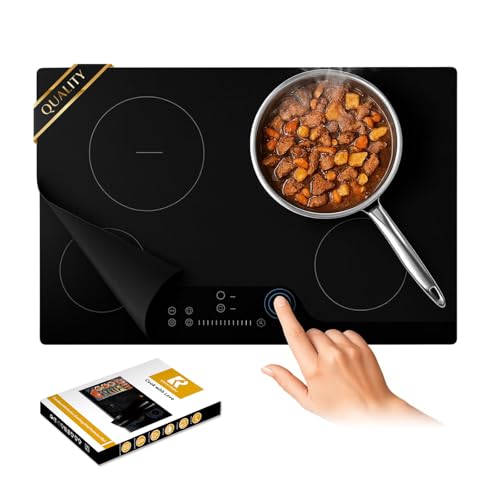
Unlike flat covers intended for an idle stove, this mat is identified for induction cooking. Its 20.4 x 30.7-inch translucent silicone-fiberglass construction is described as a scratch protector and as a non-slip pad intended to reduce cookware sliding. The decisive limitation is cooktop type: the maker says not to use it on conventional electric, radiant, ceramic, coil, or gas ranges. Confirm that the range is induction and that cookware is induction-compatible; a glass surface by itself does not establish compatibility.
Bottom line: Choose it only for an induction cooktop and compatible cookware.
28.5 x 20-Inch Fiberglass Cover

This fiberglass cover is designed to shield an electric or glass stovetop and reclaim counter space when cooking is over, rather than sit under cookware during cooking. It measures 28.5 x 20 inches and has a double-sided silicone coating; the maker gives a maximum heat-resistance figure of 1,472°F and says to allow two minutes of cooling before setting it on heating elements that are still warm. That cooling instruction makes this a poor choice for anyone seeking a mat to leave in place during active cooking.
Bottom line: Pick it for protecting a cooled, unused stove and gaining prep space.
PONGARD 30 x 21-Inch Stove Cover

The 30 x 21-inch PONGARD cover is larger than the 28-inch-wide options and is meant to turn an unused electric, induction, or ceramic cooktop into a work surface. Its water-resistant, oil-proof material is intended to wipe clean, and the maker describes it as heat-resistant without giving a temperature figure in the product text. This is a cover for an idle stove, not a cooking mat: buyers who need protection between a pan and a live cooktop should look for a product specifically intended for that use.
Bottom line: Choose it when a larger flat cover for an idle cooktop is the goal.
28 x 20-Inch Silicone Cover and Drying Mat

This silicone option doubles as a ridged dish-drying mat, a different use from an induction cooking protector. Its raised lines are intended to improve airflow and catch drips from dishes, glasses, fruits, and vegetables; the product also describes a waterproof bottom and high edges. At 28 x 20 inches, it can cover a glass-top electric stove or another flat surface when that surface is not being used for cooking. The key limitation is purpose: the maker does not identify it for use under cookware on an active cooktop.
Bottom line: Pick it if dish drying and covering an idle stove are both useful.
30-Inch Three-Layer Electric Stove Cover

This three-layer cover is presented as a flat protector for an electric or glass stove, with the maker saying it can go on a stove that is turned off but still hot. That makes its intended timing different from an induction mat used during cooking. The 30 x 21-inch size also offers a large surface for food preparation when the range is idle, and the cover is described as waterproof and oil-proof.
Bottom line: Choose it for a broad cover to use after the cooktop is switched off.
How to choose a glass stove top protector while cooking
Choose by heating method before choosing by size: induction mats are for induction cooktops, while flat stove covers are for an idle range. Induction uses a magnetic field to heat compatible cookware, so a magnet that sticks firmly to the cookware base is a practical compatibility check. A glass or ceramic surface alone does not mean the range is induction. Do not treat a cover described as fireproof or heat-resistant as permission to leave it on a live radiant burner; those claims do not establish active-cooking compatibility. If the product is not explicitly intended for active induction cooking, use it only with the cooktop off and cool. Keep mats clear of controls and any vents identified in the cooktop manual.
Induction and flat covers serve different jobs
An induction cooking mat sits between compatible cookware and an induction surface; a flat cover protects the whole top or provides workspace after cooking. The distinction matters because conventional electric radiant elements heat the glass directly, unlike induction heating through a magnetic field. Use this quick selection table to separate the functions before comparing dimensions.
| Need | Suitable type | Key check |
|---|---|---|
| Cook with a mat in place | Induction cooking mat | Induction range and compatible cookware |
| Cover the whole stove between uses | Flat stove cover | Cooktop switched off |
| Dry dishes on a flat surface | Ridged silicone drying mat | Stove not in use |
When the range has radiant, coil, or gas heating, none of the induction-only claims apply; choose a cover for storage or counter use instead.
Measure the cooktop before choosing a cover
Measure the flat area you want covered, not just the outside width of the range, and compare both length and width with the mat dimensions. A 28-inch-wide cover will not span a 30-inch-wide area, and a cover that overhangs can interfere with nearby counters or controls. For a cooking mat, use the maker’s footprint and keep cookware positioned within the mat and the active cooking zone. Do not assume a larger mat is safer or more versatile: material and heating type decide whether a mat can be used during cooking. If a control panel sits on the glass surface, choose a placement that leaves it fully visible and usable.
Use stove covers safely after cooking
Flat covers turn an idle cooktop into temporary work space, but they should not conceal a burner that is on or a hot surface that the cover is not approved to contact. A residual-heat indicator can remain lit after electric cooking ends; wait until the cooktop’s own hot-surface warning clears before setting down a cover unless its maker gives a specific safe condition. Keep knives, heavy cookware, and food-prep spills away from controls and surface edges. For mats intended during induction cooking, stop if the mat shifts, bunches, or the cookware rocks; stable pan contact and clear controls are essential. Never infer a maximum safe temperature from terms such as fireproof or heat-resistant alone.
Frequently Asked Questions
Can a stove top protector stay on while cooking?
Only use a mat during cooking when it is intended for that cooktop type; the induction mat here excludes conventional electric, radiant, ceramic, coil, and gas ranges. A flat stove cover is for an idle cooktop, not for cooking under cookware.
How can I tell whether my glass cooktop is induction?
Check the cooktop model or manual, because a glass or ceramic surface alone does not establish induction heating. For cookware compatibility on induction, a magnet should stick firmly to the base.
Can I use an induction mat with any pan?
No; the cookware must be induction-compatible, and a magnet that sticks firmly to its base is a useful check. A pan that does not pass that check may not work on an induction range.
When can I put a cover on a recently used stove?
Wait until the cooktop is off and its hot-surface warning has cleared unless the cover maker gives a specific condition. One cover maker here says to allow two minutes of cooling before placing its mat on heating elements that are still warm.
What size stove top cover should I choose?
Measure the area to cover in both directions, then choose a mat whose length and width fit without obstructing controls or overhanging adjacent work areas. A 28-inch cover cannot span a 30-inch-wide target area.