
Fish Tank Cleaning Brush: 4 Tools Compared by Fit

For a straightforward glass-tank scrubber, choose AQUANEAT Double-Sided Sponge Brush for its 12.5-inch handle and sponge head; choose a different tool if you have an acrylic tank or need adjustable reach.
A fish tank cleaning brush removes algae mechanically, but the right contact surface depends on the aquarium material and the type of buildup.
We earn a commission if you buy through links on this page. As an Amazon Associate I earn from qualifying purchases. Products are compared on manufacturer specifications, not hands-on testing.
- Best overall: AQUANEAT Double-Sided Sponge Brush – Its 12.5-inch handle and sponge head make it a simple choice for glass tank walls.
- Best for corners: DaToo Five-Sided Sponge Brush, 2-Pack – Its five-sided head and 360° rotating structure are designed to reach corners and crevices.
- Best for multiple tasks: UPETTOOLS 6-in-1 Aquarium Cleaning Kit – The kit includes six attachments and an adjustable handle reaching up to 3.2 feet.
- Best for outside operation: Aqueon Magnetic Algae Scraper, Small – The magnetic cleaner lets you move the inside pad from outside the aquarium.
| Product | Best for | Tool type | Reach | Tank surface | Shop |
|---|---|---|---|---|---|
| AQUANEAT Double-Sided Sponge Brush | Glass tank walls | Sponge brush | 12.5 in handle | Glass | Check Price on Amazon |
| DaToo Five-Sided Sponge Brush, 2-Pack | Tank corners | Rotating sponge brush | — | Aquariums | Check Price on Amazon |
| UPETTOOLS 6-in-1 Aquarium Cleaning Kit | Multiple tank tasks | Six-attachment kit | 23.2–34.2 in | Aquarium | Check Price on Amazon |
| Aqueon Magnetic Algae Scraper, Small | Outside operation | Magnetic pad | — | Glass or acrylic | Check Price on Amazon |
Fish tank cleaning brushes and tools
Match the tool’s contact surface and reach to your tank material, algae location and cleaning routine.
AQUANEAT Double-Sided Sponge Brush

For a basic hand-held scrubber, this brush pairs a 3-by-2.5-inch sponge with a 12.5-inch plastic handle. The maker says the sponge removes algae quickly; the handle has a non-slip surface and a hanging hole. Its surface restriction matters: this brush is for glass tanks, not acrylic or plastic. Choose it for reachable glass walls and modest scrubbing jobs, but consider a longer or differently designed tool if the tank is deep or the buildup sits far below the surface.
Bottom line: Pick this for a simple sponge scrubber on a glass aquarium.
DaToo Five-Sided Sponge Brush, 2-Pack

For corner access, this two-piece set uses a five-sided head and a 360-degree rotating structure, unlike the fixed sponge design of AQUANEAT Double-Sided Sponge Brush. The maker describes it as suitable for all types of aquariums and says its head is intended to reach corners, crevices and the bottom. Choose it when awkward angles are the main cleaning problem. The handle reach and exact tank-material limitations are not established here, so buyers with a delicate acrylic surface should verify pad compatibility before scrubbing.
Bottom line: Choose this set when corners and crevices are hard to reach.
UPETTOOLS 6-in-1 Aquarium Cleaning Kit
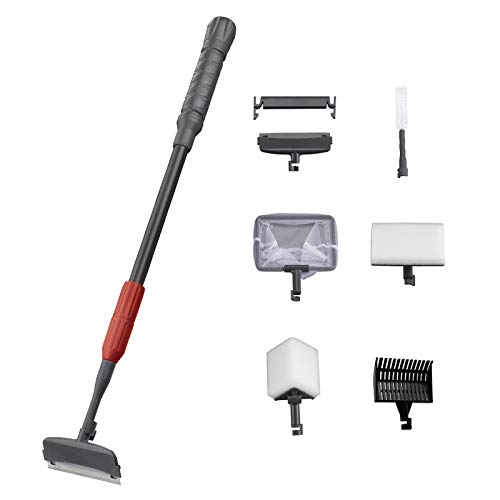
Rather than a single brush, this kit includes a scraper, gravel rake, brush, cleaning sponge, fishing net and right-angle sponge. Its adjustable handle is sized from 23.2 to 34.2 inches, and the maker says it can extend up to 3.2 feet. That range and assortment suit owners who want one handle for wall and bottom tasks, although assembly and swapping attachments add steps compared with a dedicated sponge brush. The maker advises keeping the tool dry after use.
Bottom line: Pick this if adjustable reach and several tank-cleaning attachments matter.
Aqueon Magnetic Algae Scraper, Small
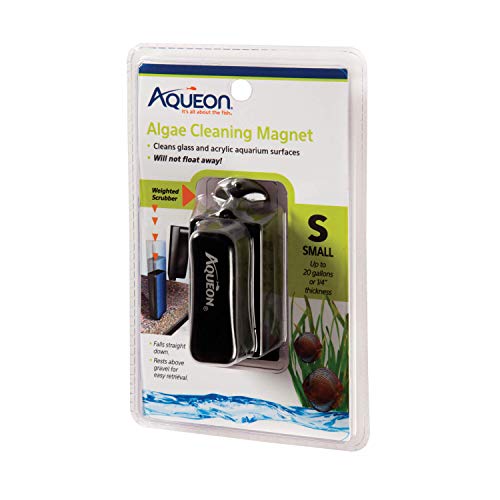
For cleaning without moving a handle through the water, this small magnetic pad is controlled from outside the aquarium. A curved pad is designed for flat and curved surfaces, and the weighted cleaner is intended not to float away; if the two magnet halves separate, the inside piece falls for retrieval. It is specified for glass or acrylic, unlike a glass-only sponge brush. Check that the small cleaner suits your tank wall and panel curvature, since the dimensions do not establish a compatible glass thickness.
Bottom line: Choose this if you want to move an interior scrubber from outside the tank.
How to choose a fish tank cleaning brush
Choose first by tank material, then by reach and cleaning area. Glass can take a compatible sponge or scraper, while acrylic needs a tool explicitly suitable for acrylic; a hard or gritty pad can leave scratches. For flat wall algae, a hand brush gives direct pressure, while a magnetic cleaner lets you guide an inside pad from outside the tank. If the tank is deeper than the handle can reach comfortably, an adjustable shaft or magnetic design avoids leaning into the water. A useful rule: if the brush head cannot reach the bottom without your hand entering the tank, choose a longer handle or a tool designed for outside operation.
Match the tool to the job
| Cleaning need | Tool style | Check before use |
|---|---|---|
| Glass wall algae | Sponge brush or scraper | Panel material |
| Inside cleaning from outside | Magnetic pad | Panel thickness compatibility |
| Walls, substrate and multiple tasks | Multi-attachment handle | Reach and attachment fit |
Prevent scratches while removing algae
Rinse a scrubber before each session and inspect the pad for trapped sand or gravel; one hard grain dragged across a panel can scratch it. This risk matters especially with acrylic, which scratches more readily than glass, so use only a pad marked suitable for the tank material. Keep aquarium scrubbers separate from household sponges and cleaners: soap or chemical residue can contaminate the water. Work gently around silicone seams, where aggressive scraping can damage the seal. For magnetic cleaners, keep the interior pad under control while moving the outside half so the two sides do not snap together across fingers or strike the tank.
When to clean aquarium glass
Clean visible algae when it begins to obscure the view or spread across a viewing panel; there is no single schedule that fits every aquarium. Light routine wiping is preferable to waiting until a thick layer requires force. Algae growth changes with light exposure, nutrient levels, plant growth and tank maintenance, so a sunny tank may need attention more often than a shaded one. Leave some algae-covered surfaces alone if they serve a deliberate purpose in the aquarium, and avoid disturbing the substrate unnecessarily. During cleaning, keep removed debris from settling back into the gravel, then resume normal filtration and water maintenance.
Use brushes safely around fish and equipment
Keep fish in the aquarium during ordinary wall cleaning, but move slowly to avoid startling them and avoid striking heaters, intake tubes or glass thermometers. Unplug electrical equipment before lowering hands or tools near submerged devices, especially when maintenance requires moving or cleaning around them. Never use a brush that has contacted household chemicals, and do not apply soap to aquarium surfaces. A scraper blade can cut skin and damage acrylic if misused, so reserve blades for compatible glass and keep them pointed away from hands and silicone joints. Check magnetic cleaners for grit before each pass.
Frequently Asked Questions
Can I use a glass tank brush on acrylic?
Only use a tool explicitly suitable for acrylic. Acrylic scratches more easily than glass, and trapped grit under a sponge or pad can mark the surface.
How often should I clean aquarium glass?
Wipe algae when it starts obscuring the viewing area; some tanks need attention more often because of stronger light or faster growth. Gentle, regular removal reduces the need for forceful scrubbing.
Can aquarium cleaning brushes use soap?
No; keep soap and household cleaners away from aquarium surfaces because residue can enter the water. Rinse a dedicated aquarium tool with clean water before use.
How do magnetic aquarium cleaners work?
A magnetic cleaner has an inside pad and an outside handle that attract through the tank wall, letting you guide the pad without placing a brush hand inside. Confirm the cleaner is compatible with the tank’s panel thickness and surface before use.
How do I keep a scrubber from scratching glass?
Rinse the pad and check for sand, gravel or other hard debris before each pass. Use light pressure and keep the scrubber away from silicone seams.