
Glass Oil Film Cleaner: 4 Types Compared by Use

For a glass oil film cleaner with a scrub aid, HRIOEKAX Roll-On Remover pairs a 100 ml roll-on compound with a cleaning board. Choose a different style if you want a two-piece kit or an integrated brush applicator instead.
These products are intended for automotive glass; oil film compounds target bonded road residue that ordinary glass cleaning may leave behind.
We earn a commission if you buy through links on this page. As an Amazon Associate I earn from qualifying purchases. Products are compared on manufacturer specifications, not hands-on testing.
- Best overall: HRIOEKAX Roll-On Remover – A 100 ml roll-on compound comes with a cleaning board for working residue across the glass.
- Best for a two-piece set: Vitacamy Glass Emulsion, 2-Pack – The package includes two 100 g glass emulsion cleaners and brush heads.
- Best for an integrated brush: Oil Film Cleaning Brush, Red – The applicator combines a sponge brush and solution release in one tool.
| Product | Best for | Format | Package size | Applicator | Shop |
|---|---|---|---|---|---|
| HRIOEKAX Roll-On Remover | Scrub-aid application | Roll-on compound | 100 ml | Cleaning board | Check Price on Amazon |
| QIFOR Windshield Oil Film Remover | Residue-focused cleaning | Glass cleaner | 1 piece | — | Check Price on Amazon |
| Vitacamy Glass Emulsion, 2-Pack | Two-piece kit | Emulsion with brush heads | 100 g × 2 | Brush heads | Check Price on Amazon |
| Oil Film Cleaning Brush, Red | Integrated brush tool | Cleaner with sponge brush | 0.5 fl oz × 2 | Built-in sponge brush | Check Price on Amazon |
Glass oil film cleaners
Compare the application styles and package contents to match the cleaner to your glass-care routine.
HRIOEKAX Roll-On Remover

Unlike wipe-only cleaners, this roll-on compound is supplied with a cleaning board for scrubbing residue from automotive glass. The 100 ml size is intended for windshields, side windows, rear windows, and mirrors. The maker says it helps remove oil film, road residue, water spots, smudges, and haze, which makes it a fit for someone dealing with several kinds of exterior buildup. The extra board means there is a separate tool to keep track of, so buyers who prefer a single-piece applicator may prefer another format.
Bottom line: Choose this if you want a roll-on compound paired with a separate scrubbing board.
QIFOR Windshield Oil Film Remover
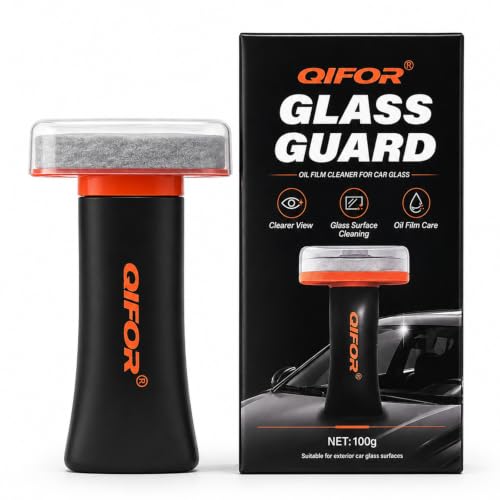
QIFOR emphasizes residue types rather than a scrub tool: its cleaner is aimed at oil film, road grime, water spots, wax residue, and washer-fluid buildup. The maker says the formula is intended to leave a haze-free surface and reduce glare, so it suits drivers looking to address traffic film on windshields and windows. The package is one piece, but the specifications do not establish an applicator style. Buyers who specifically want a board or brush included should confirm that before ordering.
Bottom line: Pick this when the residue list matters more than an included applicator.
Vitacamy Glass Emulsion, 2-Pack

Vitacamy is the only two-piece glass emulsion set among these options, with two 100 g cleaners and brush heads. The maker says the emulsion targets oil film, grease, stains, and dust on automotive glass; its use includes windshields and side mirrors, and it can be applied to interior or exterior glass. That broader surface use may suit buyers who want one kit for several glass areas. Its brush-head format differs from a roll-on compound with a separate board, so it is less suited to someone seeking that specific setup.
Bottom line: Choose this if you want two emulsion cleaners with brush heads for interior and exterior glass.
Oil Film Cleaning Brush, Red

This cleaner combines a sponge brush and solution release in an integrated applicator, rather than pairing a bottle with a separate board. The maker says its pH-balanced formula is suitable for glass, rubber, and tints, and describes use on side and rear windows as well as windshields. The package is identified as two pieces, each 0.5 fl oz, and the color is light red. The small per-piece volume is the trade-off for the built-in brush, so it may not suit buyers who prioritize a larger compound container.
Bottom line: Choose this for a one-piece brush applicator and a compact per-piece volume.
How to choose a glass oil film cleaner
Choose by residue and applicator: routine road film calls for a cleaner, while bonded mineral deposits may call for a glass polish. Glass cleaners lift ordinary dirt and oily traffic film; cerium oxide polishes are abrasive products intended to remove bonded deposits from bare glass. Apply any compound to cool glass out of direct sun, where rapid drying can leave residue. Use a clean applicator and separate cloths for dirty and final wiping to avoid transferring grit back to the surface. If residue remains after cleaning, do not keep scrubbing with more pressure; confirm that the product is appropriate for the deposit and glass surface.
Applying cleaner to automotive glass
Work one window at a time on cool, shaded glass, and keep the compound off painted trim unless its directions allow contact. Dirt trapped under a board or brush can scratch glass, so rinse or clean the applicator before moving to another pane. Use light, overlapping strokes rather than pressing hard; glass polishing compounds remove material, and aggressive pressure can create uneven results. Clean the glass afterward with a fresh cloth to remove leftover product. For a cleaner that will be used on tinted glass, check whether the tint is a film on the interior surface and keep exterior-only compounds away from that film.
Oil film cleaner versus glass polish
Oil film compounds are for residue left by traffic, wax, and similar contamination, while glass polishes address more stubborn bonded deposits. The distinction matters because polishing is a more corrective step and should not replace ordinary washing. This table matches the task to the product type.
| Need | Product type | Decision cue |
|---|---|---|
| Traffic film or greasy haze | Oil film cleaner | Try this first for surface residue |
| Bonded water marks or old coatings | Glass polish or stripper | Use only if the label matches the deposit |
| Loose dirt and fingerprints | Regular glass cleaner | Wash before using a corrective compound |
Do not assume every cleaner is interchangeable: a polishing compound can be unnecessary for ordinary grime, while a quick glass spray may not remove bonded mineral deposits.
Glass cleaner safety and care
Use glass compounds away from children and avoid contact with eyes and skin; keep the container closed between uses. Never use an automotive glass cleaner on a hot windshield, since quick evaporation can make application uneven. Follow the product label for dwell time and cleanup, and do not mix cleaners. If a windshield has a chip or crack, avoid abrasive polishing over the damaged area because pressure can worsen the defect. Store applicators clean and dry so grit does not harden on the working surface. For inside windows with aftermarket tint film, use only products compatible with that film.
Frequently Asked Questions
How often should I remove oil film from a windshield?
Clean the windshield when a greasy haze returns or wipers leave smear bands, rather than on a fixed mileage schedule. A normal glass wash should come first so loose grit does not get dragged across the surface.
Can oil film cleaner remove hard water spots?
Some oil film products also target water spots, but bonded mineral marks may need a glass polish designed for them. Avoid repeated hard scrubbing, especially if a spot does not lift with a normal cleaning pass.
Should I use oil film cleaner inside tinted windows?
Only use a cleaner on interior tinted windows if its label says it is compatible with the tint film. Many automotive tint films sit on the inside of the glass, where an abrasive compound can damage the film.
Why does my windshield still smear after cleaning?
Smears can remain when residue is left behind or a dirty cloth transfers oils back to the glass. Use a clean applicator and a separate fresh cloth for the final wipe, and avoid working in direct sun.