
Foot Brush for Shower: 3 Tools Compared by Function

For a foot brush for the shower, 4-in-1 Foot Scrubber Set is a strong all-around choice because its four functions combine a cleansing brush with a file, pumice stone, and sandpaper. Choose CAREHOOD 4-in-1 Foot Scrubber if you want one tool for wet or dry foot care, or 3-Pack 4-in-1 Foot Scrubber if a three-tool pack suits your household better.
These multi-function tools combine cleaning with exfoliating surfaces; use the brush side for routine washing and reserve abrasive surfaces for careful, occasional use.
We earn a commission if you buy through links on this page. As an Amazon Associate I earn from qualifying purchases. Products are compared on manufacturer specifications, not hands-on testing.
- Best overall: 4-in-1 Foot Scrubber Set – Combines a cleansing brush, stainless steel file, pumice stone, and sandpaper in a 7.79-inch tool.
- Best for wet or dry use: CAREHOOD 4-in-1 Foot Scrubber – Its four functions are described for both wet and dry feet.
- Best for a three-tool set: 3-Pack 4-in-1 Foot Scrubber – Includes three four-function foot-care tools, each 7.9 inches.
| Product | Best for | Functions | Length | Pack size | Shop |
|---|---|---|---|---|---|
| 4-in-1 Foot Scrubber Set | All-in-one foot care | Brush, file, pumice, sandpaper | 7.79 in | 2 tools | Check Price on Amazon |
| CAREHOOD 4-in-1 Foot Scrubber | Wet or dry care | File, brush, pumice, buffer | — | 1 tool | Check Price on Amazon |
| 3-Pack 4-in-1 Foot Scrubber | Multiple users | Brush, file, pumice, grinder | 7.9 in | 3 tools | Check Price on Amazon |
Foot Brushes for Shower
Compare the included surfaces, tool length, and pack size to find the right format for your routine.
4-in-1 Foot Scrubber Set

4-in-1 Foot Scrubber Set pairs four different surfaces in a 7.79-inch tool, including a nail-cleansing brush and stainless steel rasp. The pumice stone and sandpaper add alternatives for rough areas, while the brush handles cleaning. This two-tool set suits someone who wants several options without keeping separate files and scrubbers. Its main limitation is that the rasp and other abrasive surfaces call for a controlled touch; anyone who wants only a soft cleansing brush may find the extra surfaces unnecessary.
Bottom line: Choose this set if you want several foot-care surfaces in one compact tool.
CAREHOOD 4-in-1 Foot Scrubber
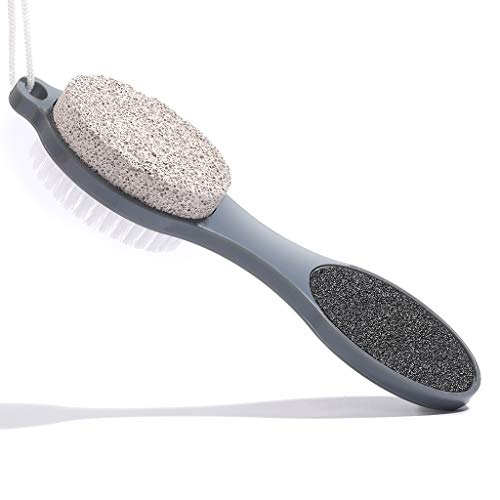
CAREHOOD 4-in-1 Foot Scrubber stands out for explicitly supporting foot care on wet or dry feet, with a stainless steel file, cleaning brush, pumice stone, and buffer. That mix suits someone who wants one tool for both shower use and a dry-foot routine. The single-tool format keeps the set simple, but it offers fewer separate tools than a multi-piece pack. Use the brush for washing and select an abrasive surface only when needed; people seeking a long handle to reach their feet should choose a different style.
Bottom line: Pick this if you want one four-function tool for wet or dry foot care.
3-Pack 4-in-1 Foot Scrubber

3-Pack 4-in-1 Foot Scrubber provides three four-function tools, each described as 7.9 inches, making the set a practical fit when more than one person needs a dedicated tool. Each combines a cleaning brush, file, pumice stone, and grinder, so the format covers washing and exfoliation without requiring separate implements. The larger pack is the key distinction; a single-user routine may not need three tools. The features emphasize callus removal, but abrasive surfaces should be used gently rather than treated as a substitute for routine washing.
Bottom line: Choose the three-tool set when separate foot-care tools for several users are useful.
Choosing a Foot Brush for Shower Use
Choose by the surface you need most: soft bristles for washing, and a file or pumice surface for occasional rough patches. A four-function tool can include a brush, file, pumice stone, and buffer or sandpaper, but more surfaces do not make every surface suitable for every shower. Start with the brush for routine cleaning; use an abrasive side only on a small area and with light pressure. A tool with a long handle can help reach feet without bending, while compact foot tools give closer control. If reaching your feet is difficult, prioritize handle length over a larger assortment of abrasive surfaces.
Brushes, Pumice Stones, and Foot Files Compared
A brush cleans; a pumice stone and a file abrade rough skin, so they serve different purposes. A brush is the better fit for regular washing, while abrasive surfaces are for limited, gentle exfoliation. Stainless steel files are firmer than pumice, so use especially light pressure and stop if skin feels sore. Compare function before pack count: a multi-function tool may combine several surfaces, but a larger set mainly adds additional tools. The table gives a quick match between the tool type and its role.
| Surface | Primary role | Use approach |
|---|---|---|
| Brush | Routine cleansing | Use for washing |
| Pumice | Gentle exfoliation | Light pressure |
| Foot file or rasp | Targeted abrasion | Use cautiously |
Using Abrasive Foot Tools Safely
Use a pumice stone or file gently, and stop at the first sign of pain, stinging, or bleeding. Avoid abrasive foot tools on broken, irritated, or infected skin; people with diabetes, poor circulation, or reduced sensation should ask a clinician before removing calluses themselves. Calluses can protect skin from friction, so aggressive removal may cause injury. Keep shower use separate from routine washing: clean the feet with the brush first, then use an abrasive surface sparingly if appropriate. A tool with a stainless steel rasp is more abrasive than a cleansing brush, so do not scrub with the rasp as though it were bristles.
Cleaning and Storing a Shower Foot Tool
Rinse a foot brush or scrubber after use and let it dry fully between uses to limit buildup in damp bathroom conditions. A brush head can trap soap and skin debris between bristles, so rinse those spaces rather than only the outside. Store the tool where water can drain away instead of leaving it in standing shower water. For a multi-user pack, keep a separate tool for each person rather than sharing one personal-care implement. Check the brush and abrasive surfaces regularly for loosened bristles, cracks, or damage, and stop using a tool that is no longer intact.
Frequently Asked Questions
Should I soak my feet before using a foot file?
A brief soak or shower can soften surface skin, but wet skin can also make it easier to abrade too much. Use light pressure and stop if the skin becomes tender.
How often should I use a pumice stone on my feet?
Use a pumice stone only when rough skin needs attention, rather than scrubbing hard every day. Limit each session to gentle passes and stop if the skin feels sore.
Can I use a foot brush on cracked heels?
Use a soft brush for gentle washing, but avoid filing or pumice on open, painful, or bleeding cracks. Abrasion can worsen irritated skin; seek medical advice for persistent or deep cracks.
How do I keep a foot brush clean between showers?
Rinse away soap and skin debris after each use, then let the tool dry completely. Avoid storing it in pooled water, and replace it if the bristles or body become damaged.