
Ultra Fine Mesh Sieve Options Compared by Size and Use

For a large-batch ultra fine mesh sieve, choose 9-Inch 30-Mesh Strainer: its 9-inch bowl uses a 30-mesh, two-layer weave for fine grains. Choose Zulay Kitchen 3.35-Inch Strainer instead for tea, cocktails, and small-volume straining; Three-Size Fine Mesh Set or Cuisinart Three-Piece Mesh Set provides graduated sizes for varied tasks.
A fine mesh sieve is woven wire that separates small particles from liquids or dry ingredients; bowl diameter and mesh fineness determine what it can handle.
We earn a commission if you buy through links on this page. As an Amazon Associate I earn from qualifying purchases. Products are compared on manufacturer specifications, not hands-on testing.
- Best overall: 9-Inch 30-Mesh Strainer – The 9-inch bowl and maker-described 30-mesh, two-layer weave suit larger batches of fine grains.
- Best for three sizes: Three-Size Fine Mesh Set – The graduated set includes 3.15-, 5.5-, and 7.87-inch strainers.
- Best for tea and drinks: Zulay Kitchen 3.35-Inch Strainer – Its 3.35-inch bowl, 5.1-inch handle, and front rest loop suit small-volume straining.
| Product | Best for | Bowl diameter | Mesh or set | Handle | Shop |
|---|---|---|---|---|---|
| 9-Inch 30-Mesh Strainer | Fine grains | 9 in | 30 mesh, 2 layers | Stainless steel, 2 rivets | Check Price on Amazon |
| Three-Size Fine Mesh Set | Mixed kitchen tasks | 3.15, 5.5, 7.87 in | Three graduated meshes | Stainless steel wire | Check Price on Amazon |
| Zulay Kitchen 3.35-Inch Strainer | Tea and cocktails | 3.35 in | Fine mesh | 5.1 in rod handle | Check Price on Amazon |
| Kafoor 9-Inch Strainer | Heat-conscious handling | 9 in | Fine mesh | Rubber handle | Check Price on Amazon |
| Cuisinart Three-Piece Mesh Set | Nesting storage | 3.125, 5.5, 7.875 in | Three fine-mesh sizes | Stainless steel handles | Check Price on Amazon |
Ultra Fine Mesh Sieves Compared
Match bowl size and mesh design to the ingredients and batch size you strain most often.
9-Inch 30-Mesh Strainer

9-Inch 30-Mesh Strainer stands apart with a 30-mesh, two-layer weave and a 9-inch bowl, pairing fine-grain straining with room for larger batches. Its 18/8 stainless steel construction has a deep bowl, a wider hook, and a handle secured by two rivets. The maker says it suits quinoa, flour, rice, and sugar, so it is a practical match for cooks who regularly rinse or sift those ingredients.
The wide bowl takes more storage space than a small tea sieve, so it is less suited to straining a single cup or resting over a narrow glass.
Bottom line: Choose this for large batches of fine grains.
Three-Size Fine Mesh Set
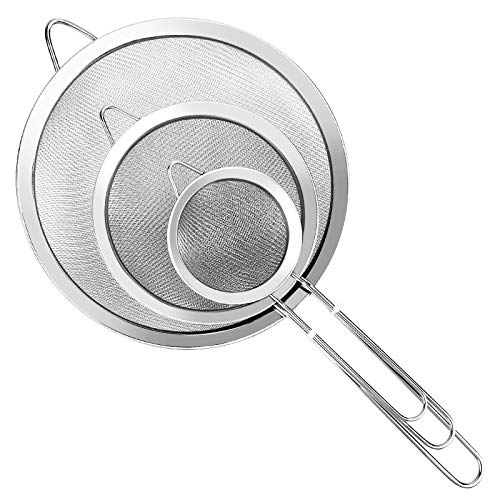
Three-Size Fine Mesh Set is the flexible choice when one sieve size will not cover the kitchen’s jobs: the set includes 3.15-, 5.5-, and 7.87-inch bowls with extra-, super-, and very-fine twill mesh. The maker assigns the mini sieve to flour, eggs, and smoothies, the medium to rice, quinoa, fruit, and juice, and the large to soups and sauces. The stainless steel wire has sealed, burr-free rims.
Because the set divides tasks among three bowls, it is a less direct choice than a single 9-inch sieve for someone focused on one large grain-rinsing job.
Bottom line: Pick this when you want three bowl sizes for different kitchen tasks.
Zulay Kitchen 3.35-Inch Strainer
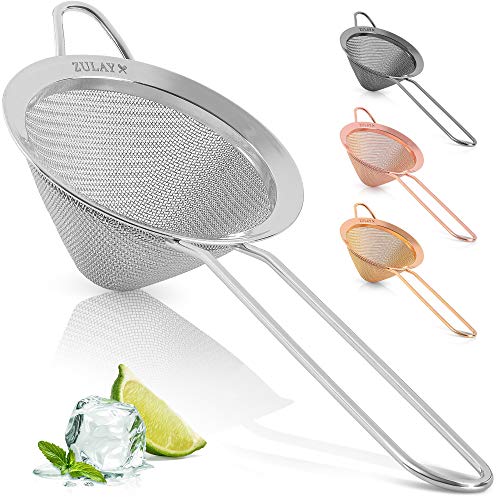
Zulay Kitchen 3.35-Inch Strainer is the smallest single-purpose option here, with a 3.35-inch bowl and a 5.1-inch rod handle. A front rest loop supports placement over a glass or cocktail shaker, while the maker says the sieve can strain tea leaves, juice, cocktails, and coffee or sift flour. The compact footprint suits small servings and drawer storage better than a deep, wide sieve.
Its narrow bowl is the tradeoff: cooks who routinely rinse a large volume of quinoa or rice will need a larger strainer for that work.
Bottom line: Choose this for tea, cocktails, and small-volume straining.
Kafoor 9-Inch Strainer

Kafoor 9-Inch Strainer combines a 9-inch bowl with a thermoplastic rubber handle, distinguishing it from the all-steel handles in this group. The maker says the handle is heat resistant and provides grip when hands are wet, and the wide ear hook helps it rest over a vessel. The maker also recommends it for larger quantities of quinoa, rice, fruit, and tomato sauce.
The features do not give a mesh count, so buyers who require a particular weave fineness should confirm that before ordering. Its broad bowl is less suited than a small sieve to cups and glasses.
Bottom line: Pick this if a rubber-grip handle matters for wet or warm tasks.
Cuisinart Three-Piece Mesh Set

Cuisinart Three-Piece Mesh Set differentiates itself with three fine mesh strainers that nest for storage and are dishwasher-safe. The diameters are 3.125, 5.5, and 7.875 inches, spanning small tea steeping through larger stockpot straining. Stainless steel mesh sits in a stainless frame, and the long handles are intended to keep hands farther from hot pot edges and steam.
Unlike Three-Size Fine Mesh Set, the set is described as fine mesh rather than with three different fineness labels; cooks seeking an explicit mesh count for very fine grains should verify suitability before choosing it.
Bottom line: Choose this for nesting sizes and dishwasher-safe cleanup.
How to Choose an Ultra Fine Mesh Sieve
Choose a sieve by matching the mesh to the smallest particle you need to catch and the bowl diameter to your batch. A fine weave is useful for tea leaves, flour, and small grains, while a wider opening drains a larger quantity faster. For a single cup or cocktail shaker, a 3- to 4-inch bowl is easier to position; for batch rinsing, a bowl around 8 to 9 inches offers more working area. Handle length and a resting hook also matter when the sieve needs to sit over a pot or glass. If you need a defined level of fineness, look for a mesh count rather than relying only on the phrase “fine mesh.”
Mesh Fineness and What It Catches
Mesh count describes the number of openings per linear inch, so higher counts generally mean smaller openings when wire thickness is comparable. A 30-mesh weave is a more concrete fineness cue than an unnumbered “fine mesh” label, but actual opening size also depends on wire gauge and weave. For fine flour sifting or filtering small particles, check the intended use and mesh construction; for tea, a small bowl and fine weave can keep leaves out of the cup. This table separates the concrete choices in this group from styles without a count.
| Style | Useful decision cue | Typical task |
|---|---|---|
| Numbered mesh | 30 mesh, two layers | Fine grains and sifting |
| Graduated mesh set | Three sizes and mesh grades | Different wet and dry jobs |
| Small fine mesh sieve | 3 to 4 inches across | Tea, drinks, small servings |
Picking a Sieve Size for Your Vessel
Choose a bowl that rests securely on the vessel without dropping inside or tipping when filled. An 8- to 9-inch bowl suits larger pots and batch work, while a bowl near 3 inches is more manageable over cups and cocktail shakers. A long handle can keep fingers farther from hot liquids, but balance still matters: the bowl, handle, and hook should all be supported before pouring. For a multi-size set, compare each bowl diameter with the openings of your usual cookware and storage drawer. A common mistake is selecting only by bowl size and overlooking whether the hook or handle can stabilize the sieve on the intended vessel.
Cleaning Fine Mesh After Straining
Rinse fine mesh promptly after wet ingredients so pulp, starch, or egg residue does not dry between the wires. Hold the sieve under running water and brush gently from the bowl side toward the outside to loosen trapped particles without deforming the weave. Fine mesh can retain flour dust and small food fragments, so a quick visual check after rinsing helps catch residue around the rim. Dishwasher suitability differs by product; use the care method for the specific sieve rather than assuming every metal mesh set handles machine washing. Let the sieve dry fully before nesting or putting it away, especially when several bowls fit closely together.
Frequently Asked Questions
What sieve size works for rinsing quinoa?
A bowl around 8 to 9 inches gives quinoa more room to move under running water than a tea-sized sieve. Choose a weave fine enough to retain the grains while letting water drain.
Can a fine mesh sieve strain loose tea?
Yes, a small fine mesh sieve around 3 to 4 inches across can sit over a cup and catch tea leaves. Empty it promptly and rinse the mesh before leaves dry in the weave.
How do you stop a sieve from tipping over a pot?
Choose a bowl wider than the vessel opening and use a stable resting hook or support loop when available. Before pouring, make sure the handle and rim cannot slide off the pot.
How should I clean flour from fine mesh?
Tap or brush dry flour out before rinsing, then wash the mesh with water and a soft brush. Directing the brush from the inside toward the outside helps clear particles caught in the weave.