
Best Rust Stain Remover for Concrete: 4 Options Compared

For most concrete rust stains, Iron OUT Outdoor Rust Stain Remover is the straightforward pick because it comes premixed and is intended for concrete and other exterior surfaces. Choose Singerman Laboratories Concrete Rust Remover instead for vertical concrete where a gel can cling, or SnowCap Rust Stain Remover when you want a powder mix for outdoor stains.
We earn a commission if you buy through links on this page. As an Amazon Associate I earn from qualifying purchases. Products are compared on manufacturer specifications, not hands-on testing.
- Best overall: Iron OUT Outdoor Rust Stain Remover – Premixed outdoor cleaner intended for concrete, with no scrubbing claimed by the maker.
- Best for vertical concrete: Singerman Laboratories Concrete Rust Remover – Makes a gel when mixed with water and is described as ideal for vertical surfaces.
- Best for concentrated mixing: SnowCap Rust Stain Remover – A 4-pound bag makes up to 8 gallons and targets outdoor rust.
| Product | Best for | Format | Coverage or yield | Stated use | Shop |
|---|---|---|---|---|---|
| Iron OUT Outdoor Rust Stain Remover | Premixed spot cleaning | Premixed liquid | — | Concrete and exterior surfaces | Check Price on Amazon |
| Singerman Laboratories Concrete Rust Remover | Vertical concrete | Water-mixed gel | About 60 sq ft | Concrete | Check Price on Amazon |
| Iron OUT Liquid Rust Stain Remover, 4 Pack | Larger outdoor jobs | Premixed liquid, 4 gallons | — | Concrete and outdoor surfaces | Check Price on Amazon |
| SnowCap Rust Stain Remover | Outdoor concentrate | Powder mix | Up to 8 gal | Concrete, pavers, and outdoor surfaces | Check Price on Amazon |
Rust Stain Removers for Concrete
Compare the application format and stated use to match a cleaner to the stained surface.
Iron OUT Outdoor Rust Stain Remover

For a ready-to-use format, this gallon cleaner is made for outdoor rust stains on concrete, vinyl, decks, patios, and other exterior surfaces. The maker says it dissolves stains on contact and rinses away without scrubbing or power washing. That makes it suited to owners who want to apply a premixed cleaner rather than mix a concentrate. Its main tradeoff is that the specifications gives no coverage figure, so it is harder to plan how much is needed for a large stained area; reserve it for a manageable patch unless the label confirms coverage.
Bottom line: Pick this for concrete when a premixed outdoor liquid is more convenient than mixing.
Singerman Laboratories Concrete Rust Remover
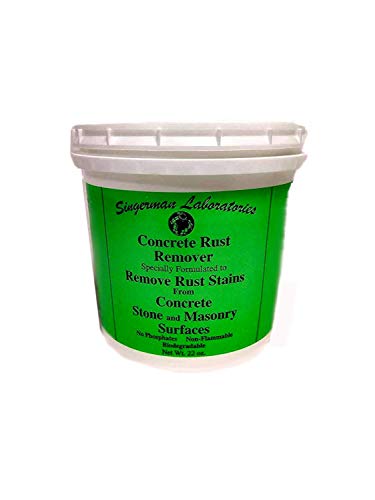
Vertical concrete is where this product differs: it forms a gel when mixed with water, helping it suit surfaces where a runny liquid may be difficult to keep in place. One 22-ounce amount makes a gallon and covers approximately 60 square feet. The maker also describes the formula as nonhazardous, nonflammable, phosphate-free, and non-harmful to vegetation. The limitation is the mixing step and finite stated coverage, so it is less convenient for someone wanting a ready-to-use cleaner or treating more than one batch can cover.
Bottom line: Choose this for a vertical concrete stain or a job near vegetation.
Iron OUT Liquid Rust Stain Remover, 4 Pack

A four-gallon multipack sets this apart from the single-gallon premixed option, while keeping the same ready-to-use approach. The maker says the liquid removes outdoor rust stains without scrubbing and is suitable for driveways, fences, houses, and other surfaces; application can be by tank sprayer, cloth, or roller. The product is also described as plant-safe with normal application. No coverage figure is provided, so the pack size alone cannot establish whether it will treat a particular driveway; check the label’s application guidance for the area you have.
Bottom line: Pick this when you want multiple gallons of premixed outdoor cleaner.
SnowCap Rust Stain Remover

For a mix-at-home outdoor cleaner, SnowCap stands apart with a yield of up to 8 gallons from a 4-pound bag. Its target stains include well-water and sprinkler rust, and the maker lists concrete, brick, pavers, vinyl and wooden fences, and metal fixtures among the intended surfaces. Application is described as mix, spray, and rinse if desired, with ratios for sprayers or hand use. The yield is an upper limit rather than a guaranteed treatment area, so this is less predictable if you need a firm coverage estimate before starting.
Bottom line: Choose this for outdoor concrete when a powder concentrate suits your application.
How to choose a concrete rust remover
Match the cleaner format to the stain area and application surface. Premixed liquids avoid measuring and mixing; a powder or small concentrate can stretch into more solution, but the yield is not the same as square-foot coverage. For vertical concrete, a gel that clings is often easier to manage than a thin liquid; the concrete-focused gel here is stated to cover about 60 square feet. If the stained area exceeds that, plan for another batch or confirm coverage on the product label. For a flat driveway with a large stain, use a sprayer-compatible liquid or mix only when its instructions clearly cover your area.
| Need | Format to consider | Decision point |
|---|---|---|
| Vertical concrete | Gel | Cling and stated area coverage |
| Small, simple application | Premixed liquid | No mixing step |
| Outdoor multi-surface treatment | Powder mix | Mix ratio and yield |
Why rust stains cling to concrete
Rust-colored marks often come from iron in well water or sprinkler overspray, which repeatedly deposits minerals as water dries. Concrete is porous, so a stain can penetrate beyond a surface film; old or deep orange marks may need more than one application. Identify the source before cleaning: if a sprinkler keeps hitting the same spot, the stain can return after treatment. Remove loose dirt first so cleaner can contact the stained area, and test a small inconspicuous patch because concrete finishes, sealers, and surrounding materials differ.
Apply rust remover without damaging nearby areas
Keep a concrete cleaner on the intended stain and manage runoff, especially near lawn, planting beds, metal, painted surfaces, and drains. Even products described as vegetation-friendly specify use as directed, so shield plants and avoid letting concentrated solution pool around roots. Start with the least aggressive application allowed by the label; do not combine rust removers with bleach or other cleaners, since mixing household chemicals can create hazardous reactions. Rinse only as directed, and wear eye protection and gloves when handling a cleaning concentrate or spraying overhead. With less than 60 square feet of vertical concrete, a gel’s coverage may suit a single batch; larger surfaces need a separate coverage check.
Frequently Asked Questions
Will rust remover damage concrete sealer?
It can affect some finishes, so test an inconspicuous spot before treating sealed concrete. A small patch also shows whether the cleaner changes color or sheen.
How do I remove sprinkler rust from a driveway?
Use an outdoor rust cleaner labeled for concrete and address the sprinkler source as well. If the same area stays under overspray, iron-rich water can deposit another orange stain after cleaning.
Should I scrub rust remover into concrete?
Not necessarily; some outdoor liquids claim to rinse away stains without scrubbing. For embedded marks, follow the product label and avoid switching to abrasive scrubbing that could roughen the surface.
Can I use rust remover near grass?
Only use a product whose directions allow nearby vegetation, and prevent runoff from collecting on the lawn. A vegetation-friendly claim is conditional on using the cleaner as directed.
How much concrete can a batch of gel cover?
The concrete gel here is stated to cover approximately 60 square feet per 22-ounce amount mixed to make a gallon. Treat that as an approximate coverage figure, since stain depth and application thickness can change consumption.