
Small 12 Volt Electric Winches: 4 Models Compared

For a compact 12-volt ATV or UTV winch, XPV AUTO 2500 lb Steel Cable Winch stands out for its 2,500-pound rated pull, integrated control and mounting plate. Choose 2000 lb 12V ATV Winch instead if you want a 2,000-pound unit; the other options offer different cable or remote setups.
A winch is a powered drum that pulls a cable or rope to move a load. Match rated line pull to the vehicle and mounting space before choosing, especially if your vehicle is heavier or your recovery conditions demand more capacity.
We earn a commission if you buy through links on this page. As an Amazon Associate I earn from qualifying purchases. Products are compared on manufacturer specifications, not hands-on testing.
- Best overall: XPV AUTO 2500 lb Steel Cable Winch – Combines a 2,500-pound rated pull with an integrated control and mounting plate.
- Best for lighter pulls: 2000 lb 12V ATV Winch – Its 2,000-pound rated line pull is lower than the other options.
- Best for rope choice: AC-DK 2500 lb Synthetic Rope Winch – Uses synthetic rope and includes both wireless and wired remotes.
| Product | Best for | Rated line pull | Rope or cable | Remote | Shop |
|---|---|---|---|---|---|
| XPV AUTO 2500 lb Steel Cable Winch | Integrated controls | 2,500 lb | Steel cable, 49.2 ft | Wired; integrated control box | Check Price on Amazon |
| AC-DK 2500 lb Synthetic Rope Winch | Synthetic rope | 2,500 lb | Synthetic rope | Wireless and wired | Check Price on Amazon |
| RUGCEL 2500 lb 12V Winch | Longer cable | 2,500 lb | Steel cable, 30 ft | — | Check Price on Amazon |
| 2000 lb 12V ATV Winch | Lower pull rating | 2,000 lb | Steel cable | Wired | Check Price on Amazon |
Small 12 Volt Electric Winches Compared
Compare rated pull, line material and control style to find a winch that fits your vehicle and recovery needs.
XPV AUTO 2500 lb Steel Cable Winch

XPV AUTO 2500 lb Steel Cable Winch is the only option here that combines a 2,500-pound pull with an integrated control box and a mounting plate. Its 12-volt, 1-horsepower permanent-magnet motor and 3-stage planetary gearing pair with a 12-strand, 4 mm by 49.2 ft steel cable. The maker gives a full-load line speed of 2.7 feet per minute. This setup suits ATV or UTV owners who want the control box and mount included. The main limitation is the steel cable: buyers who prefer synthetic rope should consider AC-DK 2500 lb Synthetic Rope Winch instead.
Bottom line: Choose this if an integrated control box and mounting plate matter more than synthetic rope.
AC-DK 2500 lb Synthetic Rope Winch

AC-DK 2500 lb Synthetic Rope Winch is the only synthetic rope choice in this group, and it offers both wireless and wired remotes. Its 2,500-pound rating targets ATV and UTV towing or recovery, while the included mounting plate is designed around a 4 1/4-inch fairlead pattern. The specified two-hole plate spacing is 3.10 inches or 3 inches, so measure your bracket before selecting it. The maker emphasizes a standardized installation size, but mounting compatibility still depends on the vehicle bracket. Buyers who specifically want steel cable can choose XPV AUTO 2500 lb Steel Cable Winch or RUGCEL 2500 lb 12V Winch.
Bottom line: Choose this for synthetic rope, two remote styles and a matching bracket pattern.
RUGCEL 2500 lb 12V Winch

RUGCEL 2500 lb 12V Winch is distinguished by its 30-foot galvanized steel cable and roller fairlead. It has a 2,500-pound rated pull, a 1-horsepower 12-volt permanent-magnet motor and a 153:1 gear ratio. Its pull-and-turn freespool clutch lets the cable be pulled out without powering the drum, a useful feature when setting up a recovery. This is a fit for buyers who want more cable length than the 15-meter option. The specifications do not give a remote type, so confirm the control arrangement if that determines your installation.
Bottom line: Pick this when 30 feet of steel cable and a roller fairlead suit your setup.
2000 lb 12V ATV Winch
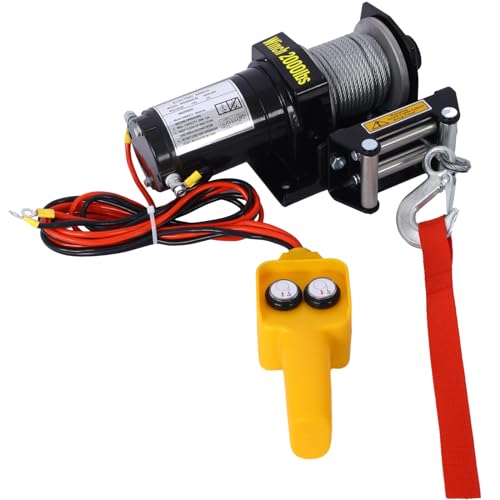
2000 lb 12V ATV Winch is the only 2,000-pound option here, with a 1-horsepower, 12-volt series-wound motor, one-stage planetary gearing and a free-spooling clutch. It includes a steel cable, roller and wired remote, making it a straightforward fit for an ATV or UTV with compatible mounting hardware. The maker describes the winch as waterproof and gives it a 2,000-pound rated line pull. That lower rating makes it less suitable than the 2,500-pound choices when the vehicle or recovery load calls for greater capacity.
Bottom line: Choose this if your vehicle and recovery needs are appropriate for a 2,000-pound rating.
How to choose a small 12-volt winch
Start with rated line pull: a common sizing rule is to choose at least 1.5 times the vehicle’s gross weight for a basic recovery setup. For example, a 1,500-pound vehicle points to a 2,250-pound minimum under that rule, so a 2,500-pound winch is the closer fit among these options. Vehicle weight is only a starting point; mud, slope, and an anchored load can increase resistance. A snatch block can redirect a line and reduce the force required at the winch, but it also changes line speed and requires a suitable anchor. Compare first-layer rated pull rather than assuming the same capacity at every drum layer. For heavy or repeated recoveries, use equipment rated for the load and learn the recovery procedure before pulling.
Steel cable and synthetic rope compared
Steel cable is a common choice for abrasion resistance, while synthetic rope weighs less and is easier to handle but needs protection from sharp edges and heat. Cable condition matters more than appearance: kinked or crushed steel cable can fail, and frayed synthetic rope should be retired. Keep hands away from a loaded line and stand clear of its path; a line under tension can cause serious injury if it breaks or an anchor moves. A fairlead guides the line onto the drum: rollers suit steel cable, while a smooth hawse-style fairlead is commonly used with synthetic rope. This comparison helps match rope to handling and terrain needs.
| Need | Typical choice | Consideration |
|---|---|---|
| Abrasion-prone terrain | Steel cable | Inspect for kinks and broken strands |
| Lower rope weight | Synthetic rope | Protect from abrasion and heat |
Check mounting fit before installation
Mounting dimensions are not universal: fairlead bolt patterns and winch plates vary by model, so compare the winch pattern with the vehicle bracket before installation. AC-DK 2500 lb Synthetic Rope Winch gives a 4 1/4-inch fairlead pattern and two-hole spacing options of 3.10 or 3 inches; verify the actual bracket dimensions. A solid mount should transfer load into the vehicle frame rather than thin body panels. Electrical setup matters too: 12-volt winch motors draw high current, so use the specified cable gauge, secure connections and appropriate protection. Do not power a stalled motor; XPV AUTO 2500 lb Steel Cable Winch specifically warns against maintaining power when its motor stalls. A poor ground or loose connection can cause overheating or erratic operation.
Use a winch with safe line handling
Keep everyone well away from the loaded line and use a blanket or purpose-made damper over the line during a pull; do not step over a tensioned cable. Attach to a rated recovery point, not a tow ball or an unverified bumper, and keep the line as straight as practical to avoid side-loading the drum. Pull in short intervals and stop if the motor, wiring or connectors become hot. Never use a winch to lift people, and do not exceed the winch, anchor or accessory ratings. Gloves help protect hands during setup, but never guide a moving line by hand. Read the vehicle and winch instructions together before the first recovery because vehicle mounting and electrical arrangements differ.
Frequently Asked Questions
How much winch capacity does an ATV need?
A common guideline is to select rated line pull at least 1.5 times the vehicle’s gross weight. A 1,500-pound ATV therefore points to at least 2,250 pounds under that rule, with greater resistance possible on steep or muddy ground.
Does winch capacity change as cable winds onto the drum?
Yes, available pulling force generally decreases as more line layers build on the drum. Compare ratings on the same basis and leave enough line on the drum for secure attachment rather than spooling out every wrap.
Can a winch pull a vehicle sideways?
A winch can be used with a change of direction, but a side pull can bunch cable against one drum flange. Use a properly rated snatch block and anchor to redirect the pull, and keep the line aligned as it returns to the drum.
How should I inspect a winch cable before recovery?
Inspect the full length before each use for kinks, broken strands, crushed sections or fraying. Replace damaged line rather than continuing to pull, and check hooks, anchors and mounting fasteners for visible damage or looseness.
Why does a 12-volt winch motor stop during a pull?
A stalled motor can indicate that the load is beyond the winch’s capability or that the line is obstructed. Stop applying power rather than holding the control on; continued current can overheat the motor and wiring.