
UV Protection Spray for Artificial Flowers Compared

For artificial flowers, choose a spray that explicitly names artificial plants as a suitable surface; Outdoor Surfaces UV Protectant Spray does, while 303 Aerospace Protectant, 10 oz is a broader protectant for vinyl, plastic and rubber. If your arrangement is fabric or silk, choose a fabric spray such as Scotchgard Outdoor Water & Sun Shield only if its label permits that material.
Outdoor UV sprays are surface-specific coatings, not a universal treatment for every artificial flower. Test a hidden area first, especially on colored or delicate petals.
We earn a commission if you buy through links on this page. As an Amazon Associate I earn from qualifying purchases. Products are compared on manufacturer specifications, not hands-on testing.
- Best overall: Outdoor Surfaces UV Protectant Spray – Its product name and features explicitly include artificial plants and a matte finish.
- Best for plastic and vinyl: 303 Aerospace Protectant, 10 oz – It covers plastic, vinyl and rubber and gives an application interval of 3 to 5 weeks outdoors.
- Best for garden decor: SUNGUARD Outdoor Decor UV Protectant, 2-Pack – It is made for outdoor decor and gives coverage of 25 square feet per can on non-porous surfaces.
- Best for fabric: Scotchgard Outdoor Water & Sun Shield – It is a fabric spray that repels water and protects against UVA/UVB rays.
| Product | Best for | Surface fit | Finish | Coverage or interval | Shop |
|---|---|---|---|---|---|
| Outdoor Surfaces UV Protectant Spray | Artificial plants | Artificial plants, plastic, vinyl, rubber | Matte | — | Check Price on Amazon |
| 303 Aerospace Protectant, 10 oz | Plastic foliage | Vinyl, plastic, rubber, PVC | Smooth matte | Every 3–5 weeks outdoors | Check Price on Amazon |
| SUNGUARD Outdoor Decor UV Protectant, 2-Pack | Garden arrangements | Outdoor decor; plastic, fiberglass, resin | Clear semi-gloss | 25 sq ft per can | Check Price on Amazon |
| Scotchgard Outdoor Water & Sun Shield | Fabric flowers | Outdoor fabric | Clean, odorless when dry | — | Check Price on Amazon |
UV protection sprays for artificial flowers
Match the spray to the flower material and desired finish before applying it to an arrangement.
Outdoor Surfaces UV Protectant Spray
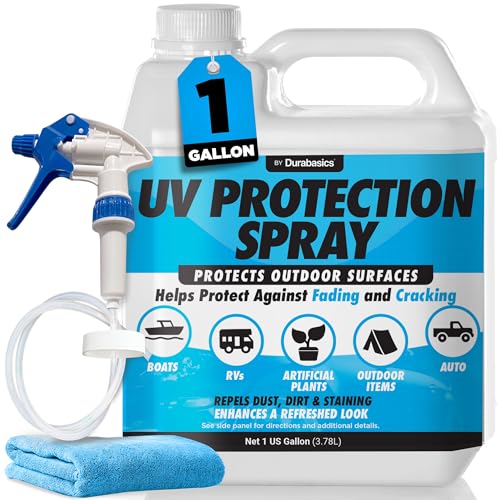
Outdoor Surfaces UV Protectant Spray is the clearest match for artificial flowers because its product features specifically include artificial plants alongside vinyl, rubber and plastic. The spray is described as non-greasy and matte, which suits arrangements where an oily shine would look out of place. Its application is a clean, spray and wipe process, and it includes a sprayer and towel. The product does not give a coverage figure or a reapplication interval, so it is harder to plan for a large display or ongoing outdoor exposure. Confirm the flower material tolerates the spray, then test a concealed spot.
Bottom line: Choose this if the arrangement is plastic or another compatible artificial-plant material and you want a matte finish.
303 Aerospace Protectant, 10 oz
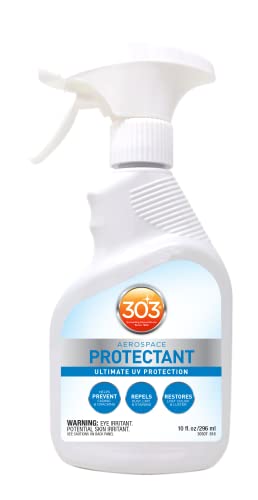
303 Aerospace Protectant, 10 oz is a multi-surface protectant for vinyl, plastic, synthetic and natural rubber, PVC, metal, gel coat, fiberglass and stainless steel; it does not specifically name artificial flowers. The maker says it helps protect against UV exposure, fading and cracking, and the formula dries to a smooth matte finish. For outdoor use, the maker recommends reapplying every 3 to 5 weeks. Spray it onto a clean, dry surface out of direct sun and wipe completely dry. This is a more suitable match for plastic foliage than delicate fabric petals, which are outside the named surface list.
Bottom line: Pick this for plastic or vinyl foliage when the 3-to-5-week outdoor interval fits your upkeep routine.
SUNGUARD Outdoor Decor UV Protectant, 2-Pack

SUNGUARD Outdoor Decor UV Protectant, 2-Pack is aimed at outdoor decor rather than artificial flowers specifically, and it covers a broad set of materials including resin, plastic, fiberglass, metal, wood, cement and ceramic. The maker says one can covers 25 square feet on non-porous surfaces, and that the coating dries to the touch in 15 minutes or less with a clear semi-gloss finish. That coverage figure can help estimate use on larger displays, but it applies to non-porous surfaces; porous petals may take a different amount. The semi-gloss finish may also look shinier than matte protectants.
Bottom line: Choose this for larger outdoor decor displays made from compatible, non-porous materials when semi-gloss is acceptable.
Scotchgard Outdoor Water & Sun Shield

Scotchgard Outdoor Water & Sun Shield differs from the surface protectants because it is a fabric spray for outdoor gear and patio furniture. The maker says it repels water and protects fabric against UVA/UVB rays, and that it dries clean and odorless. That makes it a possible fit for fabric artificial flowers only when their care guidance permits an outdoor fabric treatment; the specifications do not establish compatibility with every synthetic or silk-like textile. It is not the best match for hard plastic petals, where a plastic-specific protectant is more appropriate. Test a hidden section for color or texture changes before treating the full arrangement.
Bottom line: Consider this only for fabric petals that are compatible with an outdoor fabric treatment.
How to choose UV spray for artificial flowers
Start with the petal material, because a spray made for hard plastic can change the appearance of a fabric flower. Artificial arrangements commonly combine more than one material, such as plastic stems with textile petals, so inspect both the petals and foliage before choosing. Use a product that names the surface or material rather than assuming all outdoor coatings are interchangeable. A matte finish tends to preserve a less reflective look, while a semi-gloss coating can add visible sheen. For a mixed-material bouquet, test each material in a hidden spot and wait for it to dry before treating the full arrangement. If the test changes color, texture or flexibility, do not apply more.
A spray’s coverage and maintenance interval also matter: use the coverage only for the surface type it applies to, and compare reapplication guidance when available.
Preparing and spraying artificial flowers
Clean, dry flowers before applying any protectant; dust trapped under a coating can remain visible, and moisture can interfere with an even finish. Work in a shaded, well-ventilated area and follow the product’s label for distance, drying time and application method. Hold the can or sprayer far enough away to avoid pooling, and use light passes rather than soaking individual petals. Delicate petals, glued joints and painted details can react differently from solid plastic foliage, so test a concealed area and let it dry fully first. Keep sprays away from flames and heat, and avoid breathing mist; follow label precautions and keep children and pets away until treated surfaces are dry.
For large arrangements, treat a small section first and check the appearance in daylight before continuing.
UV spray types and the surfaces they suit
Use a hard-surface protectant for compatible plastic, vinyl or rubber foliage, and a fabric protectant only for textiles that permit it. Outdoor decor coatings may suit rigid non-porous materials, but their coverage claims do not automatically apply to porous petals or fabrics. Clear gloss paint is a different product category from a UV protectant, so a clear finish alone is not evidence of UV protection. The table gives a starting point for matching type to use; the flower maker’s care guidance and the spray label take priority when they conflict.
| Spray type | Best starting material match | Before treating flowers |
|---|---|---|
| Plastic/vinyl protectant | Rigid plastic or vinyl foliage | Test color and finish on a hidden area |
| Outdoor fabric spray | Compatible textile petals | Verify the textile allows treatment |
| Outdoor decor UV coating | Compatible rigid decor surfaces | Check whether the surface is non-porous |
How often to reapply outdoor flower protectant
Reapply on the schedule given for the particular product rather than using one interval for every artificial arrangement. Outdoor exposure varies with direct sun, rain, dust and sheltered placement, and a spray formulated for one substrate may not hold up the same way on another. One protectant here gives a 3-to-5-week outdoor interval; another gives coverage for non-porous surfaces but no reapplication timing. Inspect flowers periodically for fading, residue or an uneven finish, and clean them gently before another coat. Avoid layering different sprays: coatings can interact, cloud the surface or alter the sheen. If the flowers become brittle or their color transfers during a hidden-area test, stop applying the product.
Frequently Asked Questions
Can I spray UV protectant on silk flowers?
Only if the spray label permits the specific fabric; a product intended for plastic or vinyl is not automatically safe for silk-like petals. Test a hidden area and let it dry fully before treating the arrangement.
Will UV spray make artificial flowers waterproof?
No UV protectant should be assumed to waterproof an arrangement. A fabric spray may repel water, but its performance applies to compatible fabrics and does not establish water resistance for stems, glue or mixed materials.
Should artificial flowers be sprayed in direct sunlight?
No; apply in shade unless the product label directs otherwise. For example, the 303 protectant’s directions call for using the spray out of direct sun on a clean, dry surface.
How much outdoor decor spray covers an arrangement?
Coverage depends on the surface: SUNGUARD gives 25 square feet per can on non-porous surfaces. Porous or textured petals may use more, so do not use that figure as a guarantee for fabric flowers.
Can UV spray change the finish of plastic flowers?
Yes, a coating can change the apparent sheen, and products differ between matte and semi-gloss finishes. Test a concealed petal first and check it after it dries before spraying the full arrangement.