
Sponge for Face Wash: 5 Types Compared by Fit

For everyday face washing, Kickleen Compressed Cellulose Sponges, 50 Count is a practical pick if you want a palm-sized cellulose sponge in a 50-count pack; its expanded diameter is 2.9 inches. Choose Six-Piece Hydrophilic Polyurethane Sponge Set instead if you prefer a larger, reusable polyurethane sponge, or Derloyo Compressed Cellulose Sponges, 100 Count if you want 100 compressed cellulose pieces.
We earn a commission if you buy through links on this page. As an Amazon Associate I earn from qualifying purchases. Products are compared on manufacturer specifications, not hands-on testing.
- Best overall: Kickleen Compressed Cellulose Sponges, 50 Count – Its expanded 2.9-inch diameter and 50-count pack suit a straightforward face-washing routine.
- Best for reusable use: Six-Piece Hydrophilic Polyurethane Sponge Set – The set has six polyurethane sponges with hanging ropes for drying.
- Best for a larger pack: Derloyo Compressed Cellulose Sponges, 100 Count – The 100-count compressed cellulose pack offers the largest quantity.
| Product | Best for | Material | Count | Expanded size | Shop |
|---|---|---|---|---|---|
| Kickleen Compressed Cellulose Sponges, 50 Count | Daily face washing | Cellulose | 50 | 2.9 in diameter × 0.3 in thick | Check Price on Amazon |
| GAINWELL Compressed Cellulose Sponges, 50 Count | Fast expansion | Cellulose | 50 | — | Check Price on Amazon |
| Compressed Pink Cellulose Sponges, 50 Count | Heart-shaped pads | Cellulose | 50 | 2.9 in diameter × 0.32 in thick | Check Price on Amazon |
| Six-Piece Hydrophilic Polyurethane Sponge Set | Reusable handling | Hydrophilic polyurethane | 6 | 2.6 × 3.9 in | Check Price on Amazon |
| Derloyo Compressed Cellulose Sponges, 100 Count | Large cellulose pack | Cellulose | 100 | 2.9 × 2.9 in; 0.32 in thick | Check Price on Amazon |
Sponges for Face Wash Compared
Compare material, quantity and size to find a face-washing sponge that fits your routine.
Kickleen Compressed Cellulose Sponges, 50 Count
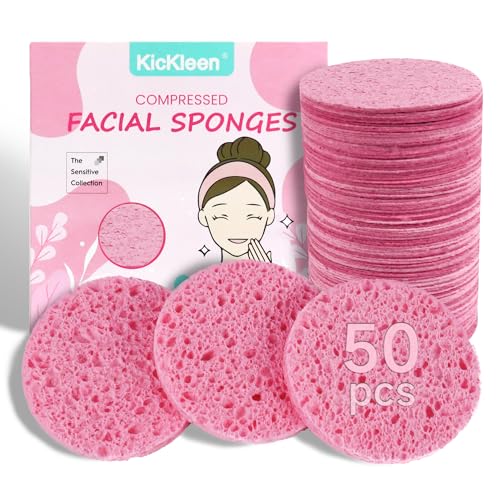
With an expanded diameter of 2.9 inches and thickness of 0.3 inch, this 50-count option gives you a defined palm-sized format for face washing. The maker says the round pads are made from wood-pulp cellulose and are intended for cleansing, makeup or mask removal, and light exfoliation. Wet a compressed sponge before using it so it can expand and soften. This pack suits someone who wants individual compressed pads rather than a larger reusable puff. Its one-piece-per-week estimate comes from the maker; anyone who cleanses more often may use the pack faster.
Bottom line: Choose this if you want round compressed cellulose pads with an expanded size.
GAINWELL Compressed Cellulose Sponges, 50 Count

The maker’s distinguishing claim is that each compressed sheet expands to 20 times its original thickness in seconds after absorbing water. The 50-count pack uses wood-pulp cellulose, and the maker describes the pads as suitable for face washing, makeup removal and mask removal. The maker also says they are free of harsh chemicals and odors and suitable for sensitive skin; treat that as a product claim, not a guarantee for every person. This option may appeal if expansion speed is a priority. The measurements do not establish the finished pad’s size, so confirm the size if a particular hand fit matters.
Bottom line: Pick this if quick expansion matters more than a specified finished size.
Compressed Pink Cellulose Sponges, 50 Count

A size of about 2.9 inches in diameter by 0.32 inch thick sets this 50-count option apart, and the product features identify the pads as heart-shaped. The maker says the compressed wood-pulp cellulose sponges can be used for daily face washing, makeup and mask removal, and exfoliating. Wet the pad before cleansing to expand it; use light pressure rather than scrubbing, especially around delicate areas. This pack fits buyers who want a shaped cellulose pad in a weekly-use quantity. The weekly-use estimate is the maker’s, so actual pack life depends on how often you use a fresh sponge.
Bottom line: Choose this if you want heart-shaped compressed pads with an expanded size.
Six-Piece Hydrophilic Polyurethane Sponge Set

Unlike the compressed cellulose options, this six-piece set uses hydrophilic polyurethane and has a droplet-shaped glove design measuring 2.6 by 3.9 inches. The maker says the sponges expand to 1.5 times their original size in water, become softer, and have hanging ropes for drying. The larger shape and hanging loops suit someone who wants a sponge that is easy to hold and hang after rinsing. The set is described as reusable, but it does not give a replacement interval. Rinse thoroughly and allow each sponge to dry fully between uses; do not share face-care tools.
Bottom line: Pick this set if you prefer a larger, hangable polyurethane sponge.
Derloyo Compressed Cellulose Sponges, 100 Count

The 100-count quantity is the main distinction here: this compressed cellulose option has twice as many pieces as the 50-count packs. Each expanded sponge measures 2.9 inches long by 2.9 inches wide and 0.32 inch high. The maker says the wood-pulp cellulose pads are biodegradable and intended for face washing, slight exfoliation, makeup removal and spa use. This pack suits someone who wants a larger supply of individual pads. Because each piece is used wet on the face, keep unused pads dry and store used ones where they can dry between uses rather than leaving them damp in a closed container.
Bottom line: Choose this if you want a larger pack of compressed cellulose pads.
How to Choose a Sponge for Face Wash
Choose by material, handling and how often you want to use a fresh pad. Compressed cellulose expands when wet, while a hydrophilic polyurethane sponge is designed to absorb water and soften; the products here include both types. For a single-use-per-session routine, compare the count in the pack; for a tool you plan to reuse, consider whether it can be rinsed and fully dried between uses. Use fingertips and a gentle cleanser for everyday washing if your skin is easily irritated, and keep sponge pressure light. A sponge is a tool, not a requirement for cleansing, and extra scrubbing is not necessary to wash the face.
This table maps common priorities to the closest format in this group.
| Priority | Format to consider |
|---|---|
| Compressed pads in a 50-count pack | Cellulose |
| Six larger sponges with hanging ropes | Polyurethane |
| Largest pack quantity | 100-count cellulose |
Cellulose and Polyurethane Face Sponges
Cellulose and polyurethane differ in material and form, not just color or count. The cellulose options here are compressed pads that expand in water; the polyurethane set is a larger, droplet-shaped sponge with hanging ropes. A sponge’s ability to hold water does not by itself establish how gentle it will feel, so use minimal pressure and stop if the skin becomes uncomfortable. Exfoliation can irritate skin when done too often or with force; avoid using a face sponge over cuts, active irritation or a sunburn. If you use a cleanser with exfoliating acids or a scrub, skip added friction from the sponge until you know your skin tolerates the combination.
Face Sponge Size and Handling
A sponge around 3 inches across fits within the palm for most people, while a 2.6-by-3.9-inch shape offers more surface area to grip. Pick a size you can control around the nose and hairline without dragging it across the skin. Compressed pads need water to expand before use; don’t rub a dry compressed pad on your face. Add cleanser to the damp sponge or face according to your cleanser routine, then glide gently rather than pressing hard. Rinse the sponge thoroughly after each session so cleanser and loosened residue do not remain in its pores. A hanging loop can make drying easier, but the sponge still needs open airflow rather than a closed, damp storage space.
Cleaning and Replacing Face Sponges
Rinse a face sponge after every use and let it air-dry completely; persistent dampness encourages microbial growth on personal-care tools. Keep it for your own use, since sharing a damp face sponge can transfer skin oils and microbes. Replace a sponge if it develops an odor, visible residue that rinsing does not remove, tears, or a change in texture. Avoid boiling or harsh disinfectants unless the maker specifically permits them, because heat and chemicals can damage sponge materials. For sensitive or acne-prone skin, use a clean, soft sponge with light pressure and stop if irritation worsens; a clean hand is a reasonable alternative while the skin settles.
Frequently Asked Questions
Should I wet a compressed face sponge first?
Yes, wet a compressed cellulose sponge before using it so it can expand and soften. Do not rub a dry compressed pad on facial skin.
How often should I replace a face sponge?
Replace it when it smells, stays visibly soiled after rinsing, tears or changes texture. Rinsing after each use and letting it dry fully helps avoid persistent dampness.
Can I use a face sponge every day?
A soft sponge with light pressure can fit a daily cleansing routine, but daily friction may irritate sensitive or already inflamed skin. Stop using it if redness or discomfort increases.
Can I use a face sponge with exfoliating cleanser?
Use caution combining a sponge with a scrub or exfoliating acids because both can add irritation. If you use an exfoliating cleanser, choose light pressure or wash with your hands instead.
How should I dry a face sponge after washing?
Rinse out cleanser and let the sponge air-dry fully in an open, ventilated place. A hanging loop can help, but avoid storing a damp sponge in a closed container.