
Pelonis Oil Filled Radiator Heaters Compared by Fit

Pelonis 1500W Radiator, White is the best fit for most buyers seeking a Pelonis oil filled radiator because its three heat settings and adjustable thermostat pair with tip-over and overheat protection. Choose Pelonis 1500W Radiator, Dual Knobs if you prefer a dual-knob control layout; consider alternatives if you want digital controls or a timer.
An oil-filled radiator heats sealed thermal oil with an electric element, then releases warmth from its fins without a fan.
We earn a commission if you buy through links on this page. As an Amazon Associate I earn from qualifying purchases. Products are compared on manufacturer specifications, not hands-on testing.
- Best overall: Pelonis 1500W Radiator, White – Three heat settings, an adjustable thermostat, and tip-over and overheat protection.
- Best for dual knobs: Pelonis 1500W Radiator, Dual Knobs – Its dual-knob control layout offers three heat modes and tip-over protection.
- Best for digital controls: DREO Oil Filled Radiator, Large – The DREO model includes a digital thermostat, remote control, and 24-hour timer.
| Product | Best for | Heat settings | Height | Weight | Shop |
|---|---|---|---|---|---|
| Pelonis 1500W Radiator, White | Adjustable thermostat | 600W, 900W, 1500W | 25.2 in | 16.53 lb | Check Price on Amazon |
| Pelonis 1500W Radiator, Dual Knobs | Simple controls | 600W, 900W, 1500W | 26.1 in | 16.76 lb | Check Price on Amazon |
| DREO Oil Filled Radiator, Large | Digital controls | 1500W maximum | 26.14 in | 17.6 lb | Check Price on Amazon |
| Amazon Basics 1500W Oil Heater | Sealed oil design | 600W, 900W, 1500W | 26.38 in | 15.41 lb | Check Price on Amazon |
| De’Longhi Dragon Digital Radiator | Digital timer | 1500W | 26.1 in | 26.6 lb | Check Price on Amazon |
Pelonis Oil Filled Radiator Heaters
Compare the Pelonis options first, then consider other oil-filled radiators for different controls or features.
Pelonis 1500W Radiator, White

Pelonis 1500W Radiator, White stands out among these Pelonis heaters for its adjustable thermostat alongside three selectable heat settings. Its seven fins and 360-degree heating design are intended to distribute warmth around the unit; Pelonis also says the heater operates quietly after reaching heating stability. The 25.2-inch height and 16.53-pound weight are useful dimensions to consider when planning placement or moving it between rooms.
Tip-over and overheat protection are included. Its main limitation is the absence of digital controls or a timer in the feature set, so choose another option if scheduling matters.
Bottom line: Choose this model for adjustable thermostat control and three power settings.
Pelonis 1500W Radiator, Dual Knobs

Pelonis 1500W Radiator, Dual Knobs differs from the other Pelonis option with its dual-knob controls and taller, wider body: it measures 26.1 inches high and 14.2 inches wide. Three heat modes—600W, 900W, and 1500W—let buyers select a power level, while the no-fan design is intended for quiet operation. The product features also describe tip-over and overheat protection.
Choose it if physical knobs suit your routine better than a digital interface. Its controls do not include a timer, so it is a weaker fit for buyers who want scheduled operation.
Bottom line: Pick this option for dual knobs and a no-fan radiator design.
DREO Oil Filled Radiator, Large

DREO Oil Filled Radiator, Large is the digital-control alternative in this group, with a digital thermostat, remote control, ECO mode, and 24-hour timer. It has four modes and a 1500W maximum, plus a child lock and tip-over and overheat protection. Its 26.14-inch height and 17.6-pound weight make it slightly taller and heavier than the Pelonis models here.
DREO says its sensor and algorithms maintain steady warmth, but the specifications do not identify wattage for each mode. This is a partial match for someone specifically seeking Pelonis; choose it only if its digital controls matter more than matching that brand.
Bottom line: Choose it when digital controls and scheduled operation matter most.
Amazon Basics 1500W Oil Heater

Amazon Basics 1500W Oil Heater is the lightest alternative at 15.41 pounds and uses seven oil-filled fins with three heat settings. Its adjustable thermostat and no-fan design suit buyers who want simple manual temperature control without a digital interface. The product features say its diathermic oil is permanently sealed, so the heater does not require oil refills.
It includes tip-over and overheat protection. This is not a Pelonis model, and its 26.38-inch height is greater than either Pelonis unit here; measure the intended spot if vertical clearance is limited.
Bottom line: Pick it for a lighter alternative with three manual heat settings.
De’Longhi Dragon Digital Radiator
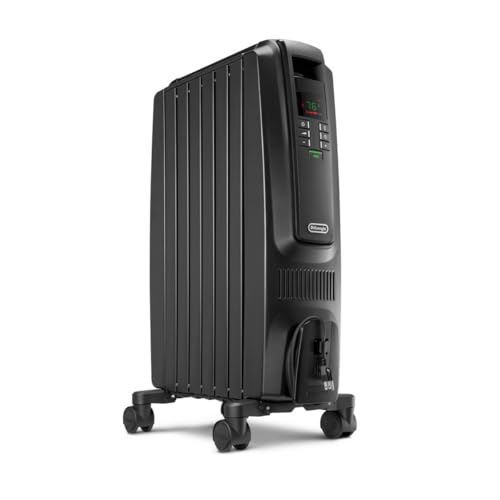
De’Longhi Dragon Digital Radiator adds a digital control panel and 24-hour timer, features that distinguish it from the two Pelonis options. Its product features also describe an integrated handle and a design intended to increase convection heating. At 26.6 pounds, it is notably heavier than the other radiators in this comparison, a practical consideration if it will be moved often.
The specifications provide a 1500W rating but no selectable wattage levels, so buyers wanting the Pelonis models’ three specified power settings should compare accordingly. This is an alternative oil-filled radiator, not a Pelonis unit.
Bottom line: Choose it for a digital panel and 24-hour timer.
How to choose a Pelonis oil filled radiator heater
Choose by control style first: an adjustable thermostat helps maintain a preferred setting, while selectable wattage lets you limit the heater’s electrical draw. A 1500W portable heater produces about 5,100 BTU per hour at full power, and on a 120V supply it draws about 12.5 amps. That leaves little spare capacity on a 15-amp circuit, so avoid running other high-draw appliances on the same circuit. Oil-filled radiators warm slowly compared with fan heaters, but their oil and metal fins continue releasing warmth after the element cycles off. For a bedroom or work area, the no-fan design can be useful when airflow noise is unwelcome; for rapid spot heating, a fan heater may feel quicker.
Where to place an oil-filled radiator
Place a portable radiator on a level, hard floor with at least 3 feet of clearance from curtains, bedding, furniture, and other combustibles. Keep it out of walkways and away from wet areas; never use a portable electric heater where it could contact water. Plug the heater directly into a wall outlet rather than an extension cord or power strip, since a 1500W heater can draw about 12.5 amps at 120V. Do not cover the fins or use the radiator to dry clothing. Tip-over and overheat switches are backup protections, not substitutes for clear space and supervision. If the outlet, plug, or cord becomes hot, stop using the heater and have the setup checked.
Compare radiator types and controls
Oil-filled radiators use an electric element to warm sealed oil, while ceramic fan heaters push air across a heated element. The first type typically gives quieter, gradual warmth; the second often directs heat toward a person more quickly. A 1500W setting is near the common maximum for a standard 120V household outlet, so a lower setting can reduce circuit load but also reduces heat output. Use the table to match a heating style to the main need, not to assume one heater will warm every room equally.
| Need | Type or feature to prioritize | Trade-off |
|---|---|---|
| Quiet, gradual warmth | Oil-filled radiator | Slower to feel warm |
| Directed, quick-feeling heat | Fan heater | Air movement and fan noise |
| Scheduled operation | Digital timer | More controls to set |
Use radiator wattage and room fit wisely
Match heater output to the room’s heat loss, not just its floor area: insulation, ceiling height, drafts, and outdoor temperature all affect comfort. A 1500W heater supplies roughly 5,100 BTU per hour, but that figure does not guarantee a particular room size will reach a target temperature. In a drafty or poorly insulated room, use the radiator as supplemental heat rather than relying on it as the sole heat source. Compare the unit’s footprint as well as its height before choosing a spot; allow room for the required clearances and an unobstructed path to the outlet. Confirm the available floor space and outlet location before settling on a model.
Frequently Asked Questions
How much electricity does a 1500W radiator use?
At its 1500W setting, a radiator uses 1.5 kilowatt-hours for each hour its element is actively heating. Thermostat cycling can make actual hourly use lower, while a 600W setting uses 0.6 kilowatt-hours per active hour.
Can an oil-filled radiator stay warm after shutdown?
Yes, the heated oil and metal fins continue releasing stored heat after the element turns off. The residual warmth fades as the radiator cools and does not mean the heater is still drawing power.
Can I plug a radiator heater into a power strip?
No; plug a portable radiator directly into a wall outlet. A 1500W model draws about 12.5 amps at 120V, which can overload a power strip or extension cord.
How far should a radiator heater sit from furniture?
Keep at least 3 feet between a portable heater and furniture, curtains, bedding, or other combustible material. Leave the fins uncovered and keep the heater on a stable, level surface.
Does an oil-filled radiator need an oil refill?
No, sealed oil-filled radiators are designed to operate without routine oil refills. If a radiator leaks or is damaged, stop using it rather than attempting to open or refill the sealed unit.