
Floating Shelves for LEGO Display: 4 Options Compared

For brick builds that attach directly to a studded surface, BlissBox Studded Brick Shelves, 12-Pack is the closest match because each shelf has a dual-sided 16-by-17-stud baseplate. Choose a conventional shelf instead if your models need more room, or clear acrylic if you want the wall to show through.
These shelves mount to a wall; the studded option is designed to connect compatible building bricks to its surface, while the others support display items on a flat shelf.
We earn a commission if you buy through links on this page. As an Amazon Associate I earn from qualifying purchases. Products are compared on manufacturer specifications, not hands-on testing.
- Best overall: BlissBox Studded Brick Shelves, 12-Pack – A 5-by-5.5-inch shelf has a dual-sided 16-by-17-stud baseplate for compatible bricks.
- Best for long displays: BAYKA Black Wood Shelves, 3-Pack – Each black wood shelf is 15.7 inches long and has a 22-pound capacity.
- Best for clear display: upsimples Clear Acrylic Shelves, 6-Pack – Six transparent acrylic shelves measure 15 by 4 inches each.
| Product | Best for | Shelf size | Material | Capacity | Shop |
|---|---|---|---|---|---|
| BlissBox Studded Brick Shelves, 12-Pack | Stud-mounted builds | 5 × 5.5 × 1 in | ABS plastic | 12 lb each | Check Price on Amazon |
| BAYKA Black Wood Shelves, 3-Pack | Longer flat displays | 15.7 × 6.7 in | Wood, steel brackets | 22 lb | Check Price on Amazon |
| upsimples Clear Acrylic Shelves, 6-Pack | See-through display | 15 × 4 in | Acrylic | 8.8 lb | Check Price on Amazon |
| WOPITUES Rustic Brown Shelves, 6-Pack | Deeper wood shelves | 16.5 × 6 in | Wood, metal brackets | 40 lb | Check Price on Amazon |
Floating Shelves for LEGO Display
Compare the studded shelf with conventional wall shelves by dimensions, material, and intended display style.
BlissBox Studded Brick Shelves, 12-Pack

Unlike the other options, these shelves have a dual-sided studded surface that lets compatible bricks attach to the shelf and its underside. Each ABS shelf measures 5 by 5.5 inches and has a 16-by-17-stud baseplate with 0.19-inch studs. The manufacturer says each shelf supports up to 12 pounds, and the design is intended for small to medium creations. Choose this set when direct brick-to-shelf attachment matters; its compact footprint is a limitation for wide models or builds that need a broad, uninterrupted platform.
Bottom line: Pick this set for compact models that can connect to a studded display surface.
BAYKA Black Wood Shelves, 3-Pack
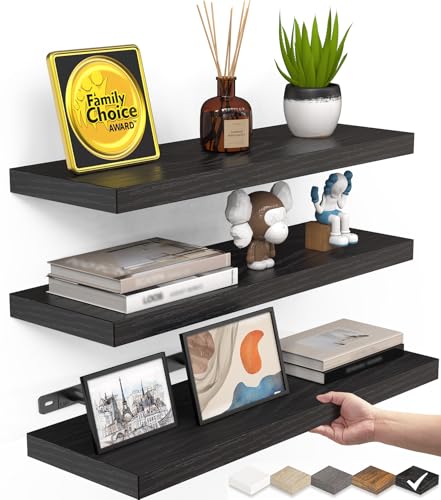
These conventional shelves provide a much longer flat surface than the studded option, making them suited to models that do not need to attach to baseplate studs. Each black shelf is 15.7 inches long and 6.7 inches deep, with a hidden bracket design and reinforced steel brackets. The manufacturer says the shelves hold up to 22 pounds and cautions against extremely heavy objects. Choose them for a row of varied figures or a larger flat-bottomed model; they do not provide brick-compatible studs, so loose builds need a stable base.
Bottom line: Choose these for longer models or figures that rest on a flat shelf.
upsimples Clear Acrylic Shelves, 6-Pack

Clear acrylic distinguishes this six-shelf set from the opaque wood choices, keeping the shelf visually discreet around figures and collectibles. Each shelf measures 15 by 4 inches, and the manufacturer gives a capacity of up to 8.8 pounds when firmly installed on the wall. The shallow depth suits smaller display pieces and can make a multi-level arrangement easier to plan. Choose it when visibility through the shelf is important; the 4-inch depth and lack of a studded surface make it a poor fit for wide builds or models meant to lock onto studs.
Bottom line: Choose these for compact figures where a transparent shelf is the priority.
WOPITUES Rustic Brown Shelves, 6-Pack

These rustic-brown wood shelves combine a 16.5-inch length with 6 inches of depth, giving broad flat platforms for models and decor. The set includes six shelves with L-shaped metal brackets. The manufacturer gives a 40-pound capacity and says the shelves are easy to assemble. This is a practical direction for displays that need more depth than the clear acrylic option offers, but the flat wood surface does not connect to building-brick studs. Confirm the wall and mounting hardware can support the intended load before placing a heavy display overhead.
Bottom line: Pick these for deeper flat displays in a wood finish.
How to choose floating shelves for LEGO display
Choose by attachment style first: a studded surface grips compatible bricks, while a flat shelf relies on the model’s base and the shelf’s edge. For a model whose footprint is wider than 4 inches, avoid a 4-inch-deep platform unless the base can safely overhang; measure the model before selecting shelf depth. Shelf capacity is only one part of safe mounting: wall type, bracket spacing, and fasteners determine whether the installed shelf can carry its intended load. Place heavier models on shelves mounted into suitable wall structure, and keep displays away from areas where people may bump them. A low-profile build can sit on a shallow shelf, but taller or irregular builds need extra space around them.
Studded shelves versus flat shelves
Studded display shelves connect compatible bricks to a surface, while conventional wood or acrylic shelves support items from below. Stud spacing and fit matter: the BlissBox baseplate has 16 by 17 studs with 0.19-inch studs, so check that a build’s underside can connect to that grid. Flat shelves work with a broader range of model bases but do not hold a build in place by brick connection. The following guide matches display needs to shelf type.
| Display need | Useful shelf trait | Trade-off |
|---|---|---|
| Attach compatible bricks | Studded baseplate | Compact footprint |
| Long flat models | 15.7-inch or 16.5-inch length | Model rests on shelf |
| Minimize visual obstruction | Clear acrylic | 4-inch depth |
Measure models and wall clearance
Measure the model’s length, depth, and height before choosing a shelf, then allow room for details that project beyond its base. The available flat shelves range from 15 to 16.5 inches long and from 4 to 6.7 inches deep; the studded shelf is only 5 by 5.5 inches. Compare the actual model footprint with those dimensions rather than relying on the set’s overall look. Leave clearance above tall builds so they can be lifted down without catching on another shelf. Also check wall material and mount location: drywall anchors, masonry fasteners, and stud-mounted hardware are not interchangeable, and shelf capacity does not replace correct installation.
Mounting and displaying models safely
Keep weight within the manufacturer’s shelf capacity, but do not treat that number as a guarantee for every wall or installation. A shelf rated for 22 or 40 pounds still depends on correctly installed brackets and suitable fasteners. Place heavier builds lower and away from beds, walkways, or seating where a falling model could cause injury. Avoid stacking unstable pieces near a shelf edge, and distribute objects rather than concentrating weight at one point. For children’s rooms, mount shelves beyond easy climbing reach and do not let children pull or hang from them; wall shelves are not climbing equipment.
Frequently Asked Questions
Will LEGO bricks attach to every shelf here?
No. The BlissBox shelves have a dual-sided 16-by-17-stud baseplate; the wood and acrylic choices are flat display shelves without that studded surface. Check the build’s underside against the baseplate grid before choosing direct attachment.
How deep should a shelf be for a LEGO model?
Choose a shelf at least as deep as the model’s base, with extra room if pieces project past the base. The options here range from 4 to 6.7 inches deep for flat shelves, while the studded shelf measures 5.5 inches in one direction.
How much weight can a floating display shelf hold?
The capacities range from 8.8 to 40 pounds among these options, but installed capacity depends on wall material and mounting hardware. Keep the model below the shelf’s capacity and use fasteners suited to the wall.
Can acrylic shelves hold large brick models?
The clear shelves are 15 inches long by 4 inches deep and have a capacity of up to 8.8 pounds when firmly installed. They may suit narrow models, but compare the full base footprint with the shelf before mounting.
How much space should go between display shelves?
Allow more vertical clearance than the height of the tallest model on the lower shelf so it can be lifted free without catching. Measure the tallest projecting piece, then add handling room based on how the model is removed.