
Laminate Floor Gap Repair Tool: 4 Options Compared

NAACOO Iron Floor Gap Fixer suits most buyers because its iron body uses a sticky pad and felt striking surface to move floating floorboards. Choose another option if you want multiple replacement pads or a dual-sided striking face.
A floor gap repair tool grips a plank so gentle hammer taps can shift it toward a neighboring board; it is intended for floating floors, not boards nailed or glued down.
We earn a commission if you buy through links on this page. As an Amazon Associate I earn from qualifying purchases. Products are compared on manufacturer specifications, not hands-on testing.
- Best overall: NAACOO Iron Floor Gap Fixer – Iron construction pairs with a washable, reusable sticky pad and extra felt pad.
- Best for extra pads: REXBETI Floor Gap Fixer – Includes 12 sticky pads and a widened striking area.
- Best for dual striking faces: Dual-Surface Iron Floor Gap Fixer – Has dual-sided 45° striking surfaces and an enhanced suction cup.
| Product | Best for | Grip system | Striking surface | Included pads | Shop |
|---|---|---|---|---|---|
| NAACOO Iron Floor Gap Fixer | Reusable grip pad | Sticky pad | Felt surface | Sticky and felt pads | Check Price on Amazon |
| REXBETI Floor Gap Fixer | Replacement pad supply | Rubber suction base | Widened 45° area | 12 sticky pads; felt pad | Check Price on Amazon |
| Dual-Surface Iron Floor Gap Fixer | Two striking faces | Enhanced suction cup | Dual-sided 45° faces | — | Check Price on Amazon |
| NAACOO 45° Dual-Suction Gap Fixer | Dual-suction grip | Dual suction cups | 45° face | 5 sticky pads | Check Price on Amazon |
Laminate floor gap repair tools
Compare how each tool grips the plank and transfers hammer taps before choosing one for a floating floor.
NAACOO Iron Floor Gap Fixer
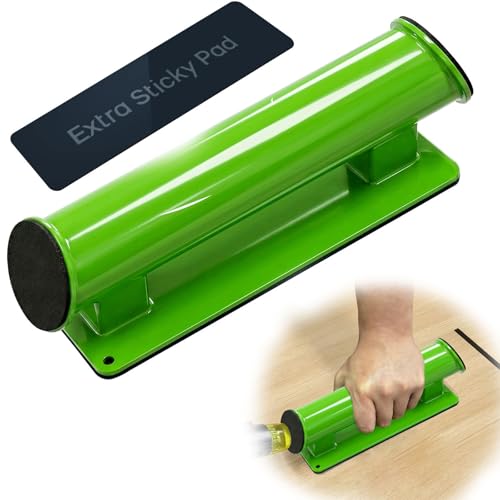
NAACOO Iron Floor Gap Fixer stands out for its washable, reusable sticky pad and separate felt striking surface. The iron body is designed for repeated impacts, and the felt surface is tapped with a hammer after the adhesive base is pressed onto a clean floor. This setup suits someone who wants a reusable grip rather than relying only on suction. The maker says the tool is intended for smooth or textured floors, but the tool still depends on the plank being movable; it cannot draw a nailed or glued board toward a seam.
Bottom line: Choose it if you want a reusable sticky pad and a felt striking face.
REXBETI Floor Gap Fixer
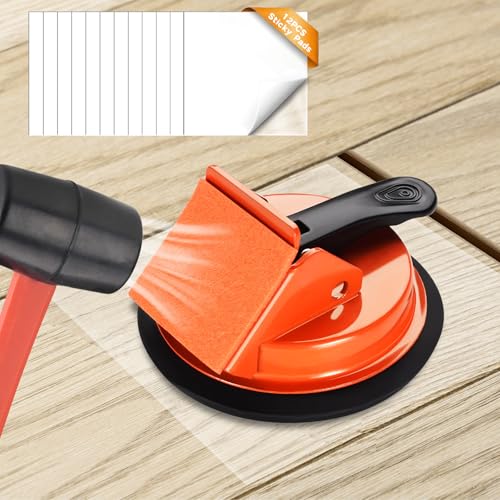
REXBETI Floor Gap Fixer comes with 12 sticky pads, more than the five-pad set supplied with NAACOO 45° Dual-Suction Gap Fixer. Its widened striking area gives the mallet a broader target, while an odorless natural rubber base is intended to grip the floor. The iron construction suits repeated tapping, and the included felt pad is intended to reduce noise and protect the mallet. This option fits buyers who want extra adhesive pads on hand. Its grip still needs a clean, suitable floor surface, and a secure hold cannot make a fixed floorboard movable.
Bottom line: Pick it if you value a wide striking zone and a larger pad supply.
Dual-Surface Iron Floor Gap Fixer
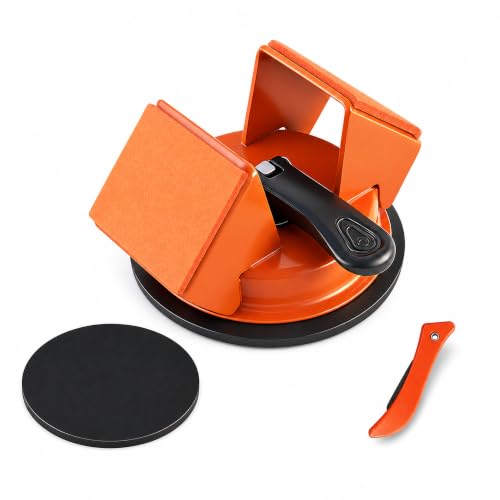
Dual-Surface Iron Floor Gap Fixer is the choice here with a dual-sided 45° striking design and an enhanced suction cup. The maker specifically says to confirm that the floor is floating rather than nailed or glued before use. That compatibility check makes this option a fit for buyers willing to verify floor construction first. The maker does not identify pad quantity, so do not choose it on the assumption that extra pads are included.
Bottom line: Choose it if you need dual striking faces and can confirm a floating floor.
NAACOO 45° Dual-Suction Gap Fixer

NAACOO 45° Dual-Suction Gap Fixer combines dual-suction cups with a 45° striking surface and comes with five sticky pads to enhance grip. Its iron body is intended for hammer-assisted movement of laminate, vinyl plank, and hardwood flooring. This combination suits buyers who prefer two suction points and want sticky pads available as additional grip aids. The maker describes it for most floor types, but a gap tool can only shift a board that is free to move; verify that the floor is floating before attempting to close a seam.
Bottom line: Pick it if dual-suction cups and five grip pads match your repair setup.
How to choose a laminate floor gap repair tool
Choose by floor construction first: these tools move floating planks, not boards fixed with nails or adhesive. Among floating-floor tools, compare the grip surface, striking face, and included pads; NAACOO Iron Floor Gap Fixer uses a reusable sticky pad, while Dual-Surface Iron Floor Gap Fixer has dual-sided 45° faces. A 45° striking face helps direct hammer taps along the plank rather than straight down. Start with light taps and stop if the board does not move, the tool slips, or the surface shows damage. Do not strike the plank itself; keep the hammer on the tool’s intended face. Clear grit and dust where the grip sits, since loose debris can reduce contact or scratch the finish.
Check whether the floor can move
A gap tool is appropriate for a floating floor, whose planks are joined to one another rather than fastened to the subfloor. A glued-down or nailed floor cannot be pulled closed this way, and hammering may damage its surface or joints. Check installation records or inspect an accessible edge before using a tool; with uncertain floor construction, confirm it before tapping. Floating laminate also needs expansion clearance at walls and fixed objects. Many installations use roughly 1/4 inch of perimeter clearance, but the required space varies by product and room conditions. Closing a seam is not a reason to wedge the floor tight against a wall, since the floor needs room to expand.
Grip and striking styles compared
Grip design determines how a tool attaches, while the striking face determines where hammer force lands. Suction grips need a surface that allows a seal; sticky pads can offer additional contact but need a clean surface. Felt faces can cushion hammer contact, while a wider or dual-sided striking surface changes the target area and tool orientation. The table compares the grip and striking arrangements, not their relative force or compatibility with every finish. Check the maker’s floor-surface guidance before use, and avoid tapping harder to compensate for a slipping grip.
| Tool | Grip approach | Striking arrangement |
|---|---|---|
| NAACOO 45° Dual-Suction Gap Fixer | Dual-suction cups; five sticky pads | 45° surface |
| NAACOO Iron Floor Gap Fixer | Reusable sticky pad | Felt surface |
| Dual-Surface Iron Floor Gap Fixer | Enhanced suction cup | Dual-sided 45° faces |
| REXBETI Floor Gap Fixer | Rubber suction base; 12 sticky pads | Widened 45° area |
Use the tool without damaging planks
Use short, controlled taps and check the seam after each one; a few small corrections are easier to monitor than forceful blows. Keep fingers clear of the hammer path, wear eye protection against chips, and never strike a loose or unstable tool. The grip should remain firmly attached while tapping; stop and reset it if it shifts. Clean the contact area first, since dust can compromise suction or pad adhesion. If a plank does not move under light tapping, check for a fixed installation, obstruction, or insufficient expansion clearance rather than increasing impact force. A gap that repeatedly returns may indicate movement or installation conditions beyond what a hand tool can correct.
Frequently Asked Questions
Can a floor gap tool fix glued laminate boards?
No, a gap tool is intended to move floating planks, not glued or nailed boards. Confirm the floor construction first; hammering a fixed board can damage its surface or joints.
How much expansion space does laminate need?
Many laminate installations leave roughly 1/4 inch around the perimeter, though the required clearance depends on the flooring product and room conditions. Do not close a gap by wedging the floor tight against a wall.
Why does a suction gap tool keep slipping?
Dust, texture, or a surface that will not hold a seal can weaken suction. Clean the contact area and reset the tool; stop if it will not stay firmly attached.
Can I use a gap fixer on vinyl plank flooring?
Some tools are described for vinyl plank as well as laminate, but floor construction still matters. Use a gap fixer only when the planks float and the tool grips the surface securely.
Should I use a heavy hammer on laminate gaps?
Use controlled, light taps rather than heavy blows, and keep the hammer on the tool’s striking face. Wear eye protection and stop if the tool slips or the plank surface shows damage.