
Best 7 Iron Golf Club: 3 Models Compared

Gowolf 7 Iron is the best 7 iron golf club for most golfers here because its 95-gram steel shaft is the clearest fit feature for adult play. Choose Callaway Elyte 7 Iron if its Speed Frame and tri-sole design suit your priorities; MAZEL 7 Iron is a right-handed alternative with a cavity back.
A 7 iron is a mid-iron used for approach shots, but loft and shaft length vary across sets, so compare the club with your existing irons before choosing.
We earn a commission if you buy through links on this page. As an Amazon Associate I earn from qualifying purchases. Products are compared on manufacturer specifications, not hands-on testing.
- Best overall: Gowolf 7 Iron – Its 95-gram steel shaft is a clearly specified adult-oriented feature.
- Best for turf interaction: Callaway Elyte 7 Iron – The tri-sole design is built for smoother entry and exit through turf.
- Best for cavity-back design: MAZEL 7 Iron – The back cavity and lower center of gravity are intended to support easier launch.
| Product | Best for | Shaft | Construction | Shop |
|---|---|---|---|---|
| Gowolf 7 Iron | Steel-shaft preference | 95 g steel | Hollow body | Check Price on Amazon |
| Callaway Elyte 7 Iron | Turf interaction | Steel, regular | Speed Frame | Check Price on Amazon |
| MAZEL 7 Iron | Cavity-back design | Steel, stiff | Cavity back | Check Price on Amazon |
Best 7 iron golf clubs
Compare the shaft and clubhead design first, then check that the loft and length fit your existing set.
Gowolf 7 Iron
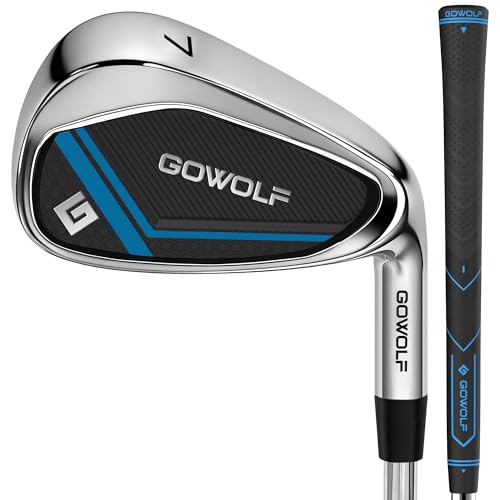
Gowolf 7 Iron stands out for its 95-gram steel shaft and hollow-body construction. The maker says its deep CNC-milled grooves support spin control and its perimeter weighting adds stability; treat those as design claims rather than a guarantee of a particular result. This single 7 iron may suit a golfer seeking a standalone adult club with a lighter steel shaft. Its right-handed configuration rules it out for left-handed players, and the maker does not establish a loft or length for set gapping.
Bottom line: Choose this if a 95-gram steel shaft and hollow-body head are your priorities.
Callaway Elyte 7 Iron

Callaway Elyte 7 Iron is the option here with a named Speed Frame and a three-section tri-sole, distinguishing its head design from the other choices. The maker says the frame combines a stiff body with a flexing face and damps vibration; the sole is designed to enter and exit turf smoothly. Its steel, regular-shaft configuration is a useful starting point for golfers who need regular flex, but the maker does not give a shaft weight or club loft for comparing it with a current set.
Bottom line: Pick this if the Speed Frame and tri-sole design matter more than a shaft weight.
MAZEL 7 Iron

MAZEL 7 Iron differs with a cavity-back head and a stiff steel shaft, giving it a distinct option for golfers who prefer that shaft flex. The maker says the low center of gravity is intended to help launch and the trailing edge to glide through turf. The input gives a 23-degree figure alongside the 7-iron size; because that loft is far below the typical 7-iron range, verify the club’s actual loft and how it gaps with your set before choosing it. Stiff flex may not suit slower swings.
Bottom line: Choose this only if stiff flex fits your swing and its loft gaps correctly with your set.
How to choose a 7 iron golf club
Start with loft, shaft, and length rather than the number stamped on the sole. Traditional 7 irons commonly sit around 30 to 35 degrees of loft, while stronger-lofted game-improvement models can be in the mid- to upper-20s; the number alone does not guarantee the same distance between brands. Compare the new club’s loft with the 6 and 8 irons in your set. If there is a gap of more than about 5 degrees between neighboring irons, distance gaps may become less predictable. Shaft flex and weight also affect feel: match them to your swing and the shafts already in your set, rather than assuming a 7 iron is interchangeable.
7 iron loft and set gapping
A 7 iron’s loft is often about 30 to 35 degrees in traditional sets, but modern sets may use substantially stronger lofts. That difference changes launch and distance, so a matching club number does not ensure a matching yardage. Use the loft when comparing clubs; if the number looks unusually strong, confirm it before buying. A practical rule is to keep neighboring iron lofts roughly 4 to 5 degrees apart when possible, then check actual carry distances because shaft, head design, and swing speed also matter. The 23-degree figure for MAZEL 7 Iron is well outside a common 7-iron range, making loft verification especially important for anyone adding it to a set.
Choosing shaft flex and material
Steel and graphite shafts differ in weight and feel, while flex labels such as regular and stiff are not standardized across manufacturers. A 95-gram steel shaft, like the one in Gowolf 7 Iron, gives a concrete weight to compare with your current clubs; Callaway Elyte 7 Iron has a regular steel shaft, and MAZEL 7 Iron has stiff steel. As a rough fitting starting point, golfers with smoother or slower swings often try regular flex, while faster swings may benefit from testing stiff flex. These are starting points, not rules: shaft profile, tempo, and strike pattern matter. Avoid switching flex or weight based only on a product label if you can compare with your current 7 iron first.
When a standalone 7 iron makes sense
A standalone 7 iron can replace a lost club, provide a practice option, or fill a set gap, but its loft and length should fit the irons around it. Most adult 7 irons are roughly 36 to 37 inches long, with variations by model and shaft; compare length and lie angle with your current set to limit setup differences. For a club added to an existing set, choose by actual loft and playing length, not simply the 7-iron label.
Frequently Asked Questions
What loft should a 7 iron have?
Many traditional 7 irons are roughly 30 to 35 degrees, while modern stronger-lofted versions may be in the mid- to upper-20s. Compare the loft with neighboring clubs rather than relying on the number alone.
How long is a standard 7 iron?
Many adult steel-shafted 7 irons are about 36 to 37 inches long, though model and shaft choices change the measurement. Check length against your current set, especially if replacing only one club.
Should I choose regular or stiff flex?
Regular flex is a common starting point for smoother or slower swings, while faster swings may suit testing stiff flex. Tempo, shaft weight, and strike quality also matter, so the label alone cannot determine fit.
How much loft gap should irons have?
Neighboring irons commonly have about 4 to 5 degrees of loft separation. Larger gaps can create less predictable distance spacing, so check the actual lofts when combining clubs from different sets.
Can a junior use an adult 7 iron?
A junior club is generally a better fit when its length matches the child’s height and setup.