
Best Compression Socks After Knee Replacement: 4 Compared

For most people seeking compression socks after knee replacement, Doc Miller TED Hose, 15–20 mmHg is the closest match because it is knee-high TED hose with 15–20 mmHg compression and an inspection opening. Choose another option only if your care team specifies a different pressure, length, or design; post-surgical compression should follow their guidance.
We earn a commission if you buy through links on this page. As an Amazon Associate I earn from qualifying purchases. Products are compared on manufacturer specifications, not hands-on testing.
- Best overall: Doc Miller TED Hose, 15–20 mmHg – Knee-high anti-embolism hose combines 15–20 mmHg compression with an inspection opening.
- Best for a simple TED hose: Knee-High TED Hose, 15–20 mmHg – Knee-high unisex anti-embolism stockings provide 15–20 mmHg compression.
- Best for graduated support: RUIXUE Graduated Compression Socks, 15–20 mmHg – 15–20 mmHg graduated support in a breathable knit suits those seeking everyday wear.
- Best for prescribed firm pressure: Truform 1945 Thigh-High, 20–30 mmHg – Thigh-high coverage and 20–30 mmHg compression suit a different prescribed pressure and length.
| Product | Best for | Style | Compression | Length | Shop |
|---|---|---|---|---|---|
| Doc Miller TED Hose, 15–20 mmHg | Inspection access | Anti-embolism hose | 15–20 mmHg | Knee-high | Check Price on Amazon |
| Knee-High TED Hose, 15–20 mmHg | Straightforward TED hose | Anti-embolism stockings | 15–20 mmHg | Knee-high | Check Price on Amazon |
| RUIXUE Graduated Compression Socks, 15–20 mmHg | Everyday graduated wear | Graduated compression socks | 15–20 mmHg | — | Check Price on Amazon |
| Truform 1945 Thigh-High, 20–30 mmHg | Thigh-high firm support | Thigh-high support sock | 20–30 mmHg | Thigh-high | Check Price on Amazon |
Compression socks after knee replacement
Match the stocking’s pressure and coverage to the plan provided by your surgeon or care team.
Doc Miller TED Hose, 15–20 mmHg

Doc Miller TED Hose, 15–20 mmHg stands out for its inspection opening, which allows access to check the foot’s temperature and pulse without removing the stocking. The knee-high, open-toe design is offered in sizes M–4XL, and the fabric is described as breathable and stretchable. Its 15–20 mmHg compression makes it the closest match here for someone whose post-surgery plan calls for that pressure and style. The main limitation is that the range does not cover a care plan requiring 20–30 mmHg or thigh-high coverage; confirm the prescribed pressure and sizing before choosing.
Bottom line: Choose this if your care team calls for knee-high 15–20 mmHg hose and inspection access.
Knee-High TED Hose, 15–20 mmHg
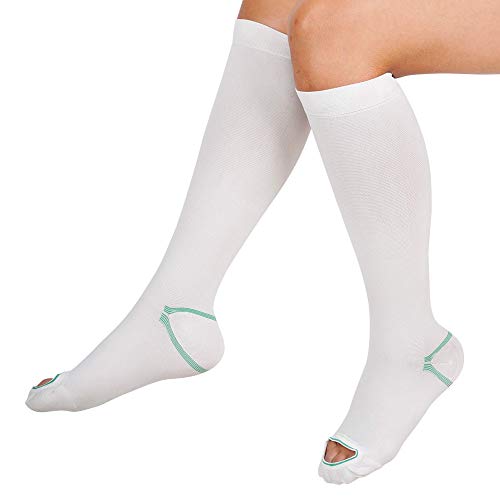
Knee-High TED Hose, 15–20 mmHg offers a straightforward unisex knee-high anti-embolism stocking at 15–20 mmHg, without the inspection-hole feature emphasized by Doc Miller TED Hose, 15–20 mmHg. Its breathable knit and elastic material are intended to provide compression at the ankle, calf, and leg. This option fits a recovery plan that calls for a basic knee-high TED-style stocking at moderate pressure. The specifications identify a large size, so buyers needing a different fit should use the maker’s sizing guidance and confirm the size with their care team rather than assume the large will fit.
Bottom line: Choose this for a basic knee-high TED hose when 15–20 mmHg is prescribed.
RUIXUE Graduated Compression Socks, 15–20 mmHg
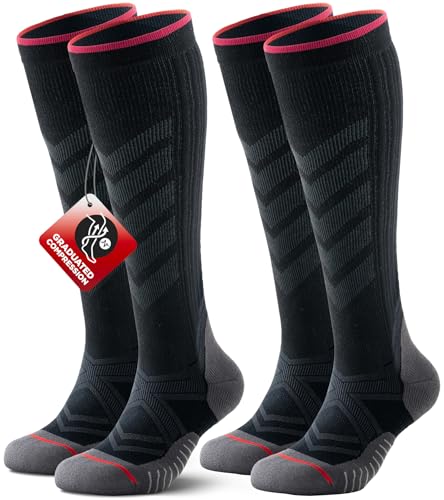
RUIXUE Graduated Compression Socks, 15–20 mmHg differs from the TED hose styles by emphasizing graduated support and everyday activities such as travel, running, and cycling. The knit is described as breathable and moisture-wicking, with a flexible top band and reinforced seamless toe. It may suit someone whose care team approves this type of graduated sock at 15–20 mmHg. The specifications do not establish a knee-high or post-surgery design, so it is a less direct match for replacement recovery; choose a dedicated anti-embolism style if that is what the care plan specifies.
Bottom line: Choose this only when graduated everyday socks are approved for your recovery plan.
Truform 1945 Thigh-High, 20–30 mmHg
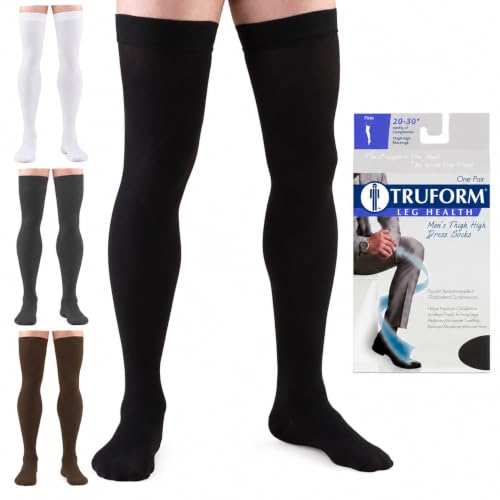
Truform 1945 Thigh-High, 20–30 mmHg is the only thigh-high option here and also uses a firmer 20–30 mmHg graduated compression level, rather than the 15–20 mmHg knee-high TED hose format of Doc Miller TED Hose, 15–20 mmHg and Knee-High TED Hose, 15–20 mmHg. Its silicone stay-up band, defined heel pocket, and rib-knit construction distinguish its fit design. The maker recommends sizing according to its chart. This is not a default substitute for post-knee-replacement hose: the greater pressure and full-leg length matter only if the care team specifically directs them.
Bottom line: Choose this only when thigh-high 20–30 mmHg compression is specifically directed.
How to choose compression socks after knee replacement
Start with the compression level and coverage prescribed by the surgeon or care team, not the strongest sock available. Graduated compression is tighter near the ankle and eases upward; TED hose are anti-embolism stockings commonly used in clinical settings. The choices here span 15–20 mmHg knee-high styles and a 20–30 mmHg thigh-high style, so they are not interchangeable. A practical decision rule is to choose a knee-high 15–20 mmHg option only when that is the plan; if instructions call for thigh-high or 20–30 mmHg, select to that specification instead. Compression garments can be difficult to put on and should not be worn over skin injury without medical direction. Confirm the pressure and fit before ordering.
Knee-high versus thigh-high coverage
Knee-high stockings end below the knee, while thigh-high stockings extend over the knee and up the thigh; the required coverage depends on the care plan. A thigh-high band needs a secure fit without rolling or constricting, while knee-high cuffs should sit below the knee crease. Use this table to distinguish the available styles and pressure levels; it does not replace clinical instructions.
| Style | Pressure shown | Use when directed |
|---|---|---|
| Knee-high TED hose | 15–20 mmHg | Plan specifies knee-high anti-embolism stockings |
| Graduated support sock | 15–20 mmHg | Plan approves everyday graduated socks |
| Thigh-high graduated sock | 20–30 mmHg | Plan specifies firm thigh-high compression |
Getting the size and fit right
Measure both legs at the points required by the maker’s size chart, usually around the ankle and calf for knee-high stockings; thigh-high styles may also require thigh circumference and leg length. Measure when swelling is least pronounced if the care team has not advised otherwise, and use the larger leg when measurements differ. A stocking should lie smooth, without folds or a rolled cuff, because bunching can create a tight band. An open toe or inspection opening can make foot checks easier, but neither confirms the garment is correctly sized. Ask the care team to verify sizing if swelling, dressings, or limited mobility change the leg’s shape.
Wearing and checking recovery stockings
Put stockings on as directed, commonly before getting out of bed when swelling is lower, and smooth the fabric rather than pulling it into a narrow band. Check the skin and toes regularly for unusual color, coldness, numbness, pain, or worsening swelling; remove the garment and contact the care team promptly if these occur. Keep seams and cuffs from pressing on an incision or dressing, and do not cut or modify a compression stocking. Care routines vary by garment, but gentle washing and air drying help protect elastic fibers; follow its care label. Ask the clinician when to stop wearing compression, since duration after surgery is individualized.
Frequently Asked Questions
How tight should compression socks feel after knee surgery?
Compression should feel snug and even, not painful or numb. A 15–20 mmHg label describes pressure, but the correct level and fit must match your care team’s instructions.
Can I use 20–30 mmHg socks after a knee replacement?
Use 20–30 mmHg only if your surgeon or care team directs that level. It is firmer than the 15–20 mmHg options and should not be chosen simply for extra support.
When should I put on post-surgery compression stockings?
Many people are instructed to put them on before standing, when leg swelling is lower, but timing after knee surgery varies by care plan. Follow the schedule your care team gives you.
How do I keep compression stockings from bunching?
Smooth the fabric evenly from the ankle upward and keep the cuff flat below the knee crease on knee-high styles. Folds or a rolled edge can form a tight band, so refit the stocking if it bunches.
Can compression socks go over a knee incision dressing?
Do not let a stocking rub or compress an incision or dressing unless the care team approves that arrangement. Keep the area clean and dry according to your surgical instructions, and ask the clinician how the stocking should sit.