
Best Fish Pellets for Ponds: 4 Foods Compared

Purina AquaMax Pond Fish 2000 is the best fit for most pond owners raising mixed game fish because it is a floating, 32% protein diet made for species including bluegill, catfish and bass. Choose another food if your pond is stocked mainly with koi or goldfish, or if you need a smaller package rather than a 50-pound bag.
We earn a commission if you buy through links on this page. As an Amazon Associate I earn from qualifying purchases. Products are compared on manufacturer specifications, not hands-on testing.
- Best overall: Purina AquaMax Pond Fish 2000 – Floating pellets and a 32% protein formula target several common game fish in ponds and lakes.
- Best for koi and goldfish: Kaytee Koi’s Choice – The 35% protein floating food is made for koi, goldfish and other pond fish.
- Best for high-protein feeding: The Pond Guy Game Fish Grower – Its 40% protein floating pellets are intended for warm-water game fish.
| Product | Best for | Protein | Package size | Intended fish | Shop |
|---|---|---|---|---|---|
| Purina AquaMax Pond Fish 2000 | Mixed game fish | 32% | 50 lb | Bluegill, catfish, bass | Check Price on Amazon |
| Kaytee Koi’s Choice | Koi and goldfish | 35% | 3 lb | Koi, goldfish, pond fish | Check Price on Amazon |
| The Pond Guy Game Fish Grower | Warm-water game fish | 40% | 17 lb | Bass, trout, catfish | Check Price on Amazon |
| Family Farm and Feed Floating Fish Food | Small pond stocks | — | 2 lb | Pond and lake fish | Check Price on Amazon |
Fish Pellets for Ponds Compared
Match the pellet’s intended fish and package size to your pond before choosing a daily feed.
Purina AquaMax Pond Fish 2000

For ponds with a mix of game fish, this floating feed names bluegill, catfish and bass among its intended fish. The 32% protein formula is positioned for omnivorous fish, and the floating format lets you watch how much feed remains at the surface. The 50-pound bag suits owners managing a larger pond or feeding many fish, but it is a substantial package for a small stock or occasional feeding. Confirm the pellet size works for the fish in your pond before ordering, since fish size affects what they can swallow.
Bottom line: Choose this for mixed game-fish ponds where a large bag and floating feed fit your routine.
Kaytee Koi’s Choice
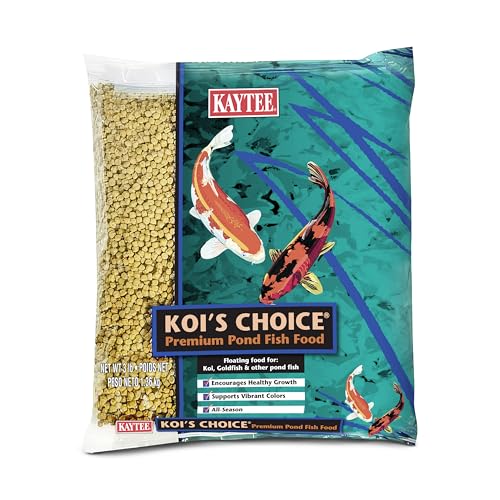
Koi and goldfish are the clearest match for this 35% protein floating feed, which also suits other pond fish. Fish meal is its first ingredient, and the formula includes fish oil, wheat germ meal and alfalfa meal. Its 3-pound package is much smaller than the bulk game-fish options, a practical distinction for a small pond or a keeper who wants to store less feed. The broad all-seasons positioning does not replace temperature-based feeding adjustments; reduce or stop feeding as cold water slows fish appetite.
Bottom line: Choose this for koi or goldfish when a smaller bag and floating pellets suit your pond.
The Pond Guy Game Fish Grower

At 40% protein, this is the highest-protein option here and is aimed at warm-water game fish such as bass, trout and catfish. The 17-pound bag sits between the 3-pound and 50-pound options, and its floating pellets make feeding activity easier to observe. It is a more specialized choice than a general koi-and-goldfish food, so match it to the fish you actually keep rather than selecting by protein percentage alone. The maker describes it as supporting rapid growth; that outcome also depends on fish, pond conditions and feeding amounts.
Bottom line: Choose this for warm-water game fish when its 40% protein formula matches your feeding plan.
Family Farm and Feed Floating Fish Food

The 2-pound package is the smallest among these pond foods, making it the easiest fit for a small stock or a keeper who wants to buy a limited quantity. Its pellets float and the maker describes the food as complete, with protein, minerals and vitamins, but no protein percentage is provided in the specifications. That makes direct protein comparisons with the other foods difficult. The intended fish category is broad, so check that the pellet size and formulation suit your particular species before making it the main diet.
Bottom line: Choose this when a small package matters more than comparing a protein percentage.
How to choose fish pellets for a pond
Choose pond pellets by matching the feed to the fish species, then compare protein and pellet format. Protein percentage alone does not establish that one feed is right for every pond: koi and goldfish have different diets and needs from bass, catfish or trout. Floating pellets make it easier to observe feeding and remove uneaten food; sinking feed can be harder to monitor in deeper water. Start with a small amount and add only what fish finish promptly. Before choosing a package, check the pellet diameter against the smallest fish in the pond; young or small-mouthed fish may not manage large pellets.
Feeding pond fish through temperature changes
Water temperature should guide feeding more than the calendar. Many common pond fish become less active as water cools, so reduce portions when fish stop feeding readily; below about 50°F, many warm-water pond fish should not be fed because digestion slows. Species and local conditions vary, so use the fish’s behavior and a pond thermometer rather than feeding a fixed amount year-round. In warm weather, feed only what the fish consume within about five minutes, then remove leftovers. Uneaten food decomposes, adding nutrients and reducing water quality, especially in a small or heavily stocked pond.
Floating and sinking pond pellets compared
Floating pellets make surface feeding visible, while sinking pellets reach fish that feed lower in the water column. Select the format based on where your fish eat and whether you need to monitor leftovers.
| Feed format | Useful when | Trade-off |
|---|---|---|
| Floating | Fish feed at the surface and you want to observe intake | Surface-feeding fish must find and eat it |
| Sinking | Fish feed below the surface | Uneaten portions are harder to see |
Pellet size matters alongside format: choose a diameter that the smallest fish can take without struggling. Avoid scattering extra feed just because some pellets drift away from the group.
How to avoid overfeeding pond fish
Small measured portions are safer than an open-ended handful. Feed once, watch for about five minutes, and stop adding food when fish lose interest or pellets remain; in cool water, shorten the session and reduce the quantity. Feed at a consistent location so fish learn where to gather and you can see what remains. Remove uneaten floating pellets instead of letting them break apart in the pond. Overstocking and excessive feeding both increase waste, so adjust the amount to the fish population and water conditions, not simply the package’s protein percentage.
Frequently Asked Questions
How much should I feed pond fish each day?
Feed only what the fish finish in about five minutes, then remove leftovers. Begin with a small portion and adjust for fish count, appetite and water temperature.
When should I stop feeding pond fish in winter?
Many warm-water pond fish stop digesting food efficiently below about 50°F, so feeding is generally stopped around that point. Use a pond thermometer because species and local conditions affect the cutoff.
Are floating pellets better than sinking pellets?
Floating pellets are easier to observe and remove, while sinking pellets suit fish that feed below the surface. Choose the format for where your fish feed and how readily you can monitor leftovers.
How do I choose pellet size for small fish?
Choose pellets small enough for the smallest fish in the pond to swallow comfortably.
Can koi eat game fish pellets?
A feed intended for game fish is not automatically a suitable everyday diet for koi. Match the formula to the species, and choose a food explicitly intended for koi when koi make up most of the pond.