
Best Horse Shedding Tool: 4 Brushes Compared

SleekEZ 10-Inch Horse Brush is the best horse shedding tool for most people because its 10-inch wave-pattern blade is made to lift loose hair and undercoat without cutting healthy coat. Choose StripHair Gentle Groomer instead if you want a flexible rubber tool that also scrubs and massages, or EquiGroomer 8-Inch Deshedding Brush if an 8-inch stainless-steel brush better suits your grip and grooming area.
We earn a commission if you buy through links on this page. As an Amazon Associate I earn from qualifying purchases. Products are compared on manufacturer specifications, not hands-on testing.
- Best overall: SleekEZ 10-Inch Horse Brush – Its 10-inch wave-pattern blade is designed for loose hair and undercoat without cutting healthy coat.
- Best for flexible grooming: StripHair Gentle Groomer – Flexible rubber supports shedding, shampooing, coat cleaning, scraping and massage.
- Best for a shorter brush: EquiGroomer 8-Inch Deshedding Brush – The 8-inch stainless-steel blade is sized for broad grooming on horses and ponies.
- Best for two tooth edges: Double-Loop Stainless-Steel Shedding Blade – Its dual-sided stainless-steel blade has coarse and fine edges for different coat lengths.
| Product | Best for | Tool style | Size | Material | Shop |
|---|---|---|---|---|---|
| SleekEZ 10-Inch Horse Brush | Seasonal shedding | Wave-pattern blade | 10 in | — | Check Price on Amazon |
| StripHair Gentle Groomer | Flexible grooming | Flexible rubber groomer | — | Natural rubber | Check Price on Amazon |
| EquiGroomer 8-Inch Deshedding Brush | Shorter blade | Stainless-steel blade | 8 in | Stainless steel | Check Price on Amazon |
| Double-Loop Stainless-Steel Shedding Blade | Two tooth edges | Dual-sided loop blade | — | Stainless steel | Check Price on Amazon |
Horse shedding tools compared
Compare blade shape, materials and grooming functions to match a tool to your horse’s coat and your routine.
SleekEZ 10-Inch Horse Brush

For a wide grooming stroke, this 10-inch SleekEZ uses a wave-pattern blade rather than flexible rubber or two toothed edges. The maker says the blade gathers loose hair and undercoat without cutting healthy coat, and the tool is intended for horses and other large animals. Its 8.5-inch length and 0.1875-pound weight may appeal to someone who wants a relatively light grooming tool. The limitation is its single blade style: choose another option if flexible rubber, shampooing or separate coarse and fine edges matter more to your routine.
Bottom line: Choose this if a wide, lightweight wave-pattern blade is your priority.
StripHair Gentle Groomer
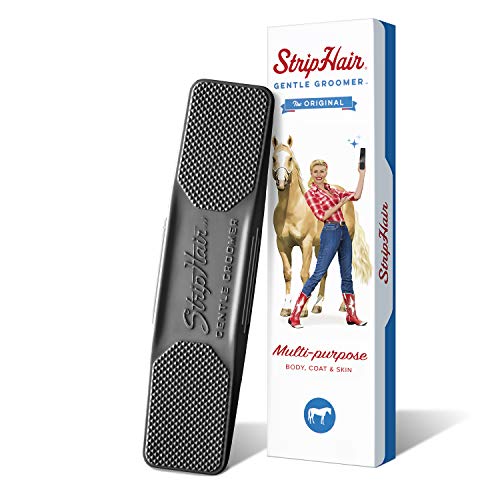
Unlike the other brushes here, this is a flexible natural-rubber groomer rather than a rigid metal blade. The maker describes six uses: shedding, grooming, shining, shampooing, scraping and massage; its exfoliating diamond texture is also intended to help loosen dried mud and sweat. At 9 inches long, it is a multipurpose choice for someone who wants one tool for several grooming steps. Its 0.5-pound weight is heavier than the 10-inch SleekEZ, and buyers seeking a stainless-steel edge or distinct coarse and fine teeth should choose a different style.
Bottom line: Choose this if you want a flexible rubber tool for grooming and bathing tasks.
EquiGroomer 8-Inch Deshedding Brush

This 8-inch EquiGroomer is the shorter stainless-steel blade option among the horse-specific brushes. The maker says its fine, rounded teeth lift loose hair and undercoat from thick coats, including horse and pony coats, while being gentle on skin. The brush is 8 inches long, 1.25 inches wide and weighs about 0.22 pounds. Its fixed 8-inch blade is the main tradeoff: choose a different design if you prefer flexible rubber or a dual-sided blade with separate coarse and fine edges.
Bottom line: Choose this if an 8-inch stainless-steel brush suits your grooming strokes.
Double-Loop Stainless-Steel Shedding Blade
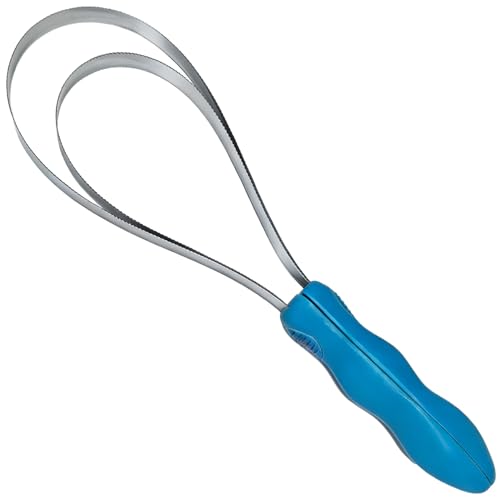
This double-loop tool stands apart with coarse and fine edges on a stainless-steel shedding blade. The maker recommends the coarse side for long or thick coats and the fine side for shorter coats; the loop handles can be held apart for larger areas or together for smaller regions. That adjustable grip can suit a groomer who wants to change coverage without switching tools. The product’s size and loop flexibility make it less directly comparable to the fixed-width horse brushes, so consider whether a blade with separately selectable edges fits your handling preference.
Bottom line: Choose this if separate coarse and fine edges are useful for your horse’s coat.
How to choose a horse shedding tool
Choose by blade contact and control, not by the word “deshedding” alone. Rigid metal edges and flexible rubber groomers contact the coat differently; dual-sided blades add a coarse and fine edge, while a wave-pattern blade offers one distinct edge style. Start on a broad, fleshy area such as the neck or shoulder, use light pressure, and stop if the horse reacts or the skin becomes irritated. Avoid hard strokes over bony areas, the face, legs and any tender or injured skin. For an individual tool, let the horse’s comfort and coat response guide whether it is suitable; a product’s purpose is not a substitute for gentle handling.
When horses shed their coats
Most horses shed their winter coat as daylight lengthens in spring; changing day length is a major seasonal cue for coat growth, so temperature alone does not determine shedding. A shorter summer coat typically gives way to a longer winter coat as days shorten in fall. Coat changes are gradual, and breed, age, health and local conditions affect how much loose hair comes away at a given grooming session. During a heavy seasonal shed, groom in short sessions and clear collected hair as needed rather than pressing harder to force more out. A shedding tool removes loose hair; it does not replace routine brushing or attention to the horse’s skin.
Shedding blade styles compared
Blade geometry changes how a tool handles, so match the style to the kind of control you want. A fixed-width brush gives a consistent contact area; a loop blade can change its shape by bringing handles together or holding them apart. Flexible rubber can bend against the coat and may serve additional cleaning tasks, while a dual-sided blade offers different tooth edges. No single style suits every horse or every body area. This table summarizes the practical distinction among the styles in this comparison.
| Style | Useful distinction | Consider |
|---|---|---|
| Wave-pattern blade | One fixed blade style | Check horse comfort with light strokes |
| Flexible rubber | Bends and supports bathing tasks | Choose for multipurpose use |
| Dual-sided loop | Coarse and fine edges; adjustable grip | Use gentle pressure |
| Fixed stainless-steel brush | Set blade width | Match the width to the grooming area |
Safe grooming around sensitive areas
Use a shedding tool only where the horse is comfortable with its contact, and keep pressure light because repeated friction can irritate skin. The face, lower legs, bony points and areas with cuts, swelling or tenderness are poor places for forceful blade strokes; use a softer brush or avoid the area. Introduce an unfamiliar tool on the shoulder, where you can watch the horse’s response, then stop if the horse flinches, pins its ears or moves away. Metal edges deserve particular care around thin skin, and a flexible rubber tool still should not be pushed hard. Remove hair and dirt from the tool after grooming so debris does not build up between sessions.
Frequently Asked Questions
Can a shedding blade be used on every part of a horse?
No; avoid forceful strokes on the face, lower legs, bony points and irritated or injured skin. Begin on a broad area such as the shoulder and stop if the horse shows discomfort.
When should I start shedding my horse for spring?
Spring shedding generally follows lengthening daylight, rather than a single calendar date. Start when loose winter hair is coming away, and keep sessions gentle as the coat changes.
Should I use the coarse or fine side on a horse?
For the dual-sided blade in this comparison, the maker recommends the coarse edge for long or thick coats and the fine edge for shorter coats. Use light pressure and check the horse’s response before continuing.
Does a shedding tool replace a curry comb?
No; a shedding tool is for loosening hair, while grooming routines may use different brushes for dirt and coat care. A flexible rubber groomer can also curry, according to its maker, but that does not make every shedding blade a curry comb.
How much pressure should I use with a horse shedding blade?
Use light pressure and short strokes, especially when introducing a metal edge. Stop if the horse reacts or the skin looks irritated; pressing harder is not a safe way to remove hair faster.